Escaping the Waiting Room: Why The Best Time is Now

by Danny Ballan | Jan 25, 2026 | English Plus Espresso

The Best Time Is Now

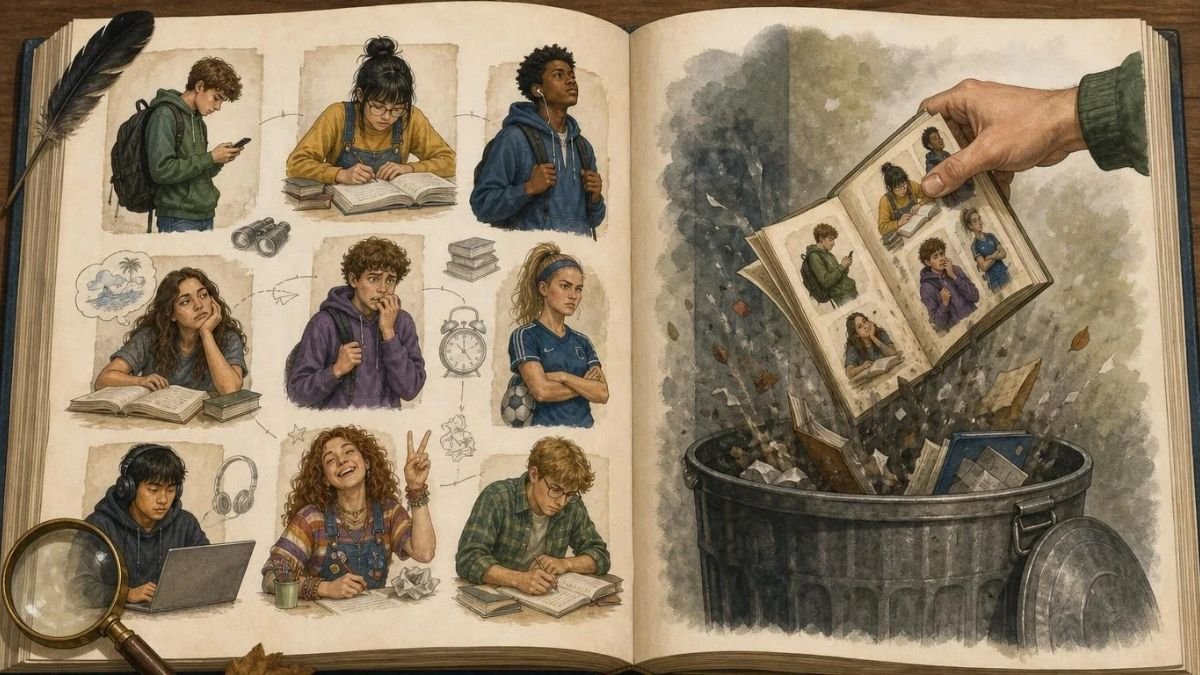
We have all been there. You look at a piano and think, "I wish I had learned to play when I was a kid." You look at a career path and think, "I should have studied that in college." You look at your health and think, "I should have started running ten years ago." We are masters of looking backward and calculating the compound interest of our inaction. We paralyze ourselves with the ghost of a past opportunity. That is why I absolutely love the Chinese proverb: "The best time to plant a tree was 20 years ago. The second best time is now." It is such a simple sentence, but it completely dismantles the logic of regret.

The first part of the quote acknowledges reality. Yes, if you had started investing, or learning French, or writing that book 20 years ago, you would be enjoying the shade of that tree today. It doesn't deny the missed opportunity. But the second part is where the magic happens. It shifts the focus from what was lost to what is still possible. It tells us that while we cannot change the timeline of the past, we are the absolute masters of the timeline starting right now. The "second best time" is still a pretty good time! It’s infinitely better than the third best time, which is tomorrow, or the worst time, which is never.

This proverb is a call to forgive your younger self for not knowing better or for not being ready. It’s a reminder that the timeline of your life isn't fixed. We often feel that if we didn't hit certain milestones by 25 or 30, we missed the boat. But trees grow whenever you plant them. The soil doesn't care how old you are. The seed doesn't check your ID. It just needs you to dig the hole today. It’s about swapping the passive heaviness of "I wish I had" for the active agency of "I am starting." It cuts through the excuse of "it's too late" and replaces it with the urgency of "let's go."

So, be honest with me: What is the "tree" you have been putting off planting because you felt like you were already too late? Let’s make a pact to plant it today. Tell me what it is in the comments!


Related Posts

Memory Melding: What If We Could Trade Pasts?

What If We Could Transfer Our Memories

Have you ever struggled to explain exactly how you felt in a specific moment? Imagine a world where you didn’t have to use words. What if we could transfer our memories—sights, sounds, and emotions—directly to someone else? In this episode of English Plus Espresso, we dive into the beautiful, messy, and terrifying possibility of shared memory.

0 Comments

Submit a Comment

This site uses Akismet to reduce spam. Learn how your comment data is processed.

Recent Posts

A History of Sex as a Business

A History of Sex as a Business 09 | The Digital Turn: Platforms, Algorithms, and OnlyFans

This is part 9 of 10 in The Oldest Profession

The internet transformed commercial sex as radically as anything since the industrial revolution — enabling greater autonomy for some, creating new vectors for exploitation for others, and producing a legislative and ethical landscape that nobody has figured out how to navigate. This episode examines FOSTA-SESTA, OnlyFans, the trafficking-platform debate, and where we actually stand.

read more...
A History of Sex as a Business

A History of Sex as a Business 08 | The Business Model: How the Industry Actually Works

This is part 8 of 10 in The Oldest Profession

Beneath the historical narrative is an economic structure — one characterized by specific mechanisms of recruitment, control, and profit extraction that have remained remarkably consistent across centuries and continents. This episode examines the business of commercial sex as a business: how it actually operates, how exploitation is maintained, and where the money actually goes.

read more...
A History of Sex as a Business

A History of Sex as a Business 07 | The 20th Century: Wars, Migration, and the Criminalization Wave

This is part 7 of 10 in The Oldest Profession

The twentieth century saw two world wars that massively expanded military commercial sex economies, massive migration patterns that created new trafficking vulnerabilities, and a wave of criminalization campaigns that often made things worse for the people they claimed to help. This episode traces how the modern policy landscape was created.

read more...

Categories

Follow Us