
Have you ever found yourself staring blankly at a blinking cursor, opening a new tab, and quietly asking a chatbot to draft a birthday message for your own mother? Or maybe you’ve caught yourself halfway through a slightly challenging thought, only to mentally sigh and think, “You know what? I’ll just let the AI summarize this for me later.”
Don't worry, your secret is safe with me. We are all doing it.
We are living in an era of unprecedented, frictionless convenience. We have built digital oracles that sit quietly in our pockets, capable of translating dead languages, writing functioning code, and explaining the intricacies of quantum mechanics in the style of an exasperated pirate. And they do it all in about three seconds.
So, it begs a rather uncomfortable, mildly terrifying question: Why on earth should we bother learning anything anymore?
If the sum total of human knowledge is instantly accessible, isn't spending hours, days, or years trying to cram facts, frameworks, and skills into our squishy, forgetful biological brains just a little bit... archaic? It feels a bit like insisting on churning your own butter while standing in the dairy aisle of a modern supermarket.
It’s a fair question. And let me be clear right out of the gate: this is not a defense of AI, nor is it an attack on it. AI is a tool, much like the printing press, the calculator, or the internet itself. But the presence of this tool forces us to hold up a mirror to ourselves and ask what it actually means to know something, and more importantly, what happens to us—cognitively and psychologically—when we decide we don't need to try anymore.
Because if we are not careful, we might just take this miraculous technological leap as the ultimate excuse for intellectual complacency. We might mistake the ease of access to information for the possession of wisdom. And that is a very dangerous swap to make.
The Hiking Trail and the Helicopter
To understand why we still need to learn, let’s step away from screens for a moment and look at the physical world.
Think about hiking. People spend thousands of dollars on specialized boots, moisture-wicking shirts, and lightweight backpacks. They drive for hours to reach the base of a mountain. Then, they spend an agonizingly sweaty, blister-inducing, breath-stealing day dragging their bodies up a steep incline. They get scraped by branches, bitten by bugs, and occasionally lost.
Why do they do it? If the sole objective is to see the view from the top, they could easily charter a helicopter. A helicopter is efficient. A helicopter gets you to the summit in ten minutes without a single drop of sweat. Or, even better, they could just stay on their couch, put on a VR headset, and watch a 4K drone video of the peak.
But anyone who has ever reached the top of a mountain knows that the view isn't actually the point. The view is the reward for the friction. The value is intrinsically tied to the struggle, the persistence, and the physical reality of the journey.
We do this all the time. We run marathons even though we have cars that can cover the distance in a fraction of the time. We spend Sunday afternoons meticulously chopping vegetables and slow-roasting a meal from scratch, even though we could have a perfectly acceptable dinner delivered to our door with three taps on a piece of glass. We build crooked, slightly wobbly birdhouses in our garages instead of buying perfect, machine-made ones for ten dollars.
Psychologists call this the "IKEA effect"—the cognitive bias in which consumers place a disproportionately high value on products they partially created. We love what we build. We value what we struggle for.
And yet, when it comes to our minds, we are suddenly perfectly happy to take the helicopter. We are thrilled to let an algorithm chew our intellectual food for us and spit it into our brains. We are confusing the end product (the answer) with the deeply necessary process (the learning).
The Cognitive Muscle and the Danger of Atrophy
Let’s look at the cognitive side of this. Your brain is not a hard drive. It does not simply store files to be retrieved later. Your brain is a dynamic, living, neuroplastic organ. It is, for all practical intents and purposes, a muscle.
When you learn something new—whether it’s a few phrases in Italian, how to play the guitar, or the historical context of the French Revolution—you are not just dropping a fact into a bucket. You are physically rewiring your brain. You are forging new neural pathways and strengthening synapses.
This process of grappling with new information, making mistakes, feeling confused, and finally achieving that "aha!" moment of clarity is what keeps our cognitive machinery well-oiled. It builds cognitive reserve, which is essentially the brain's resilience against aging and decay.
When we outsource our thinking to AI, we remove the friction. And friction is exactly what the brain needs to stay sharp.
Think about what happened when GPS and smartphone maps became ubiquitous. We stopped remembering routes. We lost our innate sense of spatial awareness. We now blindly follow a blue dot on a screen, occasionally driving into lakes because the machine told us to turn left. Our internal compasses atrophied because we stopped using them.
Now, imagine that same atrophy, but applied to your critical thinking, your logic, your creativity, and your problem-solving skills.
If we rely on AI to generate our ideas, outline our arguments, and solve our problems, we stop flexing the very muscles required to do those things. We become passengers in our own minds. When faced with a complex, nuanced real-world problem—the kind that requires deep human empathy, contextual understanding, and leaps of intuitive logic—we will find ourselves mentally out of breath, unable to climb the intellectual hill because we’ve been taking the helicopter for years.
AI can synthesize information perfectly, but it cannot care about it. It doesn't have skin in the game. It is a predictive text engine, probabilistically guessing the next most likely word. If we don't have our own foundational knowledge, our own cognitive frameworks, how will we even know if the answer the AI gives us is brilliant, or beautifully articulated garbage?
You cannot be a good editor if you do not know how to write. You cannot be a good curator if you do not know art. And you cannot effectively use AI if you have outsourced your own intelligence to it.
The Psychological Payoff: The Joy of the Struggle
Beyond the physical wiring of our brains, there is a profound psychological dimension to learning.
We are meaning-making machines. Human beings derive a massive amount of their self-worth, identity, and psychological well-being from a concept called self-efficacy. This is the belief in your own capacity to execute behaviors necessary to produce specific performance attainments. In plain English: it’s the quiet, solid confidence of knowing, "I can figure this out."
Where does self-efficacy come from? It comes from facing a challenge, experiencing the agonizing frustration of not understanding it, persisting anyway, and finally mastering it.
There is a unique, irreplaceable neurochemical cocktail that your brain releases when you solve a hard problem yourself. It’s a deep, sustaining dopamine hit that cannot be replicated by hitting "Enter" on a prompt box.
When an AI hands you a beautifully formatted, perfectly correct answer instantly, you might feel a fleeting sense of relief or convenience. But you do not feel proud. You do not feel capable. You haven't grown; you’ve just been served.
We need the frustration. We need the messy, confusing, inefficient process of learning because that process builds character. It builds resilience. It teaches us patience. When you sit down to learn a new language, the first few weeks are humiliating. You sound foolish. You can’t express basic desires. But as you slowly build vocabulary, as the grammar finally clicks, the joy you feel is profound. You have expanded your world.
If a neural-link chip could instantly upload the French language to your brain tomorrow, you would gain the utility of speaking French, but you would lose the journey of becoming someone who learned French. And the journey is where our humanity lives.
Not Less Learning, But Different Learning
So, does this mean we should stubbornly refuse to use AI? Should we throw our laptops into the sea and go back to memorizing the encyclopedia?
Of course not. That would be just as foolish as refusing to use a washing machine because you believe in the character-building struggle of scrubbing clothes on rocks.
The premise here is not that we must keep learning exactly the same way we always have. The premise is that we must learn differently.
For centuries, our educational systems and our personal metrics for intelligence were heavily based on rote memorization and information retrieval. The smartest person in the room was often the one who possessed the most facts.
Well, the machine has won that game. You will never out-memorize an AI. You will never recall a historical date, a chemical formula, or a legal precedent faster than it can.
Therefore, our learning must shift from the accumulation of data to the synthesis of ideas.
We no longer need to spend our energy memorizing the "what." We need to focus all our cognitive energy on the "why" and the "how."
We need to learn how to ask better questions. An AI is only as good as the prompt it receives. If you lack imagination, if you lack a deep understanding of human nature, history, and context, your prompts will be shallow, and the AI’s answers will be equally hollow.
We need to learn critical thinking. In a world where AI can generate hyper-realistic fake news, beautifully reasoned false arguments, and completely fabricated historical events, the most vital skill a human being can possess is a hyper-vigilant, highly educated skepticism. You need a broad base of historical, scientific, and cultural knowledge—not to recite it, but to use it as a BS-detector against a tidal wave of synthetically generated noise.
We need to learn empathy, emotional intelligence, and complex communication. AI can write a technically perfect apology letter, but it cannot sit across from a grieving friend and hold space for their pain. It cannot navigate the messy, unquantifiable nuances of a difficult team dynamic at work.
We must lean into the deeply human disciplines: philosophy, ethics, art, physical craftsmanship, and the messy complexities of human relationships. These are areas where there are no "correct" answers to be retrieved from a database, only perspectives to be explored and experienced.
The Excuse for Laziness
We have to be fiercely honest with ourselves here. The greatest threat AI poses to the average person isn't that it will become sentient and take over the world. The greatest threat is that it will slowly, softly lull us into a profound intellectual laziness.
It is incredibly seductive. It’s like a warm, comfortable blanket on a cold morning. Why read the 500-page book when the AI can give you a three-paragraph summary that makes you sound smart at a dinner party? Why wrestle with the blank page when the AI can write the first draft of your essay?
Because the moment we accept that convenience, we begin to shrink.
We become consumers of synthesized thought rather than generators of original thought. We start to accept the AI’s average, statistically probable version of reality as our own. We lose our distinct voices, our eccentricities, and the beautifully weird, illogical leaps of imagination that have driven all of human progress.
Complacency is a quiet disease. It doesn't arrive with a dramatic crash. It arrives with a whisper of, "Let the machine do it." And before you know it, you are sitting in a world you no longer understand, entirely dependent on a black box to tell you what to think, what to feel, and who to be.
The Call to Friction
So, where does this leave us?
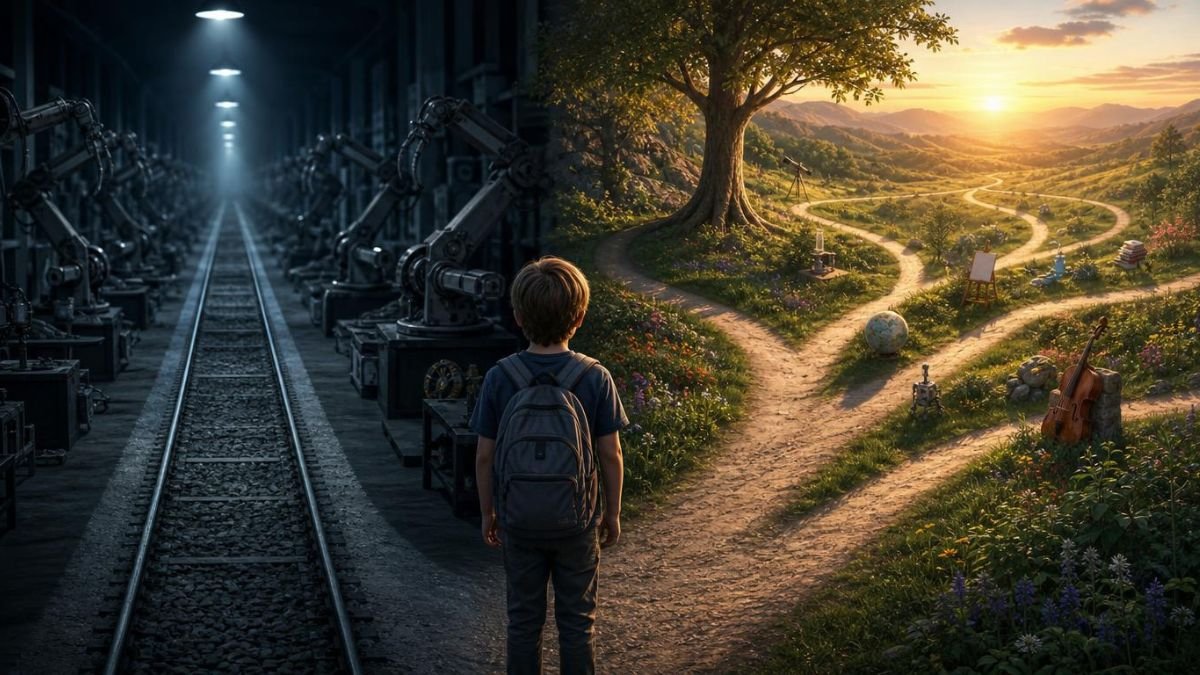
It leaves us with a choice. We can view AI as an excuse to stop trying, to kick our feet up and let the algorithms take the wheel. Or, we can view it as an invitation to elevate what it means to be a thinking, feeling human being.
We should keep learning because learning is the mechanism by which we remain alive to the world. It is the friction that keeps our minds bright and our spirits engaged.
Read the difficult book. Not for the summary, but for the way the author’s prose makes your mind bend and stretch.
Learn the new instrument. Not because you’ll be a rock star, but because the frustration of your clumsy fingers will remind you that you are a work in progress.
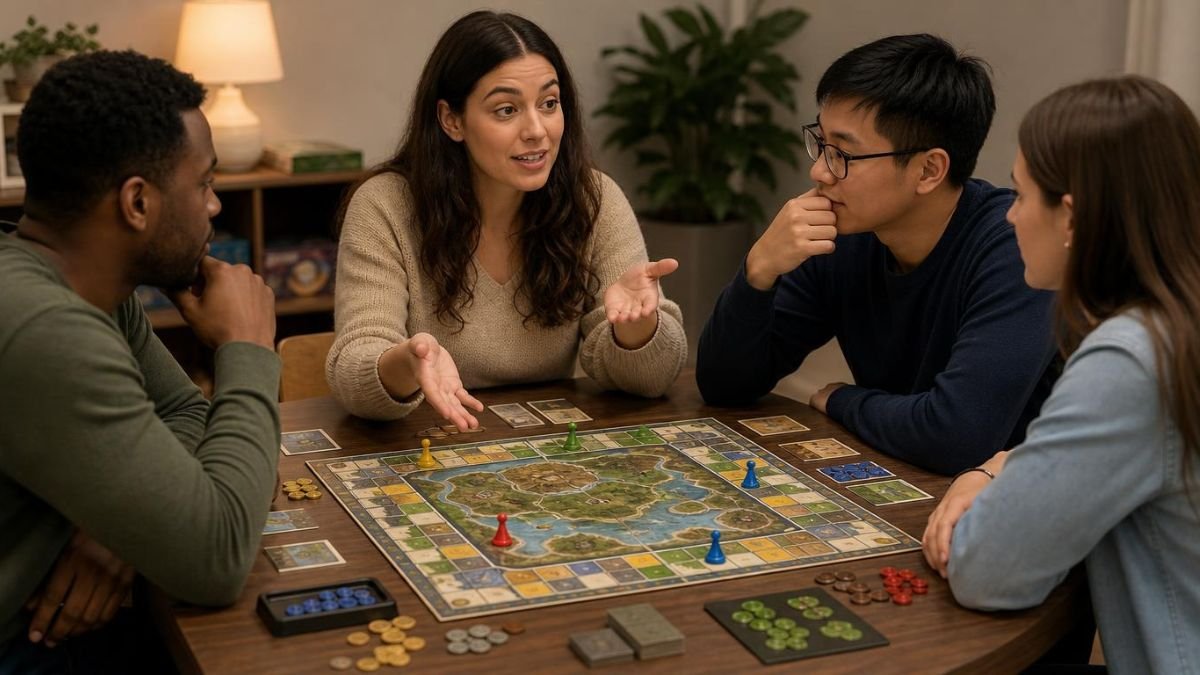
Have the difficult, meandering, unstructured conversation with a friend that doesn't have an easily generated bullet-point conclusion.
Use AI to clear away the drudgery of life. Let it organize your spreadsheets, draft your boilerplate emails, and summarize the dry reports. But fiercely protect your inner intellectual life. Guard your cognitive struggles. Seek out the mountains and climb them yourself, feeling every blister and enjoying every breathtaking view.
Because at the end of the day, AI might know everything. But it doesn't understand anything. It doesn't feel the weight of history, the thrill of discovery, or the quiet satisfaction of a hard day's mental labor.
Only you can do that. And it would be a tragic waste to give that up just because it’s easy.
Questions for Discussion & Reflection
As we wrap up our time together, I want to leave you with a few questions to chew on. You can think about these over your morning coffee, discuss them with a friend, or perhaps write your thoughts down in a journal (and please, use your own words, not ChatGPT’s!).
- The "Helicopter" Check: What is an area in your life right now where you are taking the cognitive "helicopter" to the top of the mountain? Is there a skill or a piece of knowledge you’ve recently outsourced to technology that you might actually enjoy struggling with yourself?
- The Meaning of Mastery: Think back to a time when you learned something incredibly difficult. What did that struggle teach you about yourself that simply having the "answer" never could have?
- The Shift in Focus: If we accept that rote memorization is no longer the pinnacle of intelligence, what new subjects or skills should we be teaching the next generation to prepare them for an AI-integrated world?
- The Complacency Trap: How do we balance the undeniable productivity benefits of AI with the need to maintain our cognitive "muscle"? Where is the line between a helpful tool and a harmful crutch?
I’d love to hear your thoughts on this. Until next time, don't be afraid of the friction. Keep questioning, keep struggling, and most importantly, never stop learning.







0 Comments