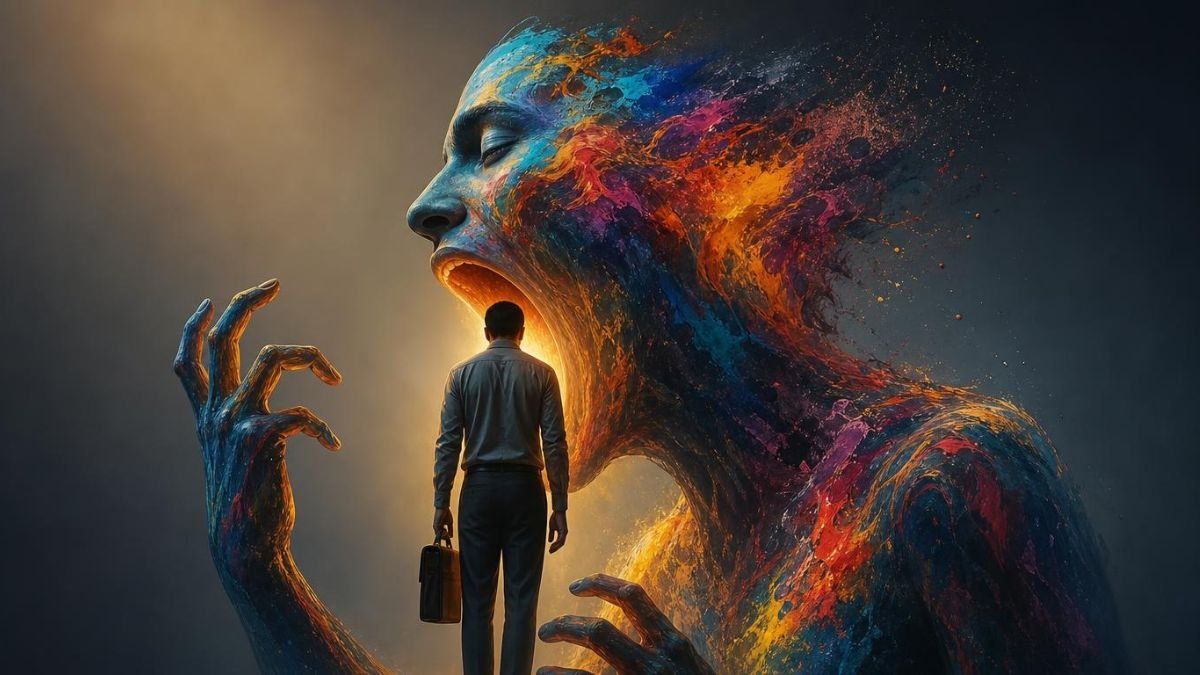
How good are you, and does anyone care?
Somewhere in the world right now there is a person who is, by any honest measure, the single greatest living practitioner of something you love. The most gifted guitarist. The most extraordinary pastry chef. The sharpest short-story writer working in any language. Someone at the absolute ceiling of human ability at a craft that would move you to tears if you ever encountered it.
You will almost certainly never hear their name.
And here is the part that stings a little: while that person quietly perfects their impossible art in a room somewhere, someone half as talented, or a tenth as talented, or possessed of no discernible talent at all beyond a warm smile and an instinct for timing, is out there with a million people watching them do a mediocre version of the same thing. Book deal. Brand partnership. A comment section full of hearts. A life built not on being good, but on being known.
So let me ask you the uncomfortable question that runs underneath this entire piece: when exactly did who you are become more important than what you do and how well you do it?
Because it did happen. There was a shift, a watershed, a quiet turning of some enormous wheel, and most of us lived right through it without noticing, the way you don't notice the tide coming in until your towel is wet. Competence used to be the whole game. Now competence is table stakes at best and an afterthought at worst, and the real currency, the thing that actually moves the needle, is something far stranger and harder to pin down. It is you. Your face, your story, your relatability, your vibe, your following, your personal brand.
I want to be honest with you from the start, because this is not going to be a grumpy old-timer shaking a fist at the youths and their phones. I refuse to write that, partly because it is boring and partly because it is wrong. There are things about this new world that are genuinely, thrillingly good, and we are going to give them their full due. But there is also a bill coming for all of it, and the bill lands hardest on exactly the people who make the slow, deep, difficult things that a culture needs most. So let us actually think about this properly, from the beginning. And the beginning, delightfully, involves cattle.
A short history of the burn mark
Here is a fact that will reorganize how you see every logo you have ever looked at. The word "brand" comes from an Old Norse word, brandr, meaning to burn. A brand was, quite literally, a burn mark. You heated a piece of iron in a fire until it glowed, and you pressed it into the side of an animal, and the scar it left told everyone whose cow that was.
Think about that for a second, because it is not a coincidence and it is not a cute etymological accident. The entire concept of branding was born from a single, deeply practical need: to answer the question who does this belong to, and can I trust it? When two ranchers' herds mingled at the watering hole, the brand was the proof of ownership. And when a buyer looked at a branded steer at market, that mark carried a reputation. A brand from a rancher known for healthy, well-fed animals was worth more than an identical steer from someone whose stock was scrawny and sick. The mark was a promise about the quality of the thing underneath it.
That is the crucial idea, and I want you to hold onto it because we are going to watch it slowly rot over the next few centuries. In the beginning, the brand pointed at the work. It was a shortcut, a compressed piece of information that said the thing behind this mark is good, because of who made it and how they made it. The mark had no value of its own. It borrowed all its value from the craft it stood for.
Fast-forward to the medieval guilds and you see the same principle wearing nicer clothes. A silversmith stamped their maker's mark into the base of a cup, and that hallmark was a guarantee. It said, this silver is real, this workmanship meets the standard, and if it doesn't, you know exactly whose door to knock on. The mark was accountability made physical. It was the opposite of anonymity, and it worked precisely because it was tethered, tightly and inescapably, to the quality of what you actually produced. A guild member who put their mark on shoddy work would be found out and, in the more colorful periods of history, occasionally set on fire, which is a hell of a customer feedback mechanism.
Then came the industrial revolution, and the machines, and something began to shift. When you have one blacksmith in a village, you don't need a brand; you have a name and a reputation and a face people see at church. But when factories start producing identical bars of soap by the thousand, and those bars travel hundreds of miles to be sold by a shopkeeper who has never met the manufacturer, suddenly the brand has to do heavier lifting. Now the brand isn't a mark on your neighbor's cow. It is the only thing standing between a customer and a wall of indistinguishable products. This is the moment brands as we know them are truly born, in the late nineteenth century, with names like Pears soap and Quaker Oats and Coca-Cola. And notice, importantly, that the promise is still about the product. Pears is still saying, in effect, our soap is good soap. The mark still points at the thing.
But a door has been quietly propped open. Because once a brand is no longer your literal reputation as a known person, once it becomes an abstract symbol that stands in for a distant, faceless factory, the brand starts to develop a life of its own. And a symbol with a life of its own can be filled with almost anything. It doesn't have to be filled with truth about the product. It can be filled with feeling. And in the twentieth century, that is exactly what happened.
The pivot to feeling
Here is where advertising walks into the story and quietly rewrites the rules of the game, and you have to admire the sheer audacity of it.
Somewhere in the middle of the twentieth century, the smartest people in marketing realized something that should have been obvious but was, at the time, almost heretical. They realized that people do not actually buy products. They buy the feeling they imagine the product will give them. Nobody wants a quarter-inch drill bit, the old saying goes; they want a quarter-inch hole. Except it turned out to be even wilder than that. People didn't even really want the hole. They wanted to feel like the kind of person who is capable and handy and in control of their own home.
So the ads stopped talking about the product. Have you ever noticed that a perfume commercial tells you almost nothing about how the perfume smells? That a car ad shows you a lone vehicle carving through a mountain road at dawn with not another human being in sight, which is the precise opposite of how you will actually experience that car, trapped in traffic behind a delivery van? That is not incompetence. That is genius, deployed in a direction that would have baffled our silversmith. The Marlboro Man was not selling you information about tobacco. He was selling you a feeling of rugged, silent, masculine freedom, and he was selling it so effectively that a brand originally marketed to women became the global symbol of exactly the opposite. Coca-Cola stopped selling a beverage and started selling happiness itself, bottled and carbonated, teaching the world to sing in perfect harmony.
The brand, in other words, had fully detached from the craft. It no longer pointed at the quality of the work. It pointed at an identity you could purchase and wear. Buy this and become this kind of person. And this worked because it tapped into something absolutely fundamental about human beings, something no amount of eye-rolling can dissolve: we are desperate, all of us, to know who we are and to signal it to others. We have always used objects to do this. The medieval lord's heraldry, the tribal tattoo, the wedding ring, the specific fade of a pair of jeans. Identity has always been partly performed through the things we surround ourselves with. Advertising didn't invent that hunger. It just industrialized the feeding of it.
But notice, and this is the last hinge before the whole door swings open, that all of this was still about companies. Marlboro was a corporation. Coca-Cola was a corporation. The identity being sold was the brand's identity, projected outward for you to absorb. You, the individual human being, were the audience. You were the one being sold to. You were not, yourself, a brand.
That was about to change. And when it changed, it changed everything.
The brand called you
In the summer of 1997, a management writer named Tom Peters published an article in Fast Company magazine with a title that reads today like a prophecy carved into stone. It was called "The Brand Called You."
Peters' argument was simple, electric, and, in retrospect, one of the most consequential ideas of the late twentieth century. He said, in effect: you already know that Nike is a brand, and Coke is a brand, and Starbucks is a brand. Here is the thing you haven't realized yet. You are a brand too. Every one of us is. You are the CEO of a company called You, and your job, whether you have admitted it to yourself or not, is to build, manage, and market that brand. Figure out what makes you distinctive. Figure out your value proposition. Package yourself, position yourself, promote yourself. The old world where you kept your head down, did good work, and let a loyal employer take care of you for forty years was dead, and in its place was a world where you, and only you, were responsible for your own visibility.
Now, in 1997 this was aimed at office workers navigating corporate careers. It was practical advice for a churning economy, and honestly a lot of it was useful. But Peters had reached out and grabbed hold of something enormous. He had taken the abstract, feeling-drenched, identity-selling machinery that companies had spent a century perfecting, and he had pointed it directly at the individual human soul. He had said, out loud, the quiet thing: apply the logic of Coca-Cola to yourself. Become a product. Become a mark. Become a promise that people buy.
And here is the twist that makes the burn mark on the cow so painfully relevant. Remember, the original brand pointed at the work. It borrowed all its value from the quality of the thing underneath it. But the brand called You does not have to work that way at all. Your personal brand can be built, marketed, and monetized largely independently of whether you are actually any good at anything. The mark has finally, completely, come loose from the craft. You can have an extraordinary personal brand and be mediocre at your actual job. You can have a magnetic online presence and produce nothing of substance whatsoever. The scar on the side of the cow has become the entire cow.
For a while, this was still limited. In 1997 you needed a magazine to write about you, or a television producer to book you, or a publisher to put your name on a spine. The gatekeepers still stood at the gate. Building the brand called You required someone else's permission and someone else's platform. Which meant that, in practice, competence still mattered a great deal, because competence was usually how you got the gatekeeper's attention in the first place.
And then somebody handed every single human being on Earth their own printing press, their own television station, their own magazine, and their own stage, all in one glowing rectangle, all for free. And the gate, along with the entire wall it was attached to, quietly fell down.
The great accelerant
I don't need to tell you what social media did, because you are living inside the answer. But I do want to name the specific thing it did to this particular story, because it is more precise and more strange than we usually admit.
Social media didn't just let you build a personal brand. It made the personal brand the native currency of the entire environment. On these platforms, the fundamental unit of value is not quality. It is not even, strictly, popularity in the old sense. It is attention. Eyeballs. The seconds of a stranger's finite life that you can capture and hold. And attention, it turns out, follows very different laws than quality does.
Back in 1971, an economist named Herbert Simon wrote a line that should be tattooed on the inside of every screen. He pointed out that in a world drowning in information, the scarce resource is no longer information itself. The scarce resource is attention. A wealth of information, he wrote, creates a poverty of attention. He wrote that before the internet existed, and he was describing our exact predicament with the eerie clarity of a man watching a wave he knew would eventually arrive.
Here is why that reordered everything. When attention is the scarce resource, then the person who can capture attention is holding the thing everyone else needs. And capturing attention is a skill, a real one, but it is a completely different skill from being good at your craft. It rewards charisma, consistency, attractiveness, controversy, relatability, speed, volume, and an almost pathological willingness to be visible. It does not particularly reward depth, patience, nuance, difficulty, or years of quiet mastery. In fact, it often punishes those things, because depth is slow and the feed is fast, and nuance does not fit in a caption, and the algorithm has never once in its life waited for anyone to finish a difficult thought.
So we arrive, finally, at the watershed. Not a single day, not a single event, but a slow and total inversion that reached its tipping point somewhere in the last couple of decades. For most of human history, the sequence went like this: you got good at something, and if you got good enough, some measure of recognition eventually followed. Reputation was the echo of competence. It came after. It was earned. Who you were, in the eyes of the world, was the accumulated interest on the principal of what you had actually done.
The watershed is the moment that sequence reversed. Now, for an enormous and growing share of human activity, who you are comes first. The audience, the following, the personal brand, the recognizable self, these are now the front door, the entry ticket, the precondition. And the work, if it comes at all, is the thing you do after you already have everyone's attention. The echo now precedes the sound.
That is the whole thesis, and I have now stated it plainly, so let me immediately complicate it, because I promised you I would be honest, and honesty requires that we talk about everything this new world got right.
Now let me argue the other side
It would be so easy, and so lazy, to end here with a sad violin and a lament for a lost golden age. But the golden age is a lie, and I won't sell it to you.
Let us be clear about the world that competence-first branding actually produced, because it had gatekeepers, and gatekeepers are not neutral guardians of quality. They are people, with tastes, biases, networks, and prejudices. For most of history, the question of whether your work reached anyone was decided by a tiny number of publishers, producers, editors, gallery owners, and label executives, who were overwhelmingly drawn from a narrow slice of society and who let through, again and again, the people who looked and sounded and thought like them. How many extraordinary novelists never got published because they were the wrong color, the wrong gender, from the wrong country, writing about the wrong lives? How many brilliant musicians died in obscurity not because their work was echoing quietly, but because the three men who controlled the studios that year simply did not get it? The old world was not a meritocracy where the best rose. It was a bottleneck where the well-connected rose, and the best sometimes came along for the ride if they were lucky.
The world of the brand called You demolished that bottleneck. And that is not a small thing. That is one of the most genuinely democratizing shifts in the history of human expression. A teenager in a bedroom in a country you would struggle to find on a map can now reach millions of people with nothing but talent and a phone, no permission required, no gatekeeper's blessing, no plane ticket to the right city. Whole genres of music were born on these platforms by people the industry would never have let through the door. Writers who could not get an agent to answer an email built enormous, devoted readerships directly, and then the agents came crawling. Comedians, educators, cooks, painters, poets, all of them found their people without asking anyone's permission, and their people found them.
And there is something even deeper here, something worth defending on its own terms. The direct connection between a creator and an audience is not a corruption of some purer relationship. In many ways it is a return to one. Remember the village blacksmith, the one who didn't need a brand because everyone knew his face? For most of human history, we bought from people we knew, and trust flowed through relationship. The faceless corporate brand of the twentieth century was the historical aberration, not the norm. The rise of the personal, the human, the who-you-are, is in some ways a homecoming. People have always wanted to buy from, learn from, and follow people, not logos. There is nothing shallow about wanting to know the human being behind the work. When you love an artist's story, their struggle, their voice, their values, and that love makes their art mean more to you, you are not being fooled. You are being human. Art has never been separable from the artist, and pretending otherwise was always a bit of a modernist fiction.
And let me say the hardest thing for a craft purist to admit. "Who you are" is not automatically superficial. Character is real. Consistency is real. Showing up every single day for years, being generous, being trustworthy, being someone whose values you can actually see, these are not nothing. They are, arguably, a form of excellence in their own right. Some of the people who have built enormous followings did it not by being pretty or loud but by being reliable and kind and genuinely useful over a very long time, and that is a kind of quality too. It is just not the kind that shows up in the finished object. It shows up in the human.
So no, I will not tell you this new world is simply a decadence, a fall from grace, a triumph of style over substance. It broke open doors that badly needed breaking. It handed the microphone to millions who had been silenced by the old order. It rehumanized commerce and creativity in ways that are, on balance, beautiful.
And now, having said all of that, in full sincerity, let me tell you where the body is buried.
The bill comes due
Every system optimizes for what it rewards, and it stops cultivating what it doesn't. This is the iron law underneath the entire story, and it is where the trouble lives.
When attention becomes the prize, and attention is a different skill than craft, then rational people, acting entirely sensibly in their own interest, will invest their time in getting better at capturing attention rather than getting better at the craft. Why wouldn't they? If two hours spent perfecting your actual work returns almost nothing, and two hours spent perfecting your posting-about-the-work returns a flood of new followers, opportunities, and income, then a sane person redirects their hours. Not because they are lazy or shallow, but because they are responding, correctly, to the incentives in front of them. And slowly, invisibly, across an entire culture, the center of gravity shifts. We get worse, collectively, at the thing, and better, collectively, at the marketing of the thing. The craft atrophies not through any single villain's decision but through millions of individually reasonable ones. This is the quiet tragedy, and it has no face to blame.
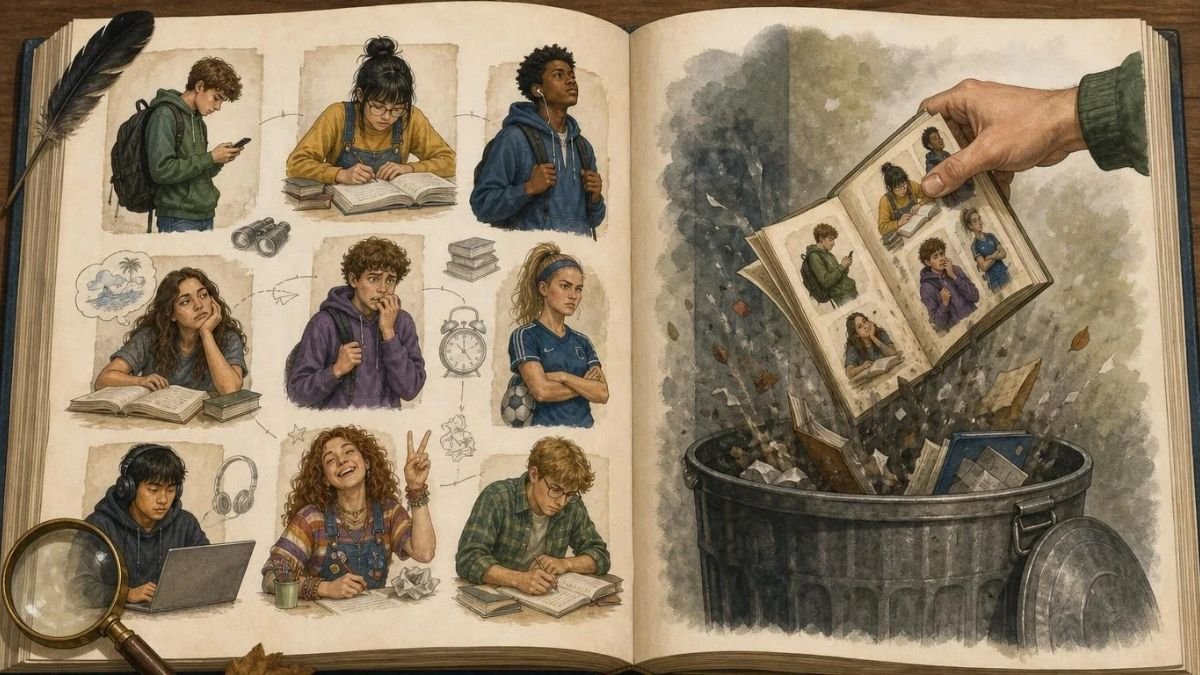
Then there is what I think of as the tyranny of visibility, and it is crueler than it first appears. This new world does not reward good work. It rewards visible work performed by visible people. And visibility is not distributed evenly across human temperaments. Some people are natural performers, comfortable in front of a camera, energized by attention, gifted at the particular art of being watched. And some people, often the deepest and most careful among us, are the opposite. They are private. They are slow. They do their best thinking alone, over months, and they would rather die than film themselves talking about it. The old world had a place for these people. The monastery, the laboratory, the quiet study, the workshop. You could be a genius and a hermit. The new world has almost no place for them at all. It systematically filters for extroversion and against depth, not because depth is less valuable but because depth photographs poorly. We are, without ever deciding to, selecting our public voices for their comfort in front of a lens, and quietly discarding a whole category of human brilliance that has always preferred the shadows. Think of every profound introvert you have ever known and ask yourself, honestly, how they would fare in a world that requires you to perform your worth daily. The tax on being quiet has never been higher.
And there is a homogenization that creeps in, which is almost funny in its irony. The entire promise of personal branding is authenticity, be yourself, be real, let people see the true you. But everyone is chasing the same reward, on the same platforms, shaped by the same algorithms, and so they converge. They converge on the same cadences of speech, the same visual grammar, the same confessional-but-polished tone, the same arc of vulnerability-followed-by-triumph. Scroll long enough and you will feel it, this vast sea of people all being authentically themselves in almost exactly the same way. The demand to have a distinctive personal brand produces, at scale, a strange sameness, a million unique individuals sanded down into a handful of successful templates. Authenticity became a genre. And a genre, by definition, has rules.
But the deepest cost, the one I most want you to feel, is what happens when the self becomes the product. Because here is the thing about the brand called You that the cheerful 1997 version left out. When your identity is your inventory, you can never clock out. A cobbler could close the shop, go home, and simply be a person. But if you are the brand, then there is no closing time, no separation between the self that works and the self that lives. Your relationships become content. Your grief becomes content. Your child's first steps become a moment you experience partly through the lens of whether it will perform well. The private self, the one that exists for no audience, that thinks unpolished thoughts and has ungraceful feelings and gets to simply be without being observed, gets slowly colonized by the public one. And a self that is always performing, always optimizing, always aware of the watching eye, is a self under a specific and exhausting kind of pressure that human beings were never built to sustain. We have monetized the one thing that was supposed to be beyond price, which is simply being a person, and the burnout epidemic among creators is not a coincidence or a personal failing. It is the entirely predictable result of asking a soul to be a storefront.
And one more thing, the one that the "just be authentic and put yourself out there" advice always conveniently forgets. That advice is easy to give when you are already charismatic, already attractive, already articulate, already connected, already the kind of person the camera loves. "Just be yourself" is a wonderful strategy if yourself happens to be exactly what the algorithm was built to reward. For everyone else, it is a cruel joke dressed as encouragement. The gatekeepers of the old world were biased, yes. But we should not pretend we replaced them with a fair meritocracy. We replaced them with a new set of gatekeepers, invisible ones made of code and crowd psychology, that have their own ruthless biases about who gets seen, and those biases are no more just than the old ones. They are just harder to argue with, because there is no editor to write an angry letter to. There is only the feed, indifferent as weather.
What this does to the people who make things
Nowhere does all of this land harder than in the creative industries, which is why I suspect you and I both care about it so much.
Here is a scene that plays out thousands of times a day now, and it should stop us cold. A writer finishes a novel. A real one, years of work, the best thing they have ever made. They take it to a publisher. And before the conversation is really about the book at all, before anyone has fallen in love with a sentence, the question comes: what is your platform? How many followers do you have? What is your reach? Because the brutal arithmetic of modern publishing is that a good book by an unknown is a bad bet, and a mediocre book by someone with a built-in audience of two million is a nearly guaranteed return. The audience you bring to the table has become more valuable than the quality of the thing you put on it. Publishers, increasingly, are not in the business of discovering great writers and building their readerships. They are in the business of monetizing readerships that already exist, and the writing is almost incidental. The tail is wagging a very large, very old dog.
The same logic has metastasized everywhere creative. Record labels sign the singer with the following, not the singer with the voice, because the following is the asset and the voice is a nice-to-have. Galleries watch an artist's follower count. Film gets greenlit on the basis of a name's social reach. Even in my own corner of the world, education and ideas, the reward flows not to the deepest teacher but to the most visible one, and those are very rarely the same person. Across the board, the work has been quietly demoted. It used to be the point. Now, in an awful lot of cases, it is the marketing collateral for the personality. You do not build an audience so you can share your work. You produce work so you can build an audience. The purpose and the means have swapped places, and most people didn't even notice the swap happen.
And think about what that does to the kind of art that gets made. Slow art, difficult art, art that takes ten years and does not explain itself, art that is uncomfortable or strange or ahead of its time, art that would have found its audience gradually, over decades, through the patient accumulation of reputation, that art has almost nowhere to grow now. It cannot survive the demand for immediate, visible, shareable traction. The masterpiece that needs twenty years to be understood dies in its first weekend because it did not trend. We are, in a very real sense, optimizing our entire culture for the art that performs well quickly, and quietly starving the art that only reveals its greatness slowly. And some of the most important things human beings have ever made were things that revealed their greatness slowly.
Van Gogh sold almost nothing in his lifetime. Barely a painting, by most accounts, while he was alive to know it. His genius was an echo that took decades to arrive, arriving long after he was gone. Now, I am not romanticizing his suffering, which was real and terrible and which I would not wish on anyone. But I want you to contemplate a genuinely disturbing question. In a world where survival as an artist requires you to be visible, likeable, and shareable right now, in a world where the work only matters after you have already won the attention, how many Van Goghs are there, right now, giving up? Not because their work is bad. Because their work is the kind that needs time, and time is the one thing this system refuses to grant.
So what on earth do we do about it
If you have made it this far, you might reasonably expect me to now tell you to log off, delete your accounts, retreat to a cabin, and make pure art for an audience of zero in noble poverty. I am not going to tell you that, because it is naive, it is self-indulgent, and it surrenders the field to exactly the people who least deserve it. Opting out is not integrity. It is just a quieter form of giving up, and it leaves the culture poorer, because the thoughtful people take their voices and go home while the loudest people inherit the earth.
But I am also not going to tell you to simply play the game harder, to optimize yourself into a fully commodified product and chase the attention until there is nothing left of you. That road ends in burnout and self-erasure, and it produces a life that is technically successful and quietly hollow. There is a third way, and it is harder than either extreme because it requires you to hold two things at once.
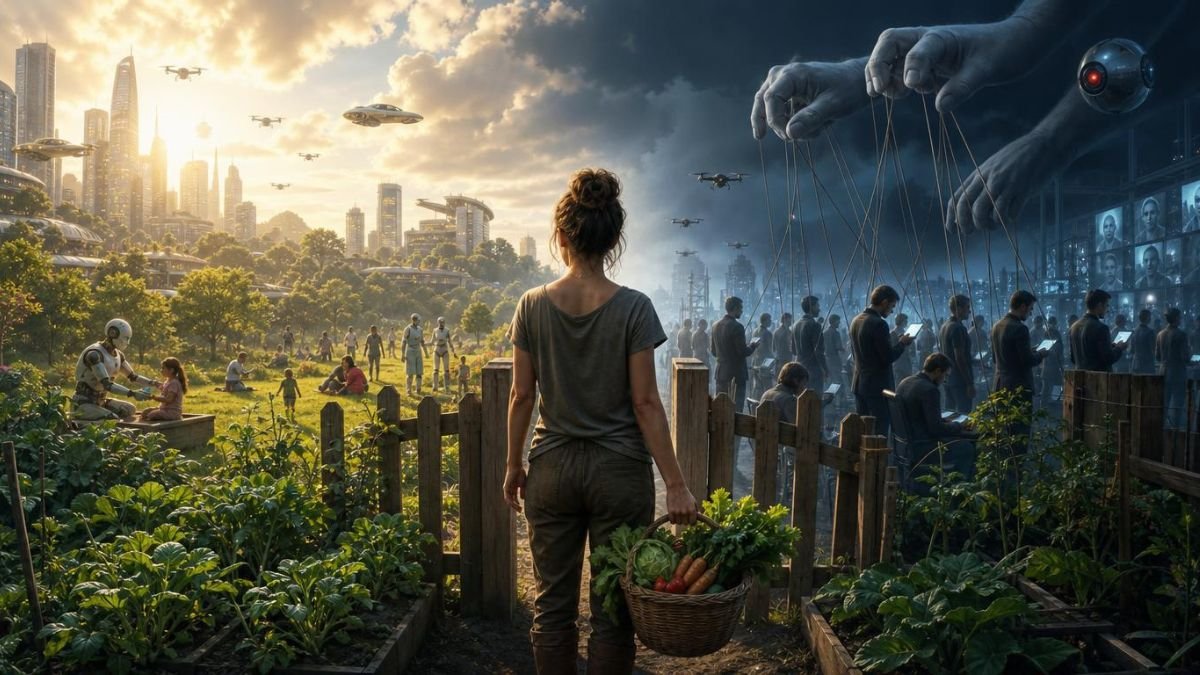
Here is the reintegration, the thing I actually believe. The old error was thinking the work is all that matters and the self is irrelevant. The new error is thinking the self is all that matters and the work is optional. The truth, the durable truth, is that these were never supposed to be in competition. The healthy relationship, the one our silversmith understood, is that the self is the door and the work is the room. You are allowed, even encouraged, to use who you are to invite people in. Your story, your voice, your face, your presence, these are legitimate ways to say come here, look at this, I made something for you. There is no shame in the invitation. The shame, and the rot, is when there is no room behind the door. When the invitation leads only to another invitation. When it is doors all the way down.
So the discipline, for anyone who makes anything, is this. Build a self worth knowing by doing work worth doing. Let your visibility be earned by and pointed at your craft, the way the burn mark on the cow was earned by and pointed at the quality of the herd. Use the attention economy, absolutely, but use it as a bridge to the work, never as a substitute for it. Refuse the trade where you get better at being seen and worse at the thing itself. Protect the private self ferociously, keep a room in your life that no audience is ever allowed to enter, because a self that is entirely public is a self with no interior, and there is no depth without an interior. And when you feel the pull to chase the reward that has nothing to do with quality, the viral moment, the cheap controversy, the performance of a person you are not, recognize that pull for what it is, which is the current trying to sweep you off the ground you actually stand on.
And here is the hopeful part, the thing I hold onto. Attention is fickle and cheap and fast, but it is not the same as loyalty, and it is not the same as trust, and it is certainly not the same as love. You can capture a million people's attention for eight seconds with almost nothing. But to keep people, to build the kind of audience that will follow you for years, that will buy what you make and defend your name and grow old alongside your work, you still, in the end, have to be good. The attention economy can get you in the door. Only the quality of what is behind the door lets you stay. The system rewards visibility in the short run, but over a long enough horizon, over the scale of a whole career, the old law quietly reasserts itself: the work has to actually be worth it. The echo can precede the sound for a moment. It cannot precede it forever. Eventually, somebody has to make the sound.
Which brings us back, one last time, to that person out there, the greatest living practitioner of something you love, working in obscurity while lesser talents bask in the light. I told you at the start that you would probably never hear their name, and that is still true, and it is still a small tragedy. But here is what I have come to believe. The answer to that unfairness is not to burn down the whole apparatus of visibility and connection, because that apparatus, for all its cruelty, has also let more people be heard than any system in human history. The answer is to be, ourselves, the kind of audience, and the kind of creator, that refuses to let the mark come fully loose from the craft. To keep asking, of ourselves and of the people we follow, not just who are you but what have you made, and is it good? To keep the two words tied together, the way they were always meant to be tied, back when a brand was a promise about the thing underneath it, and the promise was one you had to keep.
Because you can build a brand called You. Tom Peters was right about that. But the only version of it worth building is the one where, when someone finally opens the door, drawn in by who you are, they find a room full of the best work you could possibly make. That is the whole game. It always was. We just spent a few decades forgetting the order of it.
Questions worth arguing about
I would genuinely love to know where you land on all of this, because I have talked myself into and out of my own conclusions more than once while writing it. So here are the questions I keep chewing on, and I invite you to chew on them too, ideally out loud with someone who disagrees with you.
Think about the last three creators, artists, writers, or teachers you chose to follow or support. Be honest with yourself: did you find them because of the quality of their work, or because of who they are and how they made you feel? And does the answer bother you, or is it simply how humans have always worked?
Is there a version of "who you are" that is a completely legitimate part of great work, and a version that is a hollow substitute for it? Where, exactly, is the line between them, and how do you tell which side of it you are standing on with your own creative choices?
If you make things, ask yourself the uncomfortable one: over the last year, did you get better at your actual craft, or better at the marketing of it? And if it was the marketing, was that a free choice, or was it the current carrying you somewhere you did not quite mean to go?
For the deepest, quietest, most private people you know, the ones who would make extraordinary things but will never film themselves doing it, is there any place left for them in this economy? And if there isn't, what is it costing all of us that we cannot see?
And the big one, the one I cannot answer: are we living through a democratization that finally let the silenced be heard, or a great flattening that rewards the visible over the valuable? Or, as I have come to suspect, are we living through both at exactly the same time, and is the whole task of a thoughtful life now learning to tell them apart?
If any of this stirred something in you, do the thing that actually matters more than a like ever could. Go find that slow, deep, difficult creator whose work you love and whose name almost nobody knows, and support them directly, loudly, on purpose. Tell one other person about their work. Be, for one afternoon, the kind of audience that rewards the room and not just the door. Because in the end, the culture we get is the one we pay attention to, and attention, as we have learned today, is the one thing you actually get to choose where to spend. Spend it on something worth making.





0 Comments