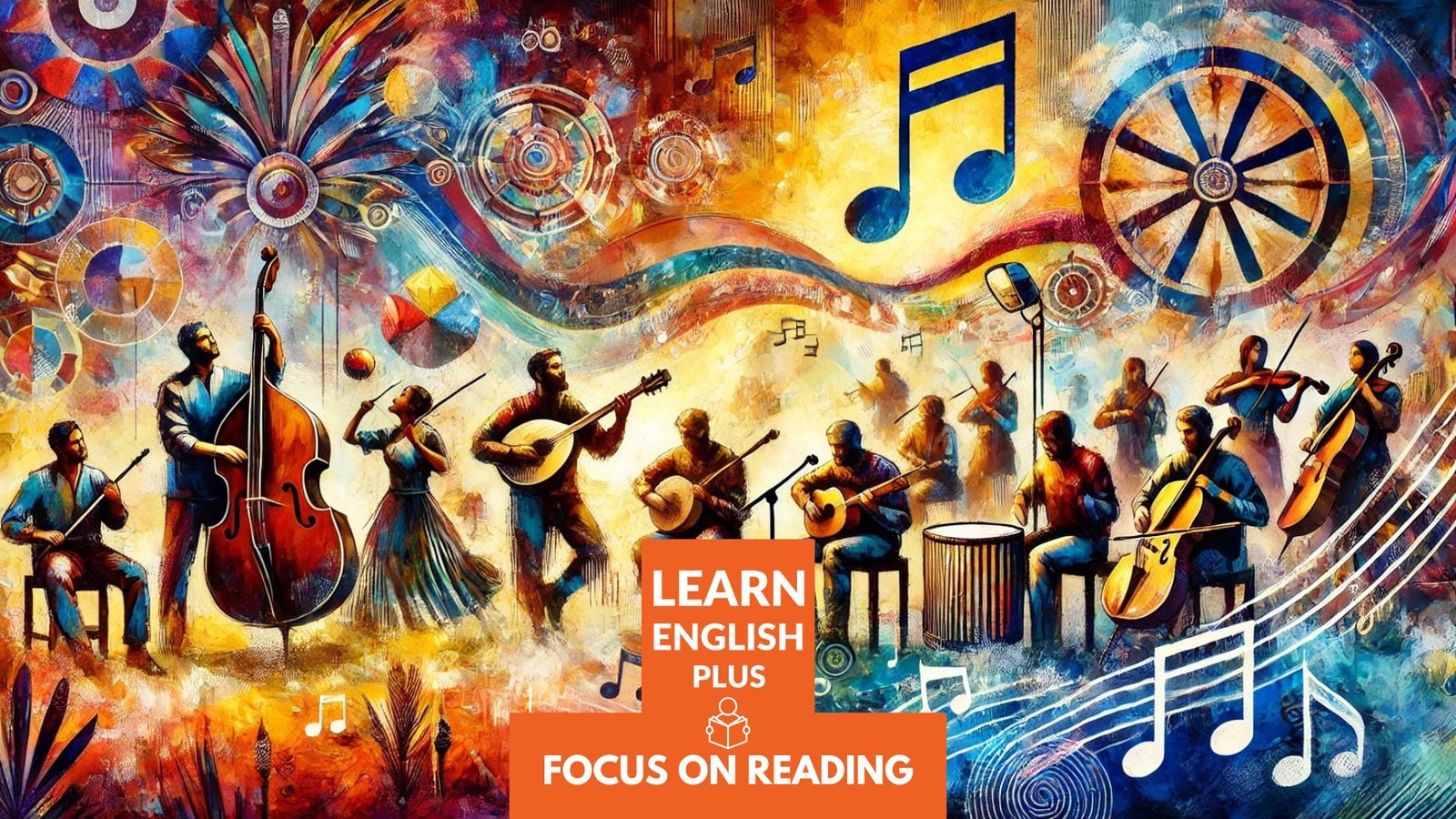
Welcome back, dedicated learners! This reading passage delves into the significant role music plays in shaping and reflecting cultural identity. As you prepare for international exams like the SAT, TOEFL, and IELTS, remember that strong reading comprehension involves more than just understanding words; it's about grasping the nuances of the text and managing your time effectively.
Here are some useful reading strategies to employ as you work through this exercise:
- Preview the Questions: Before reading the passage, quickly look at the questions. This will give you an idea of what information to focus on as you read.
- Read Actively: Engage with the text by highlighting key points, underlining important information, or making brief notes in the margins.
- Identify the Author's Purpose: Think about why the author wrote this passage. What message are they trying to convey about music and culture?
- Pay Attention to Transitions: Words and phrases that connect different parts of the text (e.g., "however," "furthermore," "in contrast") can help you understand the flow of ideas.
- Don't Panic About Unfamiliar Words: Use the context to try and figure out the meaning of new vocabulary. You don't need to understand every single word to comprehend the main ideas.
For this passage and the accompanying 10 questions, aim to complete everything within 15-20 minutes to practice your time management skills for exam day.
Now, let's immerse ourselves in the reading passage!
Reading Passage
Music, in its myriad forms, serves as a potent and ubiquitous marker of cultural identity. From ancient tribal chants to contemporary pop anthems, musical traditions encapsulate the history, values, and social structures of a particular group. It acts as a sonic tapestry, weaving together shared experiences and fostering a sense of belonging among individuals who identify with a specific culture. The rhythms, melodies, and instrumentation unique to a culture often evoke a powerful emotional resonance, serving as a visceral link to heritage and collective memory.
One of the key roles of music in cultural identity is its ability to transmit narratives and historical accounts across generations. Traditional folk songs and ballads often recount significant events, legendary figures, or the everyday lives of past communities. These musical narratives not only preserve history but also instill a sense of continuity and shared identity among members of a culture. The act of performing and listening to these songs becomes a ritual that reinforces cultural values and strengthens social bonds.
Furthermore, music often plays a crucial role in cultural celebrations and ceremonies. From religious rituals to secular festivities, music provides an emotional and unifying backdrop for communal experiences. The specific types of music performed, the instruments used, and the manner of performance are often deeply intertwined with the cultural significance of the event. These musical performances serve as powerful expressions of cultural identity, both for those participating and for those observing.
The globalization of music in the modern era presents both opportunities and challenges to the relationship between music and cultural identity. While exposure to diverse musical traditions can foster intercultural understanding and appreciation, it can also lead to the homogenization of musical styles and the potential erosion of unique cultural expressions. The dominance of certain Western musical genres, for example, has raised concerns in some cultures about the preservation of their traditional musical forms.
However, even within a globalized musical landscape, local and regional musical traditions often persist and adapt, demonstrating the enduring power of music to reflect and reinforce cultural identity. Artists frequently blend traditional musical elements with contemporary styles, creating innovative forms of expression that speak to both local and global audiences while still maintaining a connection to their cultural roots. This dynamic interplay between tradition and innovation underscores the resilience and adaptability of music as a key component of cultural identity in an ever-changing world.
Reading Comprehension Quiz
Keywords and Phrases for Advanced English Language Learners
Here are 10 keywords and phrases from the reading with their conversational definitions and usage:
- Myriad Forms: (Used in: "Music, in its myriad forms, serves as a potent...") This means a very large number of different types or kinds. In the reading, it emphasizes the vast variety of musical expressions.
- Potent Marker: (Used in: "...serves as a potent and ubiquitous marker of cultural identity.") This describes something that is very strong and effective in indicating or identifying something else (in this case, cultural identity).
- Ubiquitous: (Used in: "...a potent and ubiquitous marker of cultural identity.") As discussed in the quiz, this means present or existing everywhere. It highlights how music is a widespread aspect of culture.
- Encapsulate: (Used in: "...musical traditions encapsulate the history, values, and social structures...") This means to express the essential information or meaning of something in a brief form. Here, it shows how music contains and represents the core elements of a culture.
- Sonic Tapestry: (Used in: "It acts as a sonic tapestry, weaving together shared experiences...") This is a metaphor comparing music to a piece of woven fabric made of sounds. It illustrates how music combines different elements to create a unified representation of shared cultural experiences.
- Emotional Resonance: (Used in: "The rhythms, melodies, and instrumentation unique to a culture often evoke a powerful emotional resonance...") This refers to the quality of music that makes people feel strong emotions or have a deep connection to it. In this context, it's about the emotional link to cultural heritage.
- Visceral Link: (Used in: "...serving as a visceral link to heritage and collective memory.") This describes a connection that is felt deeply and instinctively, as if in one's gut. It emphasizes the profound and immediate connection music provides to cultural roots.
- Instill a Sense of Continuity: (Used in: "...These musical narratives not only preserve history but also instill a sense of continuity...") This means to gradually but firmly establish a feeling or belief of unbroken connection with the past. It highlights how music helps maintain a cultural legacy.
- Communal Experiences: (Used in: "...music provides an emotional and unifying backdrop for communal experiences.") These are shared events or activities that bring a community together. Music often plays a vital role in enhancing these shared moments.
- Homogenization: (Used in: "...it can also lead to the homogenization of musical styles...") This refers to the process of making things similar or uniform. In the context of globalization, it describes the concern that musical styles might become less distinct.
- Erosion: (Used in: "...and the potential erosion of unique cultural expressions.") This means the gradual wearing away or decline of something. Here, it refers to the potential loss of distinct cultural forms of music due to globalization.
- Resilience and Adaptability: (Used in: "This dynamic interplay between tradition and innovation underscores the resilience and adaptability of music...") These terms describe the ability of music to withstand challenges and to change in response to new conditions. This highlights how music continues to be a part of cultural identity even in a changing world.








0 Comments