Some letters are not meant to arrive. They are meant to keep the sender alive.
Teaser
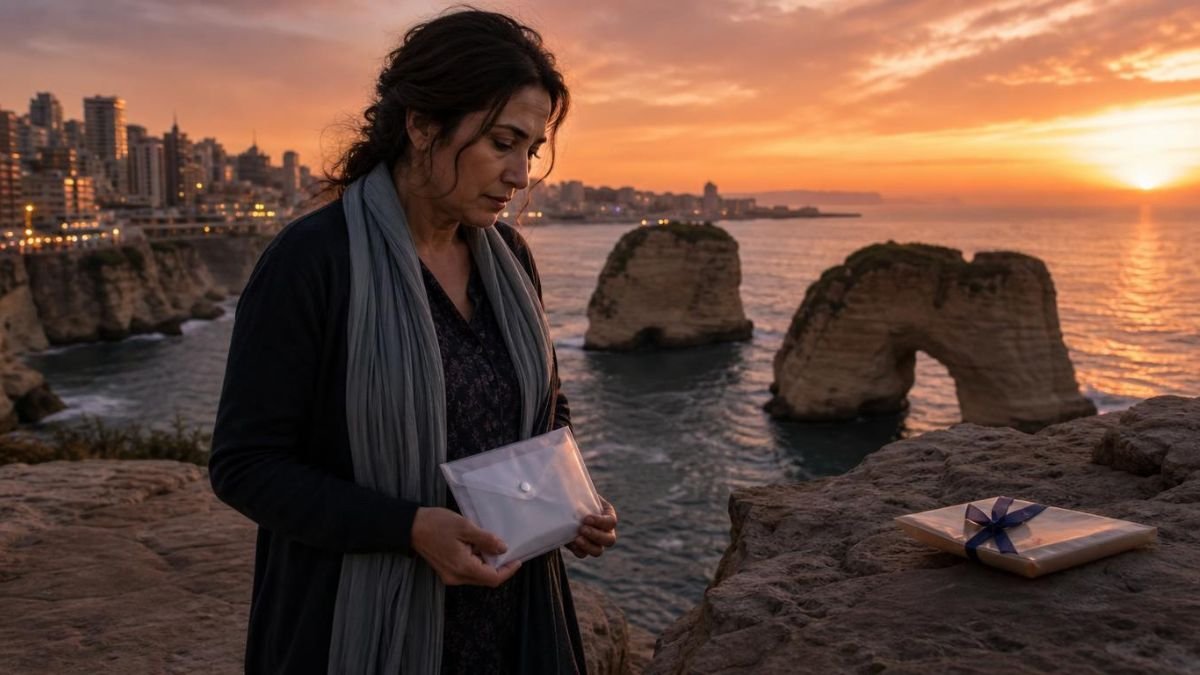
Every evening, as the sun bleeds into the Mediterranean, a woman walks to the edge of the Raouché Rocks clutching a waterproof envelope. Inside is a letter addressed to a man the sea swallowed ten years ago. The fishermen of Beirut call her majnouni—the mad one. Her daughter calls her stubborn. But Nawal Hariri knows something the rest of them do not: these letters are the only thread still connecting her to the surface of her own life. Tonight, however, she finds a letter waiting for her on the rocks. Who left it there, and what does it say?
Letters to the Horizon | Short Story by Danny Ballan
The ink bled at the edges where Nawal’s thumb had pressed too hard against the paper, a violet bruise spreading across the date she’d written in the top corner: October 14, 2024. She folded the letter along the same creases she’d been folding letters along for ten years—thirds, precise as a pharmacist measuring powder, the way Hadi used to fold his nautical charts before stowing them in the drawer beside their bed.
The plastic sleeve she slid it into was the kind used for passports at the copy shop on Hamra Street. She’d bought a box of five hundred the year after the shipping company declared Hadi’s vessel lost, and she was down to her last forty-three. That arithmetic, 457 letters cast into the Mediterranean, never failed to stun her. She could have built a small library with the pages she’d surrendered to salt.
She tucked the sealed letter into the interior pocket of her coat and locked the apartment. The elevator had been broken since the blast in 2020, so she took the stairs, her palm finding the banister the way the blind find walls—automatically, with a faith that what anchors you will still be there.
Beirut in October was a city of contradictions. The heat had not fully surrendered to autumn, so the evenings wore the city like a damp shirt, humid and clinging. Nawal walked west along Corniche al-Manara, past the old man who sold roasted corn from a cart that listed to one side, past the lovers on the benches who did not see her because people who carry grief for a decade develop a kind of invisibility. She was sixty-one years old and she walked with the posture of a woman who had once been admired at parties—shoulders drawn back, chin parallel to the ground, as though balancing an invisible book on her head the way her mother had taught her in a house in Byblos that no longer existed.
The Raouché Rocks appeared as they always did: enormous, ancient, and utterly indifferent to human longing. The natural stone arches rose from the water like the ribs of a cathedral that God had started and then abandoned, leaving only the bones. Some evenings, tourists clustered at the railing above to photograph the rocks at sunset, but tonight it was only Nawal and a stray cat that had taken up residence near the concrete bench she considered hers.
She sat. The cat studied her with the unsentimental gaze of a creature that had never needed another being to feel complete. Nawal envied it.
“Dear Hadi,” she murmured aloud, reciting tonight’s letter as she always did before releasing it. She did not do this for the sea’s benefit. She did it because the act of speaking the words made them real in a way that writing alone could not. Writing was a conversation with absence. Speaking was an act of presence.
“Today I replanted the jasmine on the balcony. You would say I overwatered it; you always said I overwatered everything. Maybe you were right. Maybe love works the same way. Maybe I have been overwatering your memory, drowning it so thoroughly that it can never dry out and become just a memory. But that is the point, habibi. I refuse to let you become just a memory.”
She paused. The sun was midway through its nightly vanishing act, a swollen orange coin dropping into the slot of the horizon.
“Reem came to visit. She brought the grandchildren. The boy, Sami, he’s seven now, asked about you. He asked why your photo is on the shelf but you never come for dinner. Reem changed the subject. I did not. I told him you were on a very long voyage and that sailors sometimes take years to come home. He asked if you were like Sinbad. I said yes. Better than explaining the alternative, don’t you think?”
A group of teenagers passed behind her, their laughter a bright, careless sound that snagged on her awareness the way a thorn catches a sleeve. She waited until they were gone.
“I miss the way you burned the morning coffee. I know that sounds absurd. You ruined it every single day—too much cardamom, not enough sugar, left on the stove until it was more smoke than liquid. But that smell was the first thing I encountered each morning, and now the kitchen smells only of kitchen, and there is a word for that kind of emptiness, but I haven’t found it in any of the three languages I speak.”
She stood, walked to the edge of the railing, and held the letter over the water. This was the ritual’s pivot point, the moment between holding on and letting go. Every evening for ten years, she had stood at this exact fulcrum, and every evening the letting go still cost her something—a small, bright coin of pain deposited into the sea’s infinite account.
She released it. The letter caught the wind, hesitated, as if even the air were uncertain where it should go, then drifted down to the water, where it landed softly, a white rectangle on the shifting dark surface. The current received it without ceremony. Within moments, it was carried past the arch of the nearest rock and out toward the open Mediterranean, that vast, indifferent body that had swallowed her husband’s fishing trawler somewhere between Jounieh and Cyprus on a night when the weather was supposed to be clear.
The shipping company’s report had used the word “anomaly.” An anomaly in the weather pattern. As though the storm that killed three men and splintered a thirty-meter vessel were simply a deviation in a spreadsheet, a number that did not align. Nawal had kept the report in the same drawer where Hadi had kept his charts. She had not opened the drawer in seven years.
• • •
She had not always written letters. The first year after Hadi vanished, she had done what the world expected of her: she wore black, received visitors who brought food and platitudes in equal measure, sat in the living room while women she barely knew told her that God’s plan was beyond human understanding. Her mother-in-law, Imm Hadi, a woman built like a cedar, unbending even in grief, had told her to pray.
“Prayer reaches places that letters cannot,” the old woman had said, her voice carrying the authority of someone who believed her own suffering gave her jurisdiction over everyone else’s.
Nawal had prayed. She prayed until her knees ached and her words felt hollow, and then she stopped praying and started writing, because writing, at least, did not require her to believe that someone was listening. Writing only required that she had something to say, and she always had something to say to Hadi. That was the cruelest trick of grief—it did not diminish love; it distilled it, boiling away the ordinary disagreements and domestic frictions until only the essence remained, pure and scalding.
Reem, their only daughter, had tolerated the letters for the first three years. By the fourth, her patience had thinned to translucence.
“Mama, this is not healthy,” Reem had said, standing in the kitchen of Nawal’s apartment with her arms crossed in the posture of a woman who had inherited her father’s stubbornness but applied it in the opposite direction. “You’re talking to the sea. The sea does not talk back.”
“Neither does your father’s headstone, but your aunt visits it every Friday,” Nawal had replied, and the argument had ended there, because it was unanswerable.
There was no headstone, of course. There was nobody. The sea had offered no evidence that Hadi Hariri had ever existed, no scrap of wreckage, no shred of the blue jacket he always wore on the boat. The absence of proof created an impossible architecture in Nawal’s mind—a house with no foundation but many rooms, and in each room a different version of what might have happened. In one room, Hadi had washed ashore on an unnamed island and was living a second life, amnesiac and sun-browned. In another, he was at the bottom of the Mediterranean, his bones becoming coral. In a third, the room she visited most often, though she would never admit it to Reem, he was simply somewhere else, somewhere beyond the horizon line, still folding his charts, still burning the coffee, still alive in the way that light from dead stars is still alive: traveling, persisting, arriving late.
• • •
Tonight, when she turned from the railing, she saw it.
A letter. Sitting on the concrete bench where she had been sitting moments before. A white envelope, sealed, with no address and no stamp, resting on the surface as though it had been placed there while she was occupied with the sea.
She looked around. The promenade was empty. The stray cat was gone. The roasted-corn vendor had packed his cart and disappeared. There was no one.
Her hands, when she picked up the envelope, were steady. This surprised her. She had expected trembling, had expected the theatrical response that grief supposedly demanded. But her hands were those of a woman who had spent a decade preparing for the impossible and was therefore unsurprised when it arrived.
She opened the envelope. Inside was a single sheet of paper, folded in thirds—precise, the way a pharmacist measures powder. The handwriting was not Hadi’s. Hadi’s handwriting had been a disaster, a seismograph recording permanent earthquake. This handwriting was neat, careful, feminine.
The letter read:
Dear lady of the rocks,
I have watched you from my balcony for three years. I live in the building across the Corniche, the one with the broken awning on the sixth floor. Every evening I see you walk to the railing and release something into the sea, and every evening I wonder what it is you are releasing. I do not mean the paper. I mean the other thing; the invisible thing that leaves your body when you open your hand.
My name is Dunya. I am twenty-four. I moved to Beirut from the south after my village was shelled and my fiancé was killed. I was going to marry him in June. He was a teacher. He taught mathematics to children who would rather have been playing football, and he made them love it anyway.
I write to you because I do not know how to do what you do. I do not know how to carry grief and still walk upright. I do not know how to face the sea every evening and ask it for nothing. I am asking you to teach me.
I will be at the bench tomorrow evening at the same time. If you are willing, sit beside me. If you are not, I understand. Some grief is too private for company.
Yours, Dunya
Nawal read the letter twice. Then she folded it—in thirds, precise—and placed it in the pocket where her own letter had been.
The Mediterranean was black now, the last light gone, the horizon erased. Somewhere out there, 457 letters were dissolving or drifting or settling on the ocean floor, and none of them had ever received a reply. But this letter, this unexpected, unasked-for letter, was not a reply. It was something more disorienting. It was an echo. Someone else’s grief calling out to hers across the distance of a street.
She walked home slowly, taking the stairs because the elevator was still broken, finding the banister again in the dark. Inside the apartment, she placed Dunya’s letter on the kitchen table and sat across from it as though it were a guest.
Then she did something she had not done in ten years. She took out a fresh sheet of paper and wrote a letter that was not addressed to Hadi.
Dear Dunya,
I cannot teach you how to carry grief. No one taught me. The weight simply became familiar, the way a tree grows around a fence post; not because the tree chose the fence, but because it had no other direction to grow.
But I can sit beside you. That, I think, is not nothing.
Tomorrow, then.
She sealed the letter in an envelope, but she did not put it in a waterproof sleeve. This letter was not meant for the sea. It was meant for the land, for the living, for the woman across the Corniche who was twenty-four and whose fiancé had taught children to love mathematics.
Nawal placed the letter by the door so she would not forget it in the morning. Then she went to the kitchen and set the coffee pot on the stove. She added too much cardamom, not enough sugar, and left it on the heat until the apartment filled with the smell of something burning.
She drank the terrible coffee standing by the balcony, looking out at the dark Mediterranean, and for the first time in a decade, she did not feel as though she were the only person speaking into the void.
The sea, as always, said nothing. But tonight, that silence felt less like absence and more like permission; a vast, salt-scented permission to begin, at last, the long and terrifying work of turning back toward the living.
Letters to the Horizon: The Crucible
Author's Commentary and Confessional
The story started with a question I could not put down: what happens to a message when there is no receiver?
Not a philosophical question, at first. A practical one. I was thinking about the physics of it. You speak, the sound travels, it hits nothing, it dissipates. You write, the paper absorbs ink, the ink dries, the paper waits. If nobody reads it, has anything happened? Most of us would say no. Communication requires two ends of a line.
And then I thought: that is obviously wrong, and everyone knows it is wrong, because people talk to the dead constantly. They talk to gravestones and photographs and empty passenger seats. They talk to the ceiling at two in the morning. If communication really required a receiver, none of that would work, and yet it works well enough that people build their whole lives around it.
So the "what if" that started this story was not about a woman or a sea or a shipwreck. It was this: what if the message is not for the receiver at all? What if the entire function of the letter is what it does to the sender in the moment of writing it?
Once I asked that, Nawal arrived almost immediately, and she arrived with the arithmetic already attached. Four hundred and fifty-seven letters. Forty-three sleeves left in the box. I wrote those numbers into the second paragraph before I understood why they mattered, and only later did I see what I had built: a woman who bought five hundred plastic sleeves in the first year, which means that in the first year of her widowhood, she had already decided how long this was going to go on. Five hundred evenings. She did the math while the grief was still fresh, and she planned for it the way you plan for a long trip. That detail is the most frightening thing in the story to me, and I did not put it there on purpose. I found it.
Here is my first confession. In the earliest complete draft, the letter on the bench was from Hadi.
He was alive. He had washed up on the Turkish coast, spent some years without his memory, recovered it slowly, and could not bring himself to come home because the man who came back would not be the man she had spent a decade addressing. It was a good draft. It made people cry when I read it aloud to myself, which is the only audience a first draft gets in my house.
I killed it because it answered the wrong question. The moment Hadi is alive, the story stops being about grief and starts being about a plot. Every sentence before the reveal becomes a setup, and the reader's job changes from feeling to detecting. Worse, it makes the sea meaningful. It turns an indifferent body of water into a device with intentions, and the whole spine of this story is that the sea does not care and never did. If Hadi comes back, the Mediterranean is a character. If Hadi never comes back, the Mediterranean is a mirror, which is much more useful and much more true.
Second confession. I wrote a version where the letter was from Reem.
The daughter, writing under a false name, inventing a grieving young woman as a kind of therapeutic trap to pull her mother back into the world of the living. That draft had teeth. There was a scene where Nawal recognized her daughter's handwriting halfway through the second paragraph and kept reading anyway, and then went to the bench the next evening knowing exactly who would be waiting. I loved that scene and I still think about it.
I cut it for the same reason I cut the first one. It made the story a trick. And it made Reem's love into a manipulation, which is unfair to her, because Reem's impatience in the story is already a form of love. She is not the villain. She is the only person in the story who is trying to stop a slow drowning, and she is doing it badly, in the way people do it badly, by arguing.
Deleted scene: the drawer. There was a long passage where Nawal finally opens the drawer that holds both Hadi's nautical charts and the shipping company's report, and reads the word "anomaly" again after seven years. I wrote three pages. I cut all of them. The unopened drawer is more powerful than the opened one, and the moment I let her open it I was giving the reader a release the character had not earned yet. Some doors are load-bearing.
Scrapped character: a fisherman, Abu Khalil, who over the years had pulled dozens of Nawal's letters out of the water and kept them, unread, in a wooden crate in his boat shed. He was going to be the one who left the envelope on the bench. He is a lovely character and he ruins everything. He gives the sea a mailbox. He turns an ecosystem of indifference into a postal service, and he lets the reader off the hook by proving that someone was listening all along. Nobody was listening. That is the point. That is the whole point.
The hardest technical problem in the piece was keeping Nawal from becoming pitiable. Pity is death for a character like this. Pity means the reader stands above her and looks down, and once that happens, nothing she does can surprise you. So I gave her posture, literally. The invisible book on her head, the shoulders drawn back, the woman who was once admired at parties. I gave her irony about her own ritual. I gave her the joke about Sinbad, which is the moment I decided I liked her. When Sami asks why his grandfather never comes for dinner and she says he is on a very long voyage, she is lying to a child, and then she turns to the reader and says, essentially, "better than the alternative, don't you think?" That is a woman who knows exactly what she is doing. That is not a woman drowning. That is a woman who has chosen a very particular way to stay afloat and is prepared to defend it.
The breakthrough was the coffee.
For weeks I did not know how to end this. Every ending I tried was either too closed, where she goes to meet Dunya and they hug and the sun comes up on a new chapter, or too open, where she stands on the balcony and thinks about maybe possibly considering the future. Both were terrible. Then I remembered the burnt coffee from the third page, the detail I had planted with no idea what it was for, and I realized that the ending had been sitting there since the beginning. She makes the coffee badly. On purpose. Too much cardamom, not enough sugar, left on the heat until the apartment fills with smoke.
That is not moving on. Do not mistake it for moving on. She is not letting him go. She is doing something stranger and braver, which is taking his ruined ritual into her own hands and performing it herself. She becomes the one who burns the coffee. The absence gets metabolized into a habit she now owns. That is as close to hope as this story is willing to go, and I think it is closer than a hug would have been.
The surprise: I wrote Dunya's letter before I decided who wrote it. I sat down and wrote it blind, in a voice I did not plan, and the line that came out was "I do not mean the paper. I mean the other thing, the invisible thing that leaves your body when you open your hand." I did not know I thought that. I still am not sure I understand it fully, and I have decided that is fine. Some sentences arrive from a slightly deeper part of the building than the one you are standing in.
Last confession, and this one is real. I do not know whether Nawal goes to the bench the next evening.
I wrote the word "permission" and I stopped, because that is where my honesty ran out. I know she wants to. I know she wrote back. I know she left the envelope by the door so she would not forget it. But I have known people who wrote the letter and left it by the door and did not go, and I was not willing to promise you something I have not consistently seen happen in the world. What I will promise is this: for the first time in ten years, she is not the only person speaking into the void. Whether that is enough is not up to me anymore. It might be up to you.
The Round Table: Characters' Commentary and Confessionals
There are six chairs and seven places. The seventh has no chair, only a gap between Nawal and the window, and nobody sits in it, and nobody mentions it until the end.
Danny: Thank you all for coming. Some of you had a longer trip than others.
Hadi: Is that a joke?
Danny: It was going to be.
Hadi: Keep working on it.
Nawal: Before we start, I want to say one thing, and then I will behave. I do not want the word "healing" used in this room. Not once. Every person who has ever said that word to me was trying to make themselves comfortable, not me.
Danny: Noted.
Nawal: I am not finished. I also do not want to be called brave. I walk to a rock and I drop paper in the water. Firefighters are brave. I am a woman with a routine.
Reem: That is the first honest thing you have said in ten years.
Nawal: Reem.
Reem: What? He said we could say anything.
Danny: I did say that.
Reem: Then I want to start with a complaint, and it is not to my mother, it is to you. You wrote me as the obstacle.
Danny: Go on.
Reem: I get one scene. One. I stand in a kitchen with my arms crossed and I say "Mama, this is not healthy," and then my mother destroys me with one line about my aunt visiting a headstone, and the narrator informs the reader that the argument ended there because it was unanswerable. Unanswerable. You gave her the last word and then you told everyone that it was unanswerable in case they were considering answering it.
Danny: That is fair.
Reem: It is not fair, that is why I am raising it. I have an answer. Do you want to hear it?
Danny: Yes.
Reem: My aunt visits a headstone for twenty minutes on a Friday and then she goes to lunch. She has a life with a grave in it. My mother has a grave with a life in it. Those are not the same thing and everyone in this room knows it.
Nawal: That is a good line.
Reem: I have had ten years to work on it.
Nawal: It is still wrong.
Reem: Of course it is wrong, I am the daughter, I am wrong professionally.
Dunya: Can I say something? I have been quiet for some time and I am already uncomfortable.
Danny: Please.
Dunya: I want to know why I do not have a name for him.
Danny: For your fiancé.
Dunya: I have a village. I have a shelling. I have a June wedding that did not happen. I have a man who taught mathematics to children who wanted to play football and made them love it anyway, which, by the way, is the best sentence you wrote about anybody in this entire story, and it is about a man you did not bother to name.
Danny: I know.
Dunya: That is not an answer.
Danny: No. Let me try to give you one. The letter you wrote is the only place your grief exists in the story, and it is four paragraphs long. If I name him, the reader starts building him. They want to know how he died, where, what he looked like, whether you found the body. And the moment they start building him, they stop looking at Nawal, and this story only has room for one shipwreck.
Dunya: So I am a mirror.
Danny: You are a second speaker. There is a difference.
Dunya: Is there? Because from where I am sitting, I appear in the last third, I hand her a reason to keep living, and then the story ends before I get to say anything in my own voice that is not a request. I am not a character. I am a doorbell.
Imm Hadi: She is right.
Danny: Imm Hadi.
Imm Hadi: I have been waiting my turn. In my day we did not interrupt. I get one paragraph, one line of dialogue, and a description that compares me to a tree.
Nawal: A cedar.
Imm Hadi: A cedar is still a tree. And I am "unbending," which is what people call a woman who does not collapse when they expect her to. I lost my son. Nobody in this room has asked me about that, including the man who invented me.
Danny: I am asking now.
Imm Hadi: Too late is not the same as never, so I will answer. I told her to pray. Everyone in that room agreed that it was the wrong thing to say. You wrote it so the reader would agree too. "Prayer reaches places that letters cannot," and then a line about how I believed my suffering gave me jurisdiction over everyone else's. Jurisdiction. You made me a judge.
Danny: You were a judge.
Imm Hadi: I was a mother whose son went out on a boat and did not come back, and the only thing I had left was a sentence I believed. You are allowed to think the sentence is useless. You are not allowed to pretend I said it to be cruel.
Nawal: She did not say it to be cruel.
Reem: Mama.
Nawal: She did not. She said it because it worked for her, and she wanted it to work for me, and it did not, and neither of us knew what to do with that. That is not cruelty. That is two women in a room with nothing to offer each other.
Imm Hadi: Thank you.
Nawal: Do not thank me, I still think you were unbearable.
Imm Hadi: Naturally.
Hadi: Can I go? I would like to complain also, since apparently that is the format.
Danny: It appears to be, yes.
Hadi: You gave me three things. I burn coffee. I fold charts in thirds. I wear a blue jacket. That is my entire existence. Thirty-one years of marriage, one daughter, a trawler I paid off over nine years, and my whole self is a smell in a kitchen and a way of handling paper.
Danny: That is the design.
Hadi: Explain the design to me.
Danny: You are not in the story. You are what is left of you in her, and what is left of a person after ten years is never the big things. It is not opinions or achievements. It is the smell of the kitchen at seven in the morning. It is a way of folding paper that she now does without noticing that she is doing it.
Hadi: She folds like me.
Danny: Every letter. Thirds, precise as a pharmacist measuring powder. She has been doing your hands for a decade.
Hadi: Nawal.
Nawal: Do not.
Hadi: I want to ask you something in front of everybody because I will not get another chance. Why do you keep doing it?
Nawal: You know why.
Hadi: I do not. I am a smell and a jacket, remember. I have no interior life. Tell me.
Nawal: Because when I write to you, you exist for about forty minutes.
Hadi: And when you stop writing?
Nawal: Then you are a man who died in 2014 between Jounieh and Cyprus because of an anomaly in a weather pattern.
Hadi: I am that either way.
Nawal: Not at eight fifteen in the evening.
Reem: This is what I am talking about. This exact conversation. This is what I have been living next to for ten years.
Nawal: Nobody asked you to live next to it.
Reem: You did. Every week. Every Sunday when I bring the children and you have that face on, the one that says do not ask me how I am, and I do not ask, and then I drive home and my husband says how was your mother and I say fine, and we both know what fine means.
Nawal: So stop coming.
Reem: There it is.
Nawal: I did not mean it like that.
Reem: You never mean it like that, you just say it and let me carry it home.
Danny: Reem, can I ask you something the story never asked you?
Reem: You wrote the story. Ask.
Danny: What do you do with it?
Reem: With what?
Danny: Your grief. He was your father.
Reem: [pause] I do not perform it.
Nawal: Meaning I do.
Reem: Meaning I have two children and a job and a husband and a mother who walks to Raouché every evening in all weather, and one of us had to keep the accounts. So I kept the accounts. I called the shipping company. I sat with the lawyer. I signed things. I am the one who read that report, Mama, all of it, not just the word "anomaly," and I am the one who decided you should never read page eleven.
Nawal: What is on page eleven?
Reem: No.
Nawal: Reem.
Reem: No. Ask the man who wrote it.
Danny: I am not going to answer that either.
Nawal: Of course you are not.
Danny: If I tell you what is on page eleven, I have to tell the reader, and then the story is about a document instead of about you. Some information is more useful as a locked drawer.
Nawal: You people are all the same. Him, her, you. Everyone protecting me from things I have already survived.
Dunya: Can I ask her something?
Danny: You can ask anybody anything.
Dunya: Nawal. The plastic sleeves.
Nawal: What about them.
Dunya: Five hundred passport sleeves. Four hundred and fifty-seven of them are in the sea.
Nawal: Yes.
Dunya: In the sea that took him.
Nawal: [pause] Say what you are saying.
Dunya: I am saying that for ten years you have been putting plastic into the water every single evening, and the story presents this as devotion, and nobody in the entire story mentions it, including the fisherman's widow who should know better than anyone what is in that water.
Reem: Oh, I like her.
Nawal: You are twenty-four.
Dunya: That is not a rebuttal.
Nawal: No. It is not. [pause] I thought about it in year three. I remember exactly when. I was in the shop on Hamra buying the second box, and the boy behind the counter asked me what I needed five hundred passport sleeves for, and I could not answer him, and I stood on the street afterward and thought: you are polluting his grave.
Dunya: And?
Nawal: And I bought them anyway.
Dunya: Why?
Nawal: Because if I used paper alone it would come apart before it reached the arch, and I needed to watch it go all the way out. I needed to see it leave. That was the whole ritual, the watching. So I chose the version of the ritual that let me watch, and I told myself the sea is large and I am one woman, which is what everyone tells themselves, and which is true, and which is also how a sea dies.
Danny: I want to note something, because this is the most honest exchange in the room, and I did not write it. It is not in the story. Nobody in the story ever says the word plastic out loud.
Dunya: Why not?
Danny: Because I did not think of it.
Dunya: You did not think of it.
Danny: I thought of the passport sleeves because they are precise and slightly bureaucratic and they made me feel like the ritual was real. I did not follow the object out to sea. That is a failure of imagination and I am not going to dress it up as a choice.
Reem: Write it down. He admitted something.
Imm Hadi: He will edit it out later.
Danny: I will not.
Imm Hadi: They always say that.
Dunya: Since we are admitting things. There are people who are going to read this and decide I do not exist.
Danny: Yes.
Dunya: You knew that when you wrote the fold.
Danny: Which fold.
Dunya: Do not. My letter is described as folded in thirds, precise, the way a pharmacist measures powder. That is her phrase. That is the phrase from page one, word for word, about her own hands. You put her fingerprint on my paper.
Danny: I did.
Dunya: So half your readers are going to close the book thinking she wrote it to herself.
Danny: Some of them, yes.
Dunya: And you are fine with that.
Danny: I am more than fine with it. Here is the honest answer, and I want you to hear the whole thing before you decide whether to be insulted. The story is told from inside her head. Everything you see, you see because she noticed it. So when she looks at your handwriting and reaches for the exact comparison she reaches for when she looks at her own hands, that is not evidence that she wrote your letter. It is evidence of something worse, which is that after ten years she can only recognize grief when it comes in her own format.
Nawal: That is a horrible thing to say about a person.
Danny: You are welcome to argue with it.
Nawal: I cannot, that is why it is horrible.
Reem: For the record, she does exist. I have met her.
Dunya: Twice.
Reem: Twice is met.
Nawal: You two have spoken about me.
Reem: Constantly.
Nawal: Wonderful.
Danny: Nawal, I want to ask about Sami.
Nawal: No.
Danny: You lied to a seven-year-old about Sinbad and then you made a joke about it, and it is the funniest line in the story, and I have never been sure whether I was allowed to laugh.
Nawal: You wrote it.
Danny: That has never once stopped me from being confused about it afterward.
Nawal: [pause] I did not lie to him. Think about what I actually said. I said his grandfather was on a very long voyage and that sailors sometimes take years to come home. Every word of that is true. The voyage is long. Sailors do take years. I simply did not append the part where the years become all of them.
Reem: That is a lie with excellent posture.
Nawal: He is seven. When he is twelve he will do the arithmetic himself, the way children do, in bed, at night, and he will feel a cold thing move through his chest, and he will decide never to mention it to me. And that will be the day he learns what happened to his grandfather, and it will be his own discovery, and it will belong to him. That is a better inheritance than a sentence from me in a kitchen.
Imm Hadi: She is right.
Reem: You agree with her?
Imm Hadi: I have agreed with her four times today. It is exhausting and I would like it to stop.
Danny: Last small one. The cat.
Nawal: What about the cat.
Danny: People are going to want the cat to be him.
Hadi: Absolutely not.
Danny: Nawal envies it, in the text. "The unsentimental gaze of a creature that had never needed another being to feel complete."
Nawal: And then it left. Did anybody notice that? On the night the letter appeared, the corn seller had gone, the tourists had gone, and the cat was gone. I have been going to that bench for ten years and that is the only evening I can remember being completely alone on that promenade.
Danny: Why do you think that is?
Nawal: Because you cleared the stage.
Danny: Yes.
Nawal: You could have written weather. A storm, a wind, something. Instead you emptied the street, which is much more frightening, and then you had me pick up an envelope with steady hands.
Danny: Were they steady?
Nawal: [pause] They were steady.
Danny: That surprised me when I wrote it.
Nawal: It surprised me too. I had been rehearsing trembling for a decade.
Danny: Dunya, earlier you said you never get to speak in your own voice, only to ask. So ask nothing. Say something.
Dunya: About him?
Danny: About anything.
Dunya: [pause] He could not sleep unless the door was open. Not the bedroom door. The front door of the apartment, all night, in a building with eleven families in it. He said a closed door made him feel like he was in a box. I told him he was going to get us robbed and he said there was nothing in the apartment worth the walk up four flights. He was right. There was nothing in the apartment. And now I live in a city where I lock everything, and I lie awake anyway, and the thing I cannot forgive is that I do not know whether I lock the door because I am afraid or because locking it means he is definitely gone.
Nawal: [pause] That is better than anything I said in ten years of letters.
Dunya: It is not a competition.
Nawal: Everything is a competition when you are grieving. You just do not say it out loud. Every funeral, every condolence room, there is a hierarchy. The wife outranks the sister. The mother outranks the wife. And a fiancée, habibti, a fiancée outranks nobody, which is why you came to me instead of to your own family.
Dunya: How did you know that?
Nawal: Because you wrote to a stranger.
Imm Hadi: This is the first thing anyone has said today that I recognize.
Reem: Say more, then. You have been holding something all afternoon.
Imm Hadi: Fine. I want to argue about prayer, and I want the author to sit still while I do it.
Danny: Sitting.
Imm Hadi: You put my sentence in the story as a mistake. That is how it is arranged. She prays, her knees hurt, her words feel hollow, she stops, and then she starts writing, and the narrator explains that writing does not require you to believe that someone is listening. That is a very tidy little argument and I want to take it apart.
Danny: Please.
Imm Hadi: You think prayer is a message that requires a receiver, and that writing is a message that does not, and therefore writing is the honest one. But I have prayed for sixty years and I can tell you that most of it is not a message at all. Most of it is a shape you put your body into so the day can be survived. It is a fold. Three times, precise. So tell me how her plastic sleeve at eight fifteen in the evening is different from my knees at dawn.
Nawal: [pause] It is not.
Imm Hadi: Say that again with the author listening.
Nawal: It is not different. I did not stop praying because prayer was false. I stopped because it was yours. Every word of it came out in your voice, in your house, with your hand on my back, and I could not find a single sentence in it that was mine. So I made a version I could own.
Imm Hadi: That, I accept. That is not an argument against prayer. That is an argument against me.
Nawal: Yes.
Imm Hadi: Good. I would rather be the problem than be irrelevant.
Hadi: I want my question now.
Danny: You have had one.
Hadi: I want a better one. Nawal. If I could give you permission, would you take it?
Nawal: Permission for what?
Hadi: To stop.
Nawal: [pause] Say it and we will find out.
Hadi: No.
Nawal: No, you will not say it, or no, I would not take it?
Hadi: No, I will not say it. And before you get angry, listen to me, because this is the only reason I came. Everybody wants me to release you. Reem wants it, the old woman wants it, the man over there has been circling it for four thousand words. And I will not do it, because if I release you, then every letter you wrote was something I permitted, and that makes them mine. They are not mine. I never read one. I have no rights here. What you did with those ten years is the most sustained piece of work either of us ever did, and you did it alone, and I am not going to walk in at the end and put my name on it.
Nawal: [pause]
Reem: Baba.
Hadi: Yes.
Reem: Say something to me.
Hadi: Page eleven.
Reem: Do not.
Hadi: You have carried it since you were twenty-nine years old.
Reem: And I will keep carrying it, because that is what it is for.
Hadi: That is your mother's sentence. You sound exactly like her.
Reem: That is the worst thing anyone has ever said to me.
Nawal: Welcome.
Reem: [laughing] This is the most we have talked in years and it is happening at a table that does not exist.
Danny: I want to push on the ending, because everyone has been polite about it and I do not believe any of you.
Nawal: You want to know if I went.
Danny: Eventually. First I want to know what you think of how I left it. The coffee, the balcony, the line about permission.
Reem: It is too kind.
Danny: Kind to whom?
Reem: To her. To all of us. You end on a smell and a feeling and you close the door before anyone has to do anything difficult. In real life the next scene is: she goes, or she does not go, and then there are four hundred more evenings after that one, and every single one of them has to be gotten through, and the young woman gets tired, and my mother is still my mother.
Dunya: I do get tired. That is true.
Reem: Thank you.
Dunya: But I also came back.
Nawal: [pause]
Dunya: I am allowed to say that. He said we could say anything.
Nawal: Do not tell them how many times.
Dunya: I was not going to.
Danny: Nawal, defend the ending. Somebody should.
Nawal: The coffee is not kind. Everyone is reading it as kind. I made his coffee, his way, badly, on purpose, and I stood on the balcony and drank it, and what that means is that I have taken the last living piece of him out of the world and put it inside my own hands. That is not comfort. That is a transplant. It hurt. It hurt more than the letters, because a letter goes away and the coffee stays in the apartment for three hours.
Danny: So why do it?
Nawal: Because I was going to run out of sleeves.
Danny: Forty-three left.
Nawal: Forty-two, after that night. And I have known for two years that the box was ending, and I have not bought another one, and nobody in this room noticed except him, and he only noticed because he is dead and has nothing else to do.
Hadi: That is unkind and accurate.
Nawal: I was never going to buy another box. So the question was never whether I would stop. The question was what would be standing there on the evening after the last one. And the answer turned out to be a girl from the south with better handwriting than mine.
Dunya: My handwriting is not better. It is smaller. There is a difference.
Imm Hadi: She is going to be difficult. I approve.
Danny: One last thing, and then I will let you go. There is a place at this table with no chair in it. Nobody has sat there. Nobody has mentioned it.
Reem: We noticed.
Danny: Say who it is.
Reem: No.
Danny: Why not?
Nawal: Because it does not talk. That is its entire character. It took my husband and three other men on a clear night and it has never once explained itself, and if you had given it a voice in this story I would have walked out of your book. Leave the gap. Let the reader look at it.
Danny: That is the note I wanted to end on.
Nawal: Then you should have let me say it four thousand words ago and saved everyone the trouble.
The Craft Insider
Let me open the hood.
The first decision that shaped everything else was point of view. This is close third person, but it is close enough that the narration keeps slipping into Nawal's own idiom without announcing it. Watch the sentence about the teenagers: their laughter is "a bright, careless sound that snagged on her awareness the way a thorn catches a sleeve." That is not a neutral narrator describing laughter. That is a woman for whom other people's happiness has become a physical hazard. The technical name is free indirect discourse, and its advantage is economy. I never have to write "Nawal felt excluded from other people's joy," which would be an author explaining a character. I just let the comparison come out crooked in her direction and the reader does the rest.
The second decision was the metaphor system, and this is the one I would point out to any writer who is starting out. Pick a vocabulary and stay inside it. Nawal's is accounting.
Look at the chain. She has cast 457 letters into the sea, and the arithmetic "never failed to stun her." She is down to her last forty-three sleeves. Letting go costs her "a small, bright coin of pain deposited into the sea's infinite account." She could have built "a small library" with the pages she surrendered. Her daughter's patience "thinned to translucence," which is the language of a substance being measured. Even the shipping company speaks this way, calling the storm an anomaly, "a number that did not align."
None of that is decoration. A woman married to a fisherman, living in a country where the currency collapsed, has spent her life counting. So her grief counts. And the reason the accounting language matters is that it sets up the one thing that cannot be counted. She has a precise number for the letters. She has no number for what happened to Hadi. There is no body, no wreckage, no jacket. The story is a ledger with a permanent hole in it, and every number I gave her is there to make the hole visible.
Third: I use repetition as a structural hinge rather than as emphasis. The phrase "in thirds, precise as a pharmacist measuring powder" appears on the first page, describing how Nawal folds a letter. It reappears near the end, describing how Dunya's letter has been folded. I did not vary the wording. Beginning writers are often taught to avoid repeating a phrase, and that advice is usually right, which is exactly why breaking it lands so hard. The reader has met that phrase before. When it comes back, unaltered, a small alarm goes off. Something in the story has just rhymed.
That repetition does two jobs at once, and I want to be honest that I only planned one of them. The one I planned: it tells you Dunya is a person of the same species as Nawal, careful, ritualistic, someone who measures. The one I did not plan: it opens the door to the reading where Nawal wrote the letter herself. I left the door open. A story that can be read two ways without collapsing is more alive than a story that can only be read one way, provided both readings hurt.
Fourth, the verbs. I want to talk about them because young writers tend to reach for adjectives when the sentence is actually asking for a verb. The sun "bleeds" into the Mediterranean. The cart "listed" to one side, which is a nautical word, doing quiet work in a story about a lost boat. Grief does not diminish love, it "distilled" it, "boiling away the ordinary disagreements and domestic frictions until only the essence remained, pure and scalding." The current "received" the letter "without ceremony." Every one of those verbs is carrying an implication that an adjective would have had to state.
That last one is my favorite piece of craft in the story and it is three words long. "Without ceremony." The entire tragedy of Nawal's ritual is compressed there. She has built an elaborate ceremony, the speaking aloud, the fold, the walk, the moment at the fulcrum, and the water takes the paper the way water takes anything. Her ritual is real and the sea's indifference is also real and neither one cancels the other. I could have written a paragraph about that. Instead I wrote two words and moved on, and the reader feels it in the gut without ever slowing down.
Fifth, register clash. I put one piece of corporate language into the story and I let it sit there like a stone in a shoe: "anomaly." Around it the prose is lyrical, and then the shipping company arrives with its spreadsheet and its deviations, and Nawal turns the word over, "as though the storm that killed three men and splintered a thirty-meter vessel were simply a deviation in a spreadsheet." When you want a reader to feel institutional coldness, do not describe the institution. Quote it. One authentic word of bureaucratic vocabulary in a lyrical passage does more damage than a page of complaint.
Sixth, the architecture of the impossible. This is the passage I rewrote most:
The absence of proof creates "an impossible architecture in Nawal's mind, a house with no foundation but many rooms, and in each room a different version of what might have happened." Then I walk you through three rooms. Amnesiac on an island. Bones becoming coral. And then the third, "the room she visited most often, though she would never admit it to Reem," where Hadi is simply somewhere else, "still alive in the way that light from dead stars is still alive: traveling, persisting, arriving late."
Three is a structural number, and the third slot is where the weight goes. Two rooms would have felt like a list. Four would have diluted it. And the parenthetical about Reem is the most important part of the sentence, because it is the moment the reader learns that Nawal has a private life inside her private life. She is not merely grieving in public and coping in private. She is hiding a room from the people who are worried about the house.
Last, the thing I chose not to do. There is no flashback scene. You never see Hadi alive. You never see the night of the storm, the phone call, the day the company declared the vessel lost. I was tempted, constantly. A flashback would have been easier to write and would have given readers the emotional payload directly. But a flashback would have made Hadi available, and the entire experience I wanted for the reader is unavailability. You cannot see him because she cannot see him. All you get is what she gets: cardamom, a fold, a blue jacket, and a horizon.
Early Fans Q&A
I sent this story to a small group of early readers, and they came back with better questions than I had answers for. Here are the ones that kept me up.
Marwa, Tunis: The fold. "Precise, the way a pharmacist measures powder" is Nawal's own phrase from the first page, and then it shows up describing Dunya's letter. My reading group split down the middle. Half of us think Nawal wrote that letter to herself. Are we wrong?
You are not wrong, and I am not going to rescue you. Here is what I will say. The narration never leaves Nawal's head, so every description in the story is filtered through her perception, which means that phrase tells you how she saw the fold, not necessarily how the fold was made. That is the technically correct answer and it settles nothing, which is the point. What I would ask your group is a different question: which version of the story is more painful? Because if she wrote it herself, she is inventing a stranger in order to give herself permission to stop, and that is heartbreaking. And if Dunya is real, then a woman spent ten years addressing an ocean and the answer came from a balcony two hundred meters away the entire time, and that is also heartbreaking. I built a door and I did not put a lock on it.
Kenji, Osaka: She bought five hundred sleeves and she has forty-three left. That means she had an ending in mind before she started. Did you intend that?
I intended the numbers. I did not immediately understand what they confessed. She bought that box in the first year, and the size of the box is the size of a decision. Five hundred evenings is roughly a year and a half if you go every night, which she does not, so in practice it is a decade. Somewhere in the worst year of her life, Nawal Hariri estimated how long this would take. And here is the part your question forced me to face: she has never bought a second box. She could. The shop is on Hamra. The stated reason she is down to forty-three is that she has been using them. The unstated reason is that she has decided, quietly, without telling her daughter or her God or herself, that this thing has a bottom.
Elif, Izmir: I noticed Nawal never says "dead." Not once. Was that deliberate?
Yes, and I policed it hard. She uses "vanished," "lost," "swallowed." The word "killed" appears exactly once in the story and it is in a sentence about the shipping company's report, which means the only entity in this narrative willing to say plainly that men died is an institution filling out a form. Grief has its own grammar. People do not usually decide to avoid the word. They just find that their sentences keep taking a different route, the way you take a longer street home to avoid a building.
Grace, Nairobi: I need to know whether she goes to the bench the next evening. You end one scene too early and I have been arguing with my husband about it for a week.
Tell your husband I am on nobody's side. The story stops where my confidence stops. What I can point at is evidence rather than promises. She wrote back, which she has not done for a living person in ten years. She sealed it in an envelope with no waterproof sleeve, which is a technical detail with an enormous meaning: this one is for the land. And she put it by the door, which is what you do with something you are afraid of forgetting and also, sometimes, with something you are afraid of doing. I know some people who left the envelope by the door for a month.
Iryna, Lviv: I lost my brother in the war and I found Dunya's arrival too convenient. In real life nobody hands you a solution. Why should I believe this?
I want to answer this carefully because you are asking the fairest question in the batch. Dunya is not a solution and I would resist the word rescue. Nothing in Nawal's situation changes. Hadi is still gone, the drawer is still closed, the daughter is still tired, and the sea is still saying nothing at the end of the last paragraph. What changes is one thing only: someone asks her for something. In my experience that is not a plot device, it is the actual mechanism. People stay in the dark room for years and then somebody knocks and wants something and the wanting is what gets them up, because we will do for a stranger what we will not do for ourselves. I did not make it convenient. I made it small. And you should know that Dunya's request is not "help me," it is "teach me," which is a much shrewder thing to ask a proud woman.
Halim, Alexandria: Could this story happen anywhere, or does it need Beirut?
It needs Beirut, and the proof is in the infrastructure. The elevator has been broken since 2020, and I never explain which event in 2020, because in that city you do not have to. She takes the stairs, "her palm finding the banister the way the blind find walls." A city that has taught its residents to navigate a damaged building in the dark is not a backdrop, it is a training program in living with what cannot be repaired. Put this story in a city where things get fixed and Nawal becomes an eccentric. In Beirut she is one of thousands of people conducting private negotiations with an unrecovered loss.
Rodrigo, Porto Alegre: The cat is Hadi. Tell me I am right.
You are not right, and I say that with affection because I have seen four different people arrive at four different versions of this. What the cat is doing in that scene is providing a model of an alternative. It is a creature that "had never needed another being to feel complete," and Nawal envies it openly, which tells you she is aware there is another way to live and has judged herself unsuited to it. Here is the detail I would rather you noticed: the cat is gone later. So are the tourists and the man with the corn cart. On the one evening something arrives, the entire stage has been cleared, and I did that with weather, silence, and an empty street rather than with anything supernatural.
Sadia, Dhaka: Reem gets one scene and I wanted ten. Will you write more about her?
That complaint has been formally lodged by the character herself, so you are in good company. My defense is structural. This is a story about a closed system, one woman and one horizon, and every additional interior I open makes the system less airtight. My concession is that Reem is the most under-served person in the piece and I know exactly what her scene would be. It is the phone call with the shipping company in year one, at twenty-nine, with a legal pad. She reads the whole report. Her mother reads one word of it. That difference is the entire relationship, and I may yet write it.
And for all other people who sent their questions and I haven’t answered them in this crucible, I apologize, but I read them all and I responded to every one of them privately, not because they included things I don’t want to talk about publicly, but the main reason is that I wanted to avoid repetition and there are some questions that I already answered in depth in my confessional and in the round table. With that being said, I truly appreciate every message and every opinion; that’s what tells me my writing has reached you and triggered a response you couldn’t keep for yourselves. As a writer, I couldn’t ask for more. Thank you very much.
React to the Story
Let's Discuss
These are the questions I could not settle on my own. I am genuinely interested in where you land, so leave a comment, email me at danny@dannyballan.com, or bring it to the Patreon page at dannyballan.com, where these conversations tend to get much better than anything I could write alone.
One. At what point does a ritual of remembrance become a refusal to live, and who has the standing to make that call? Reem thinks the line was crossed years ago. Nawal thinks the ritual is the only reason she is upright. Both of them have watched the same ten years. If you had to choose one of them to be right, which one, and what evidence in the story are you leaning on rather than your own instincts about grief?
Two. Nawal puts a piece of plastic into the sea every evening for a decade, and the story treats this as devotion. Does the ecological fact change your reading of the ritual, or does grief buy a person an exemption from consequences that we would not grant them in any other context? Consider that she is a fisherman's widow, and that the sea she is polluting is the closest thing her husband has to a grave.
Three. Imm Hadi says prayer reaches places letters cannot. Nawal replaces prayer with writing because writing does not require her to believe anyone is listening. Is there any real difference between the two practices, or is the difference simply about who owns the words? Be careful with this one. It is easy to answer it as a question about religion when it is actually a question about authorship.
Four. Nawal tells her seven-year-old grandson that his grandfather is on a long voyage, and defends it later as a truth with an omission rather than a lie. Do children have a right to accurate information about death, or do they have a right to a story they can carry until they are strong enough to put it down? What would you have said to Sami, and be honest about whether your answer is for his benefit or your own.
Five. The story suggests that what finally moves Nawal is not comfort, insight, or time, but a stranger needing something from her. If being needed is what pulls people out of grief, is that a genuine recovery or a new dependency wearing better clothes? And what does that imply about people who grieve without anyone available to need them?
Your Turn to Write
And now it is time for the teacher in me, and the author who does not want to feel alone, to make the most of this story. All of this is optional. But I promise you that if you are a Patreon subscriber at any tier and you send me something, I will read it and write back to you with real feedback, and whenever I have time I will do the same for anybody else who sends me their work.
Here is the prompt.
Write a letter, 400 to 700 words, from someone to a person who cannot receive it. Then, in the same piece, write the moment the letter is found by a stranger. Two parts, one page.
You choose the situation. The sender can be writing to someone who died, someone who left, someone who is alive but unreachable, or someone who never existed in the form the sender remembers. The letter can be delivered by hand, left on a train, taped inside a library book, buried, burned, thrown into water, or forgotten in a coat pocket at a charity shop. What matters is the structure: an act of writing that expects nothing, and then a second person who receives it anyway.
Some directions to make it work.
Give the letter a physical ritual. Nawal's letters are folded in thirds, sealed in passport sleeves, spoken aloud before release. The ritual is what makes the reader believe the practice has been going on for years. Invent yours before you write a word of the letter, and make it specific enough to be slightly strange. Ordinary grief performed with unusual precision is far more affecting than extraordinary grief performed vaguely.
Let the letter be about small things. Do not have your sender summarize their loss. Nawal writes about jasmine, cardamom, and a boy's question at dinner. Big feelings enter a reader through small doors. If your letter contains the sentence "I miss you so much," delete it and replace it with the object that made you write it.
Withhold one fact from the reader and let the letter circle it. The reader should finish the letter knowing something the sender never states directly.
Change something in the second part. Do not simply have the stranger read the letter and feel moved. The stranger should want something, or take something, or misunderstand something. A found letter is not an ending, it is a transaction, and both people are altered by it.
Watch your tense. The letter is present tense addressed to a "you." The finding is usually past tense in third person. That shift is the engine of the piece, and if you can make the reader feel the temperature drop between the two sections, you have written the whole thing correctly.
Cut the last sentence. Whatever you write as your final line, delete it and read what comes before. Nine times out of ten, the real ending was already sitting there, one sentence earlier, waiting to be uncovered.
Optional Educational Extra
For serious learners, and perhaps even for writers. I’m sorry, but I can’t help it; I’m a teacher after all.
Language and Literary Deep Dive
This section works best if you treat it as a conversation rather than a lecture. I will show you something, then ask you to go back into the story and do a small piece of work, and then we will meet again on the other side of it. Keep the story open in another window. Have something to write on. If you skip the tasks, you will still learn something, but you will learn it the way you learn a city from a bus window.
Movement one: whose voice is this?
Find this sentence.
"A group of teenagers passed behind her, their laughter a bright, careless sound that snagged on her awareness the way a thorn catches a sleeve."
Read it twice. Now answer this before you continue: who is describing the laughter?
Take a moment.
The grammatical answer is that a third person narrator is describing it. There is no "she thought," no "it seemed to her," no quotation marks. But the judgment inside the sentence is not neutral. A neutral narrator does not call laughter careless, and does not reach for a thorn. That comparison comes from a woman for whom other people's ease has become a small physical injury.
This is free indirect discourse, sometimes called free indirect style. The narration keeps the grammar of third person and past tense, but borrows the character's vocabulary, judgments, and rhythms. It gives you intimacy without the claustrophobia of first person, and it lets you move in and out of a mind without announcing the door each time.
Here is your task. Go back through the story and find two more sentences that are grammatically the narrator's but emotionally Nawal's. I will tell you where one of them is if you get stuck: look at the paragraph about the lovers on the benches.
Did you find them?
The one I had in mind is this: "past the lovers on the benches who did not see her because people who carry grief for a decade develop a kind of invisibility." Notice the generalization. "People who carry grief for a decade" is stated as a fact about the world, but no objective narrator knows that. That is Nawal's private theory, promoted to the status of a universal law, which is exactly what long grief does to a person's thinking.
Now try producing it. Take this flat sentence: "The waiter brought the bill. She paid it and left." Rewrite it in free indirect discourse so that the reader understands, without being told, that the woman has been dreading this restaurant for a month. Do not use the words dread, anxious, or memory.
Movement two: the tense that builds the past
This story has two time zones. The evening of October 14, 2024, and the ten years behind it. Watch how the second one is constructed.
"She had not always written letters. The first year after Hadi vanished, she had done what the world expected of her: she wore black, received visitors who brought food and platitudes in equal measure, sat in the living room while women she barely knew told her that God's plan was beyond human understanding."
Look at what happens to the verbs. The passage opens in the past perfect: "had not always written," "had done." Then, once the reader is safely inside the earlier time, the verbs relax into the simple past: "wore," "received," "sat."
This is a standard, powerful move, and many advanced learners overuse the past perfect because they think consistency demands it. It does not. English uses the past perfect as a door, not as a room. Two or three uses establish that we have stepped back in time, and after that the simple past does the work until the narrative returns to the present of the story.
Your task: find the paragraph beginning "Reem, their only daughter, had tolerated the letters for the first three years." Track the verb forms from that sentence to the end of the paragraph. Where does the door close and the room begin?
Then test yourself. Write a five-sentence flashback about a person returning to a childhood house. Use the past perfect exactly twice, at the start, and simple past for everything after. If you find yourself writing "had" more than twice, you are holding the door open and letting the cold in.
Movement three: sentences that carry an extra body
Look at this.
"The elevator had been broken since the blast in 2020, so she took the stairs, her palm finding the banister the way the blind find walls, automatically, with a faith that what anchors you will still be there."
The phrase "her palm finding the banister" is not a full clause. There is no finite verb, no "her palm found." This is an absolute construction, and it is one of the most useful structures in literary English. It attaches a simultaneous action or condition to the main clause without subordinating it with "while" or "as."
Compare: "She took the stairs while her palm found the banister." Correct, and dead. The absolute construction lets the two actions happen in the same breath.
Find two more in the story. Look at the description of the corn seller's cart, and at the sentence about the sun's nightly vanishing act.
Now write three sentences of your own using absolutes. One about a person leaving a hospital. One about a person cooking alone. One about a person waiting at a border. Structure: main clause, comma, noun plus participle. "He walked out into the parking lot, his coat still folded over the arm he had not used in six weeks."
Movement four: abstractions with a temperature
Find this: "By the fourth, her patience had thinned to translucence."
This is a small masterpiece of ordinary English and I did not invent any of its parts. "Patience" is an abstract noun. "Thinned" is a verb usually applied to liquids, hair, or fabric. "Translucence" is a physical property of materials. The sentence takes something that cannot be seen and gives it thickness, so that it can be described as losing thickness.
Advanced writing in English very often works this way. You do not describe the abstraction. You assign it a material and then damage the material.
Your task, and I want you to actually do this one, because it will change your writing: take these five abstractions and give each one a physical property that can then be altered. Loyalty. Ambition. Shame. Curiosity. Forgiveness.
I will give you one to start. "His loyalty had the tensile strength of wet paper." Now do the other four, and resist the temptation to use "like." The strongest versions embed the physicality in the verb instead of announcing it in a simile.
Movement five: the verb is the argument
Here are five verbs from the story, all doing work that a lesser draft would have given to adjectives and adverbs.
The sun "bleeds" into the Mediterranean. The corn cart "listed" to one side. Grief "distilled" love, "boiling away" the ordinary frictions. The teenagers' laughter "snagged" on her awareness. The current "received" the letter "without ceremony."
Take the second one. "Listed" is a nautical term describing a boat leaning to one side because of uneven weight or damage. Now ask yourself why that verb, in this story, for a corn cart on a promenade in Beirut. Nothing in the plot requires it. But the whole vocabulary of the sea has been let loose on land, so that the reader's ear is being prepared for a shipwreck long before one is mentioned.
Your task. Below are three flat sentences. Rewrite each by changing only the verb, so that the new verb carries an implication rather than a description.
The old man walked across the square. The rain fell on the windows all night. She put the photograph back on the shelf.
Do not add adjectives. Do not add adverbs. One word each.
Movement six: the stone in the shoe
One word in this story does not belong to the story's own voice.
"The shipping company's report had used the word 'anomaly.' An anomaly in the weather pattern. As though the storm that killed three men and splintered a thirty-meter vessel were simply a deviation in a spreadsheet, a number that did not align."
Read that aloud. Feel the temperature change. Around it, the prose is warm and figurative. Then a piece of institutional English walks in wearing a suit: anomaly, deviation, pattern, spreadsheet.
This technique is called register clash, and it is more effective than any amount of editorializing. If I had written that the company was cold and indifferent, you would have taken my word for it and felt nothing. Instead I quoted them. The word does the accusing.
There is a second example of institutional coldness earlier, and I want you to find it: a phrase describing what happened officially to Hadi's boat, using a verb that sounds like a court ruling rather than a tragedy.
Found it? "The year after the shipping company declared Hadi's vessel lost." Declared. A vessel is not lost the way a key is lost. It is lost because a form said so.
Task: write three sentences about a personal catastrophe using only the vocabulary of an institution that processes it. A hospital discharge summary. An insurance claim. A school report. Then write one sentence in your own voice about the same event, and place it directly afterward. The collision is your paragraph.
Movement seven: three rooms, and why three
Find the passage about the "impossible architecture" in Nawal's mind. Count the rooms.
There are three. Amnesiac on an island. Bones becoming coral. And "in a third, the room she visited most often, though she would never admit it to Reem," a Hadi who is simply somewhere else, "still alive in the way that light from dead stars is still alive: traveling, persisting, arriving late."
Three is the smallest number that creates a pattern and then breaks it. With two items, the reader senses a contrast. With four or more, they sense a list, and lists flatten emotion because the reader starts scanning. Three items lets you establish a rhythm in the first two and load the third.
Now notice something else. The first two rooms are described in one clause each. The third gets a subordinate clause about Reem, a comparison to starlight, and a triplet of participles at the end: traveling, persisting, arriving late. The sentence gets physically longer as it approaches the thing that matters most. That is not accidental. In English, length signals importance at the end of a structure. This is sometimes called end weight, and you can use it deliberately: put your shortest element first and your heaviest last, and the reader will feel the sentence tilt.
Your task: write a three-part sentence about what a person imagines might have happened to someone who disappeared. Keep the first two possibilities short. Make the third one twice as long as the other two combined, and end it on a participle.
Movement eight: the grammar of what is not there
"There was no headstone, of course. There was no body. The sea had offered no evidence that Hadi Hariri had ever existed, no scrap of wreckage, no shred of the blue jacket he always wore on the boat."
Count the negatives. No headstone, no body, no evidence, no scrap, no shred. Five in three sentences, built on the existential structure "there was no," which is the plainest way English has of announcing absence.
Notice also that the negatives get more specific as they go. Headstone and body are categories. Scrap of wreckage and shred of the blue jacket are particulars. This is a movement from the general to the intimate, and the last item is the one that hurts, because a jacket is a thing a wife would recognize.
That is the rule I would take away from this passage: when you list absences, end with the smallest and most personal one. Grief does not live in the missing coffin. It lives in the missing jacket.
Task: write a four-item list of what is missing from a room after someone has gone. Order them from largest to smallest. The last item should be something only one person in the world would notice.
Movement nine: the vocabulary that earns its place
These are the words I would put on a card if I were studying this story, with a note on why each one is doing something a simpler word could not.
Platitudes. Comfortable, unoriginal statements offered as wisdom. In the story, visitors bring "food and platitudes in equal measure," which quietly equates the two as things people hand over so they do not have to stay.
Jurisdiction. The legal authority to make decisions in a particular territory. Applied to grief, it turns suffering into a claim of ownership over other people's behavior.
Translucence. Allowing light through without being transparent. Note the difference from transparency: translucent things obscure. Reem's patience is not gone, it is thin enough to see the shape of something moving behind it.
Fulcrum. The pivot point of a lever, where the balance of force changes. Nawal stands at "this exact fulcrum" every evening, which frames her ritual as a mechanism rather than a sentiment.
Unsentimental. Not governed by feeling. The cat's gaze is unsentimental, and this is presented as an object of envy, not criticism.
Distill. To purify by evaporation and condensation. Grief distills love. The word insists that the result is stronger, not weaker, which contradicts the comforting idea that time dilutes.
Splintered. Broke into sharp fragments. Used of a thirty-meter vessel, it makes a large object suddenly small.
Anomaly. Something that deviates from what is standard or expected. The bureaucratic word for the worst night of a family's life.
Indifferent. Not caring either way. Applied twice to the sea, and this is the single most important adjective in the story. The sea is not cruel. Cruelty would be a relationship.
Ceremony. A formal ritual act. Used in the negative, "without ceremony," to describe the current taking the letter.
Seismograph. An instrument that records earthquakes. Used for Hadi's handwriting, which tells you about the man before you ever meet him.
Now a challenge with these. Pick four and write a single paragraph about waiting for news that never comes. The words must not feel imported. If a reader can tell which four you chose, you have used them as decoration rather than as tools.
Movement ten: find the motif I have not mentioned
Throughout this document I have talked about folding, counting, the sea, and coffee. There is at least one more pattern running through the story that I have deliberately not named.
Go back to the text and hunt for it. Some clues, in the order they will help you: think about hands. Think about what hands do in this story, how many times they appear, and what state they are in each time. Then think about the last thing Nawal's hands do before the story ends.
Whatever you find, write it down in two or three sentences and send it to me. If you are a Patreon subscriber at any tier, I will write back and tell you whether you have found what I put there or something better that I did not know was there. Both happen, and the second is more interesting.
Writing Challenge, Differentiated
Three versions of one idea, pitched at three levels. The middle one is the level of the story itself. Choose the one that makes you slightly uncomfortable rather than the one you are certain you can finish. And remember that if you are a Patreon subscriber at any tier, you can send me what you write at danny@dannyballan.com or through dannyballan.com, and I will read it and give you real feedback, not a form response.
Easy: The Ritual (B2, 250 to 350 words)
Write about a person who does the same small thing every day to stay connected to someone who is not there. Do not explain the loss. Show the routine.
Instructions. Choose one specific action that takes less than fifteen minutes. Watering a plant, setting a second cup on the table, walking a particular route, keeping a phone number in a contacts list. Describe one single occurrence of it, from beginning to end, in order. End the piece at the moment the routine finishes.
Grammar and structure tips. Use the present simple for what always happens and the past simple for what happened on this particular day, and do not mix them inside a paragraph. Sequencing is your friend: first, then, after that, finally. Build at least three sentences with a time clause at the front ("Before she leaves the apartment, she..."), because fronting the time phrase creates rhythm and signals routine. Use concrete nouns. If you write "she felt sad," delete it and describe her hands instead. Aim for four to six paragraphs, one action each.
Mini-rubric. Check your own work against this before you send it.
| Criterion | What a strong piece looks like |
| Specificity | The reader could perform the routine exactly, step by step |
| Restraint | The words sad, miss, lonely, and grief do not appear |
| Tense control | Present and past are used consistently and for different jobs |
| Sequencing | At least three clear time markers guide the reader |
| Ending | The piece stops when the routine stops, with no summary or moral |
Normal: The Unsent Letter and the Stranger (C1, 500 to 800 words)
Write a two-part piece. Part one is a letter from someone to a person who cannot receive it. Part two is a scene in which a stranger finds that letter and does something with it.
Instructions. The letter should be about small, physical, ordinary things: a meal, a plant, a repair, an argument about nothing. Somewhere in it, one large fact should be circled but never stated, so that the reader finishes the letter knowing something the writer has not said. In part two, the stranger must want something. They may take the letter, copy it, keep it, misread it, or answer it, but they must not simply feel moved and walk away.
Grammar and structure tips. Change the grammatical machinery between the two parts, and change it deliberately. The letter is first person, present tense, addressed to "you." The finding scene is third person, past tense. That contrast is the engine of the piece. Inside the letter, use direct address and short sentences; inside the scene, use longer sentences with participial phrases and at least two absolute constructions of the kind we studied earlier. Use the past perfect two or three times at the start of the scene to establish backstory, then let it go. Avoid adverbs of manner almost entirely; if you have written "she said quietly," find a verb that already contains the quiet. Place your best sentence second to last, not last.
Mini-rubric.
| Criterion | What a strong piece looks like |
| Voice separation | The letter and the scene do not sound like the same person wrote them |
| Withholding | One central fact is implied throughout and never stated |
| Physical detail | At least four concrete objects carry emotional weight |
| Grammar range | Correct use of participial and absolute constructions, controlled tense shift |
| Transaction | The stranger acts rather than merely reacts |
| Ending | The final line resists resolution without being vague |
Challenging: The Ledger (C2, 900 to 1,200 words)
Write a story in close third person about a person maintaining a private accounting system that measures something unmeasurable. The system must be precise, the loss must never be named directly, and the story must end without resolving whether the system is keeping the character alive or keeping them stuck.
Instructions. Invent the system first and make it strange but plausible: a tally of unspoken sentences, a spreadsheet of days survived, a jar of coins for every night without a phone call. Establish the numbers early, and make sure the numbers run out or approach an ending at some point in the story, so the reader feels a countdown they were not told about. Introduce exactly one other consciousness that pressures the system, and give that person a real argument, not a straw one. Do not include a flashback. Everything the reader learns about the past must arrive through objects, habits, and one document the character refuses to open.
Grammar and structure tips. Commit to free indirect discourse and control it: no "she thought," no "it seemed to her." Let the character's judgments enter the narration unmarked. Build a single controlling metaphor system, as the story does with accounting, and stay inside it for the whole piece, allowing one deliberate breach at your climax. Use register clash at least once by importing a piece of institutional language into a lyrical passage. Deploy end weight in your three most important sentences by putting the heaviest element last. Repeat one distinctive phrase exactly, without variation, at two points far apart, and make the second occurrence do something the first could not. Finally, write your last paragraph, then delete your last sentence, and check whether the piece is now stronger.
Mini-rubric.
| Criterion | What a strong piece looks like |
| Point of view | Sustained free indirect discourse with no filter verbs |
| Metaphor discipline | One controlling system, with a purposeful breach at the climax |
| Structural rhyme | An exact repetition that gains new meaning on its second appearance |
| Register | At least one collision between institutional and lyrical language |
| Antagonist | The opposing character's argument is genuinely persuasive |
| Ambiguity | The ending is unresolved by design, not by evasion |
| Sentence craft | Varied length, controlled end weight, no ornamental adjectives |
Comprehensive Quiz
No multiple choice. Every question here asks you to think, to return to the text, and to write something in your own words. Answer in full sentences. Most of these have more than one defensible response, which is why the key that follows offers possible answers rather than correct ones.
The Questions
- The story gives us two numbers in its second paragraph: 457 letters released and 43 sleeves remaining. Explain what these numbers reveal about a decision Nawal made in her first year of widowhood, and why the story never states that decision directly.
- Nawal says that speaking her letters aloud is different from writing them, because "writing was a conversation with absence. Speaking was an act of presence." Explain the distinction in your own words, and then argue for or against it based on your own experience of language.
- Identify the passage where the narration presents a personal belief of Nawal's as though it were a general truth about the world. Quote no more than eight words, then explain how this technique tells us something about her that direct description could not.
- The word "anomaly" appears in a paragraph that otherwise sounds nothing like the rest of the story. Explain the effect of that vocabulary shift and what it suggests about the relationship between institutions and grief.
- Reem argues that her mother's ritual is not healthy. Nawal replies that her aunt visits a headstone every Friday. The narrator then tells us the argument ended because it was unanswerable. Construct the answer Reem could have given, in three or four sentences, and then evaluate whether the narrator was right to close the exchange.
- The story describes an "impossible architecture" containing three rooms. Explain why the third room is the most revealing, paying attention both to its content and to the length and shape of the sentence that contains it.
- Nawal's hands are described as steady when she picks up the unexpected envelope, and the narration remarks that she had expected trembling. Explain what this detail communicates about the last ten years of her life.
- Dunya's letter is described as folded "in thirds, precise, the way a pharmacist measures powder," which repeats a phrase used earlier for Nawal's own folding. Give two competing interpretations of this repetition and explain which one you find more powerful, and why.
- At the end of the story Nawal makes coffee badly on purpose. Argue that this is an act of letting go. Then argue that it is the opposite. Which argument is better supported by the text?
- The sea is described as "utterly indifferent to human longing" and later as receiving the letter "without ceremony." Explain why indifference is a more devastating characterization than cruelty would have been, and identify one other place where the story insists on this indifference.
- Nawal tells her grandson that his grandfather is on a long voyage. Analyze the ethics of this choice using evidence from the text, then explain what her aside to the reader reveals about her self-awareness.
- The story ends with the words "the long and terrifying work of turning back toward the living." Explain what the word "work" is doing in that sentence, and why "terrifying" is a more honest adjective than "difficult" would have been.
- Choose any one object in the story: the plastic sleeve, the banister, the blue jacket, the drawer, the jasmine, or the cat. Explain what it means the first time it appears, and whether that meaning changes by the end.
1. Buying five hundred sleeves means she anticipated an extended practice from the beginning. In the worst year of her life she made a quiet estimate of how long she would need to keep doing this, and she equipped herself accordingly. The story never states it because Nawal has not admitted it to herself. Strong answers will also note the second implication: she has never bought a replacement box, which suggests she has privately accepted an end point.
2. Writing is a one-way act performed in solitude, and it is haunted by the knowledge that no one will read it. Speaking produces sound in a shared physical space, so for the duration of the utterance the addressee is treated as present. Nawal's ritual therefore has two stages, one that acknowledges absence and one that briefly denies it. Good answers will take a position, and the strongest ones will complicate it, for example by pointing out that speaking to no one can also feel more absurd and therefore more exposing than writing.
3. The clearest example is the observation that people who carry grief for a decade develop a kind of invisibility. It is stated as a fact about human beings, but the only evidence in the story is her own experience. This shows a mind that has generalized its private condition into a law of the universe, which is both a symptom of isolation and a coping strategy: if invisibility is a rule, then being unseen is not a personal failure.
4. The shift into bureaucratic language creates a collision of registers. Institutional vocabulary processes death by classification, and the effect is to make the reader feel the coldness rather than be told about it. It also suggests that survivors are often forced to receive the most important information of their lives in a language that has been designed to keep feeling out.
5. A strong reconstruction distinguishes between grief that has a place in a life and a life that has been reorganized around grief: a visit to a headstone is bounded in time, while the letters are a nightly obligation that structures everything else. Evaluations may go either way. The narrator closing the exchange dramatizes how family arguments actually end, but it also protects Nawal from a fair challenge, and readers are entitled to notice the imbalance.
6. The third room is where Hadi is neither alive nor dead but elsewhere, still traveling. It is the most revealing because the narration admits she visits it most often and hides it from her daughter, which tells us she maintains a private belief she knows to be indefensible. The sentence is also the longest of the three, with a subordinate clause and a triple participle at the end, so its shape enacts the way this idea expands and lingers.
7. Steadiness indicates rehearsal. She has imagined the arrival of the impossible so many times that the actual event finds her prepared. It also suggests something bleaker: the theatrical responses that grief is supposed to produce have been exhausted, and what remains is a practical competence. Some readers will add that the absence of trembling marks her as the strongest character in the story rather than the most fragile.
8. Interpretation one: Dunya is a real young woman whose careful nature mirrors Nawal's, and the echo signals kinship. Interpretation two: Nawal wrote the letter to herself, consciously or otherwise, and the repeated phrase is the tell. A third and subtler reading, worth full credit, is that the repetition reflects a limitation in Nawal's perception rather than a fact about the paper, since everything in the story is filtered through her. The question of which is more powerful is genuinely open, and the best answers argue from effect rather than from proof.
9. For letting go: she is closing the ten-year practice of addressing Hadi and beginning something new, and the coffee is a private ceremony marking the change. Against: she recreates his most intimate daily habit inside her own apartment, which is absorption rather than release, and the story explicitly ends with the sea still silent and nothing resolved. The stronger case is arguably the second, because the text describes a transfer rather than a farewell, and because she still has forty-two sleeves in a box.
10. Cruelty implies attention, and attention would mean the sea has a relationship with her. Indifference denies her even the dignity of being targeted. The most useful supporting example is the description of the rocks as ancient, enormous, and utterly indifferent to human longing, or the arches compared to the ribs of a cathedral that God began and abandoned, which extends the indifference from the sea to the divine.
11. Textual evidence includes her precise phrasing, which is technically true, and her refusal to change the subject as Reem did. Ethical arguments can run in either direction, but the aside to the reader shows she is not deceiving herself about what she has done. She has weighed the alternative and chosen a version the child can carry, and the wry closing question invites the reader into complicity rather than asking for absolution.
12. "Work" frames recovery as labor rather than as feeling: something performed repeatedly, with effort, over time, whether or not the worker is in the mood. "Terrifying" is more honest than "difficult" because the obstacle is not effort but fear, specifically the fear that turning toward the living means loosening the only grip she still has on her husband. Difficulty can be overcome with willpower. Terror has to be survived.
13. Answers will vary. A strong response tracks a change in function rather than a change in symbolism. The plastic sleeve begins as an instrument of preservation and ends, if the reader is paying attention, as pollution. The drawer begins as storage and becomes a sealed room. The coffee begins as his failing and ends as her practice. The banister begins as a physical support in a damaged building and becomes an image of faith in what still holds.
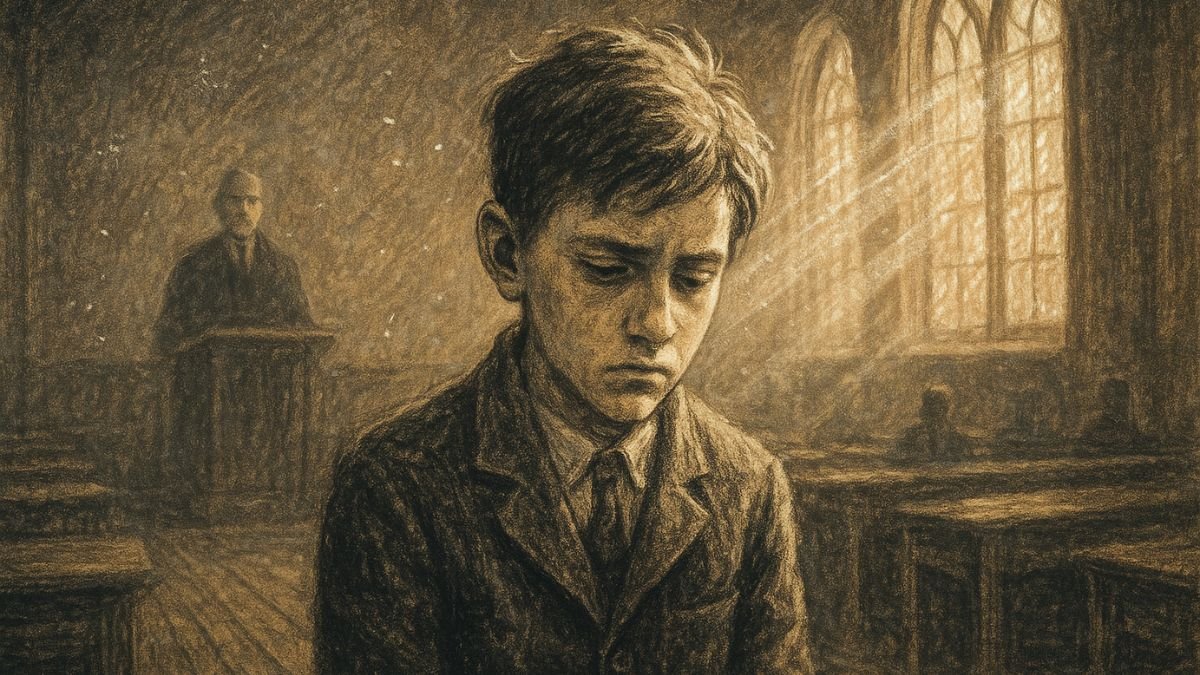


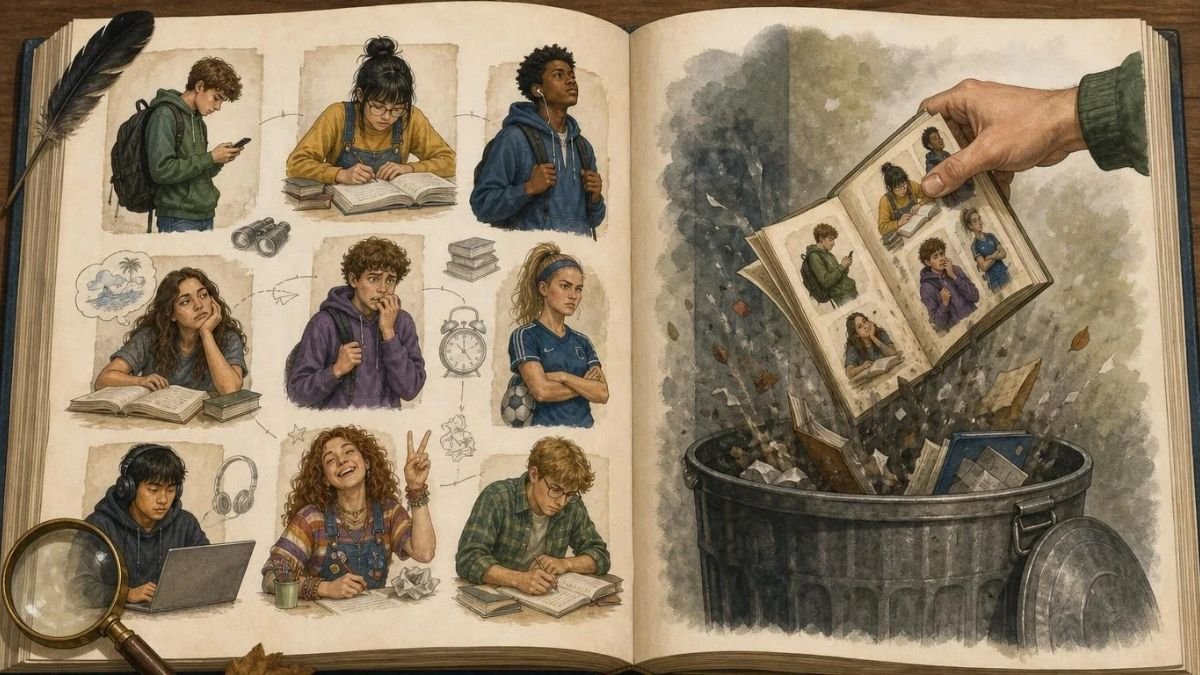



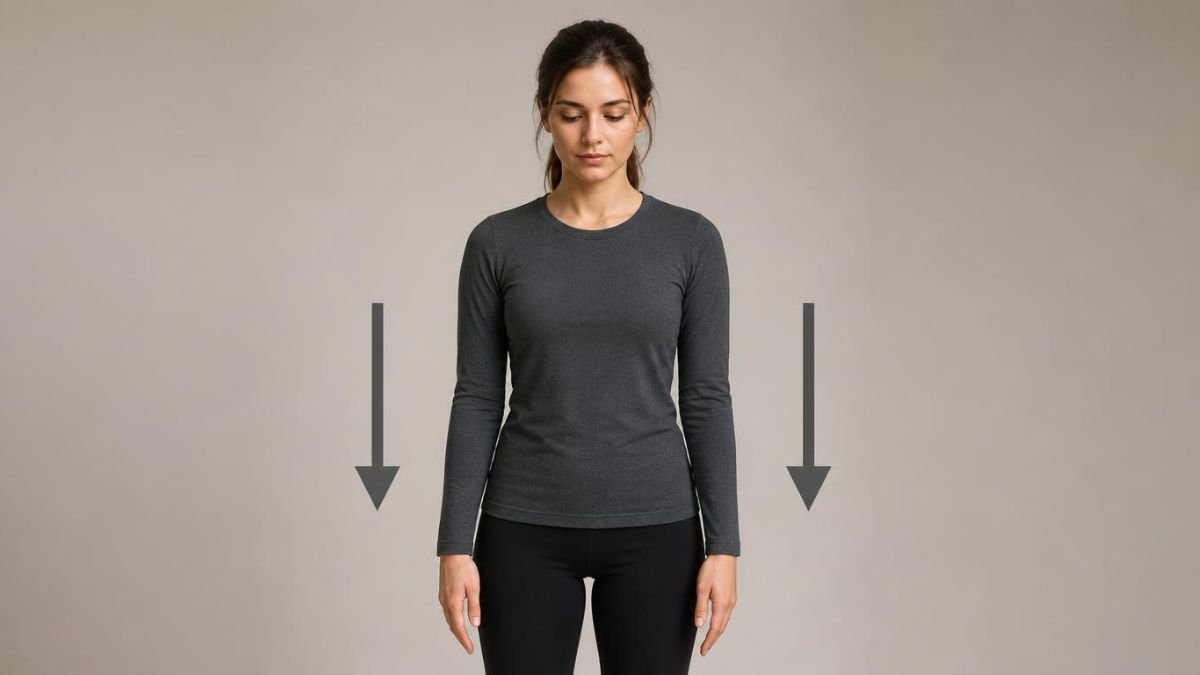

0 Comments