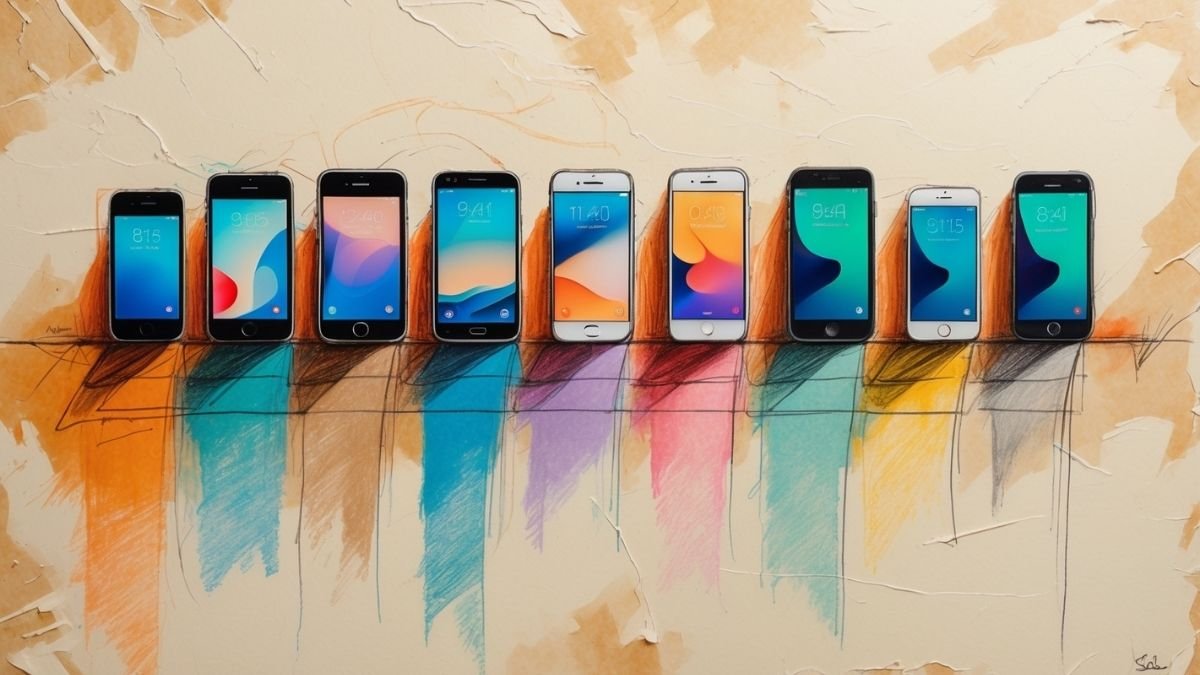
Level Up Your Listening: The Evolution of Smartphones
Welcome to your listening practice session! Today's topic is The Evolution of Smartphones. Lectures about technology often include a lot of technical terms and trace developments over time. Don't let unfamiliar words intimidate you! Often, the speaker will provide a definition or the context will make the meaning clear. Your job is to listen for the main idea, not to understand every single word.
A key skill for this type of listening is identifying milestones. As you listen, try to pinpoint the major breakthroughs. What was the first device to do something? What development represented a major change? The speaker will often use signal words like "the breakthrough came," "a key innovation was," or "this changed everything." Noting these milestones will help you build a clear picture of the evolution and ace the questions that follow. Let's get started.
Listening Audio
[ppp_patron_only level=5]
[/ppp_patron_only]
Listening Transcript: Please do not read the transcript before you listen and answer the questions.
The Evolution of Smartphones
Hello, and welcome. The device in your pocket, the smartphone, has become so ubiquitous and integral to our daily lives that it's difficult to imagine a world without it. In less than two decades, it has transformed from a niche gadget for business executives into a universal tool that has fundamentally reshaped communication, entertainment, commerce, and society itself. Today, we're going to trace the evolutionary journey of the smartphone, from its humble beginnings to the powerful pocket-sized supercomputers we carry today.
While the term 'smartphone' is a relatively recent invention, the concept of a handheld device that combines computing and communication functions is older than you might think. The predecessors to the modern smartphone were Personal Digital Assistants, or PDAs, which became popular in the 1990s. Devices like the Palm Pilot allowed users to manage calendars, contacts, and notes. However, they were primarily organizers; their communication capabilities were limited or non-existent.
The first device that truly merged the functionality of a phone and a PDA was the IBM Simon Personal Communicator, released way back in 1994. It was bulky, expensive, and had a short battery life, but it was revolutionary for its time. The Simon had a touchscreen display and could be used to make calls, send faxes and emails, and it even had apps for a calendar, address book, and calculator. While not a commercial success, the Simon was a visionary product that laid the conceptual groundwork for the smartphones to come.
Throughout the late 90s and early 2000s, other companies experimented with the formula. Nokia released its Communicator series, which looked like a regular phone but opened up to reveal a keyboard and a large screen. BlackBerry, then known as Research In Motion, became dominant in the business world with its devices optimized for secure email and featuring a signature physical keyboard. For a time, the BlackBerry was the undisputed king of mobile productivity.
But the true paradigm shift, the event that completely redefined the market and created the smartphone as we know it, occurred in January 2007. That’s when Apple CEO Steve Jobs unveiled the very first iPhone. The iPhone was not the first smartphone, but it was the first one to get the user experience absolutely right for the mass market. It did away with the physical keyboard and stylus, which were common at the time, in favor of a large touchscreen display controlled by fingers—a multi-touch interface. It also featured a full-fledged mobile web browser that displayed websites just as they appeared on a desktop computer, a massive leap forward from the simplified mobile sites of the era.
Perhaps the most crucial innovation introduced by Apple, which came a year later in 2008, was the App Store. This was a centralized, curated marketplace where third-party developers could create and sell their own applications. This single idea was a stroke of genius. It transformed the phone from a static device with a fixed set of features into a dynamic, customizable platform with limitless potential. Suddenly, your phone could be a gaming console, a photo editor, a navigation system, a language translator—anything a developer could imagine. The App Store created a virtuous cycle: more apps made the iPhone more attractive to customers, and more customers made the platform more attractive to developers.
The iPhone's success spurred an immediate and intense response from competitors. The most significant response came from Google, which developed the Android operating system. Unlike Apple's closed ecosystem, Android was an open-source platform that Google licensed to a wide variety of hardware manufacturers, such as Samsung, HTC, and LG. This open strategy led to a rapid proliferation of Android devices at all price points, allowing them to quickly capture the majority of the global market share. The ensuing competition between iOS and Android has fueled a relentless pace of innovation over the past decade and a half.
This innovation has touched every aspect of the device. Processors have become exponentially more powerful, enabling complex tasks like real-time language translation and console-quality gaming. Camera technology has seen astounding improvements, with multi-lens systems and computational photography that can produce images rivaling those from professional cameras. We’ve seen the introduction of biometric security like fingerprint scanners and facial recognition, high-speed mobile internet with 4G and now 5G, and vibrant, high-resolution displays. The smartphone continues to evolve, with emerging technologies like foldable screens and augmented reality poised to define the next chapter in its remarkable story. From a simple communicator to the central hub of our digital lives, the smartphone's evolution is a testament to the rapid pace of technological change.
Listening Quiz
Keywords & Phrases
- Ubiquitous: (adjective) This means seeming to be present everywhere at the same time. We used it at the beginning of the lecture to describe smartphones because they have become an incredibly common and ever-present part of modern life.
- Integral: (adjective) This means being a necessary and essential part of something. To say the smartphone is "integral to our daily lives" means that our lives are now structured around it, and it would be very difficult to function without it.
- Predecessors: (noun) This refers to a thing (or person) that has been followed or replaced by another. In the lecture, PDAs were described as the "predecessors" of smartphones, meaning they came first and led to the development of what came next.
- Paradigm shift: (phrase) We've seen this one before! It's a fundamental change in approach or underlying assumptions. It was used here to describe the release of the iPhone because it didn't just improve on existing phones; it completely changed what people expected a phone to be.
- Curated marketplace: (phrase) 'Curated' means carefully selected and organized. A "curated marketplace" like the App Store isn't a free-for-all; Apple reviews and approves the apps, creating a controlled and organized environment for users.
- Virtuous cycle: (phrase) This is a chain of events in which one positive event causes another, and that event causes another, creating a loop of continuous improvement or growth. We used it to describe how more apps brought more users, which in turn brought more developers, making the iPhone platform stronger and stronger.
- Ecosystem: (noun) In biology, this is a community of living organisms interacting with their environment. In technology, as used in the lecture ("Apple's closed ecosystem"), it refers to a set of interconnected products and services from one company. Apple's ecosystem includes the iPhone, iOS, the App Store, iCloud, etc., all designed to work seamlessly together.
- Open-source: (adjective) This describes software for which the original source code is made freely available and may be redistributed and modified. We explained that Android is "open-source," which is why so many different companies like Samsung and LG can use it and adapt it for their own phones.
- Proliferation: (noun) This means a rapid increase in the number or amount of something. The lecture mentioned the "rapid proliferation of Android devices," meaning that once the operating system was available, a huge number of different Android phones appeared on the market very quickly.
- Computational photography: (phrase) This refers to the use of digital processing and algorithms to improve an image, rather than just relying on the optics of the lens. We used it to explain how modern smartphone cameras can take such amazing pictures; it's not just the lens, but the powerful software that processes the image.








0 Comments