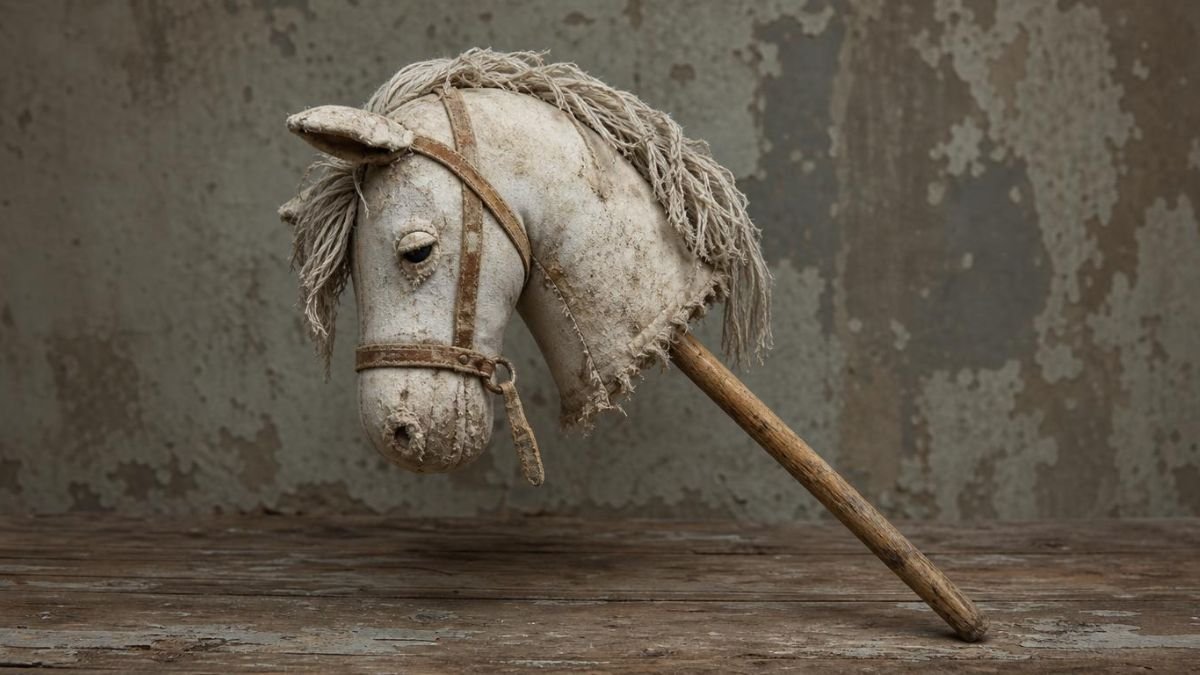
Was every cliché in the world once somebody's most beautiful sentence?
Because it was. That's the fact I want to build tonight around, and it changes how you hear a word we mostly use to sneer.
Hackneyed. We say it about writing that's stale, about phrases so overused they've stopped delivering anything. A hackneyed expression. Hackneyed sentiment. It has a dismissive little sound to it, and behind that sound is a horse.
Hackney was a village outside medieval London, and it was known for horses — good, sturdy, unremarkable horses, bred not for racing or war but for ordinary riding. In time, a hackney came to mean any horse available for hire. Not your horse. Anybody's horse. You paid, you rode it, you brought it back, and the next person paid and rode it too.
And that's the entire meaning of this word. A hackney is a thing used by everyone and belonging to no one. Which is exactly what happens to a phrase.
The word left a wider trail, too. A hackney carriage was a coach for hire, and that term is still the legal name for a taxi in Britain. And the word got shortened, and gave us hack — the hack writer, the one who works for hire, who'll take any subject, who is available to whoever's paying. All of it comes from the same village and the same patient horse standing in the yard, waiting for the next stranger.
So when you call a phrase hackneyed, you're saying something specific and rather sad. Not that it's wrong. Not that it's ugly. You're saying: this has been ridden by too many people, too hard, for too long, and there's nothing left in it.
And that's precisely what overuse does to language. Consider a phrase like the tip of the iceberg. The first time anyone said that, it was an act of imaginative genius. Someone looked at a problem and thought about the physics of floating ice — that nine-tenths of it sits below the waterline, unseen, enormous — and handed you that entire image in five words. Whoever heard it first must have felt their mind actually move.
And now nothing happens. You've heard it ten thousand times. The words go past and no ice forms anywhere in your head. The image is still technically inside the phrase, but nobody unpacks it anymore, because the phrase has become a single unit of meaning that we swallow whole. That's a hackneyed expression. Not a bad idea — an exhausted one.
Here's what strikes me most about this. The reason a phrase becomes a cliché is that it was too good. Nothing weak ever gets overused. A mediocre metaphor dies in its first paragraph and nobody borrows it. It's the brilliant image that spreads, because it worked so well that everyone who heard it wanted to use it, and they did, and their listeners did, and after four hundred years of that, the thing that was once astonishing is now the phrase we use to describe unoriginality.
So a cliché is a fossil of a very good idea. It's a monument to something that succeeded so completely it destroyed itself. Every hackneyed phrase in the language is a former masterpiece that got hired out too often.
There's a mercy in that, I think, and also a warning.
The mercy is that we should be gentler about it. When someone reaches for a tired phrase in a hard moment — at a funeral, at a hospital, at the door — we sometimes wince at the language. They're in a better place. Time heals. I'm here if you need anything. And yes, those are worn horses. But a worn horse still carries someone. The person didn't reach for the phrase because they felt nothing; they reached for it because they felt something enormous and had no words of their own, and the language handed them a ready-made vehicle at the exact moment they couldn't build one. That's not laziness. That's what shared language is for. It stands in the yard for centuries so that it's available on the worst day of your life.
The warning is subtler, and it's about your own thinking.
Because clichés don't only wear out on the page. They wear out inside your head, and when they do, they stop you from noticing things. If you're carrying a ready-made phrase for a situation, you'll often use it instead of actually looking. Someone tells you something painful and everything happens for a reason deploys automatically, and the sentence arrives before your attention does — and now you haven't seen what happened to them; you've filed it.
That's the real cost of hackneyed language. Not ugliness. Blindness. Worn phrases are pre-formed opinions, and a mind full of them can move through a whole day without meeting anything new.
Which brings me to the only real remedy I know, and it's not to ban the old phrases. It's to open them.
Take the tired thing and unpack it on purpose. Actually picture the iceberg. Actually think about a horse for hire. Ask what the phrase is claiming, whether it's true, where the image came from — and half the time you'll find something startling in there that's been sleeping for centuries. That's most of what I do here, and it's why worn phrases are my favorite material: they were the best ideas we ever had, and nobody looks at them anymore because they're everywhere.
Because the horse isn't dead. It's just tired, and standing in a yard, and nobody has bothered to look at it properly in a very long time.
So here's what I'll leave you with. Every cliché you roll your eyes at was once the most original thing anyone had ever said, and it wore out from being loved too much. So think about the phrases you use most automatically — the ones that leave your mouth without passing through you. And ask yourself: what did that sentence actually mean, the very first time somebody said it — and what would happen if you meant it that way again?




0 Comments