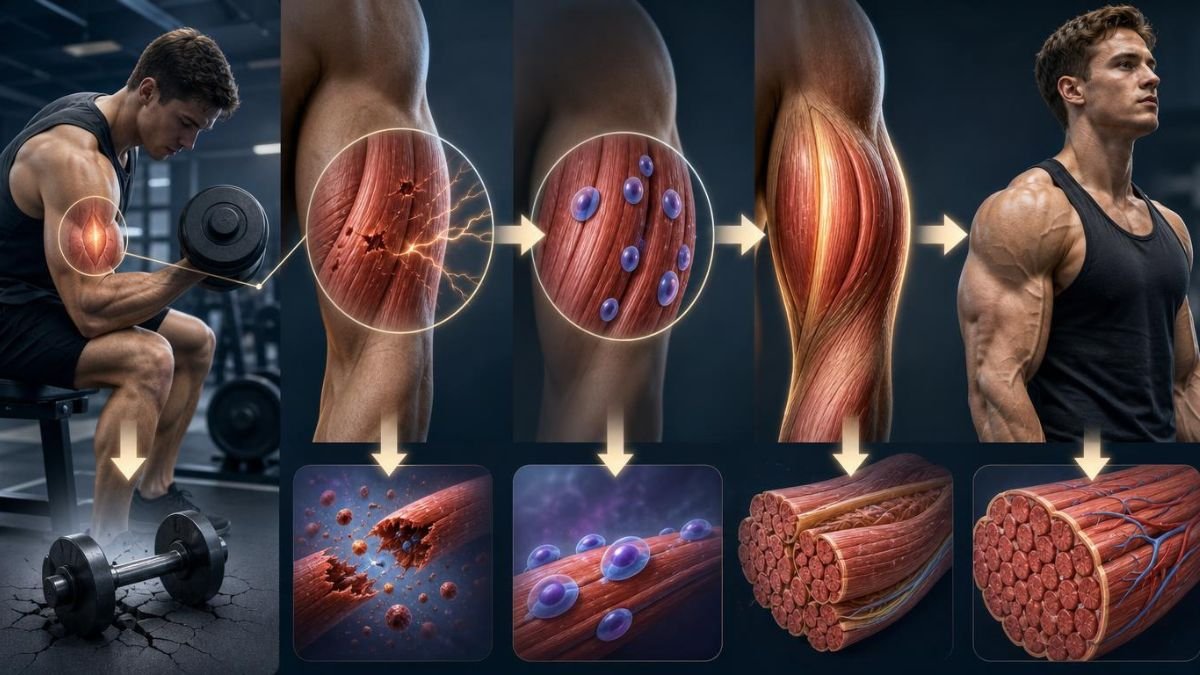
You Don’t Grow at the Gym: The Mechanics of Muscle Growth
Soreness isn’t the signal. Lactic acid isn’t the culprit. What actually builds muscle is stranger and slower than you were told, and the English for it is worth having.
Soreness isn’t the signal. Lactic acid isn’t the culprit. What actually builds muscle is stranger and slower than you were told, and the English for it is worth having.

A poetic dive into 忍, the Japanese character for endurance, which draws a knife directly above a heart, and what a swordsmith’s clay can teach you about surviving the pressure.

A poetic dive into the Italian good-luck phrase in bocca al lupo — “into the mouth of the wolf” — the argument Italians are still having about the correct reply, and what predators actually do to a landscape.
Soreness isn’t the signal. Lactic acid isn’t the culprit. What actually builds muscle is stranger and slower than you were told, and the English for it is worth having.
A poetic dive into 忍, the Japanese character for endurance, which draws a knife directly above a heart, and what a swordsmith’s clay can teach you about surviving the pressure.
A poetic dive into the Italian good-luck phrase in bocca al lupo — “into the mouth of the wolf” — the argument Italians are still having about the correct reply, and what predators actually do to a landscape.

A poetic dive into “dirge” — a word for the music of grief, which turns out to be the crumpled remains of a Latin word meaning guide me.

Medieval Europeans knew the Earth was round. Columbus knew. His critics knew, and they were right about the part that mattered. So where did the flat Earth story come from? A novelist, two Victorian polemicists, and our deep appetite for feeling smarter than the dead.

Washington Irving invented the flat Earth myth in 1828. Danny puts him on trial for the lie that made Columbus a hero and the Middle Ages a joke.
0 Comments