Understand the meaning of “profundity” and how to use it effectively. Learn when to use this word to describe depth, wisdom, and insight.


Understand the meaning of “profundity” and how to use it effectively. Learn when to use this word to describe depth, wisdom, and insight.

Understand the concept of a fallacy – a flaw in reasoning. Learn to identify common types of fallacies and avoid them in your own arguments.

Explore the meaning of “opulent” and learn when to use this word to describe lavishness. Discover appropriate and less suitable contexts with examples.

Is something impervious to water, criticism, or change? Explore the meaning of “impervious,” how to use it correctly, and when to choose a different word.

Learn the meaning of the word “extol” and discover when to use it for powerful praise – and when it might be overkill. Get examples and alternatives!

What does “ascetic” mean? Learn about the philosophy of asceticism, its historical roots, modern applications, and how the word is used.

What does “aberration” mean? Learn the definition, when to use it correctly (and when not to), plus synonyms and real-life examples.

What does “quotidian” mean? Discover the nuances of this word and when to use it to describe the ordinary and the extraordinary.

Understand the meaning of “jingoism”, its historical roots, and the dangers of this extreme form of nationalism. Learn when it’s appropriate (and inappropriate) to use the term.
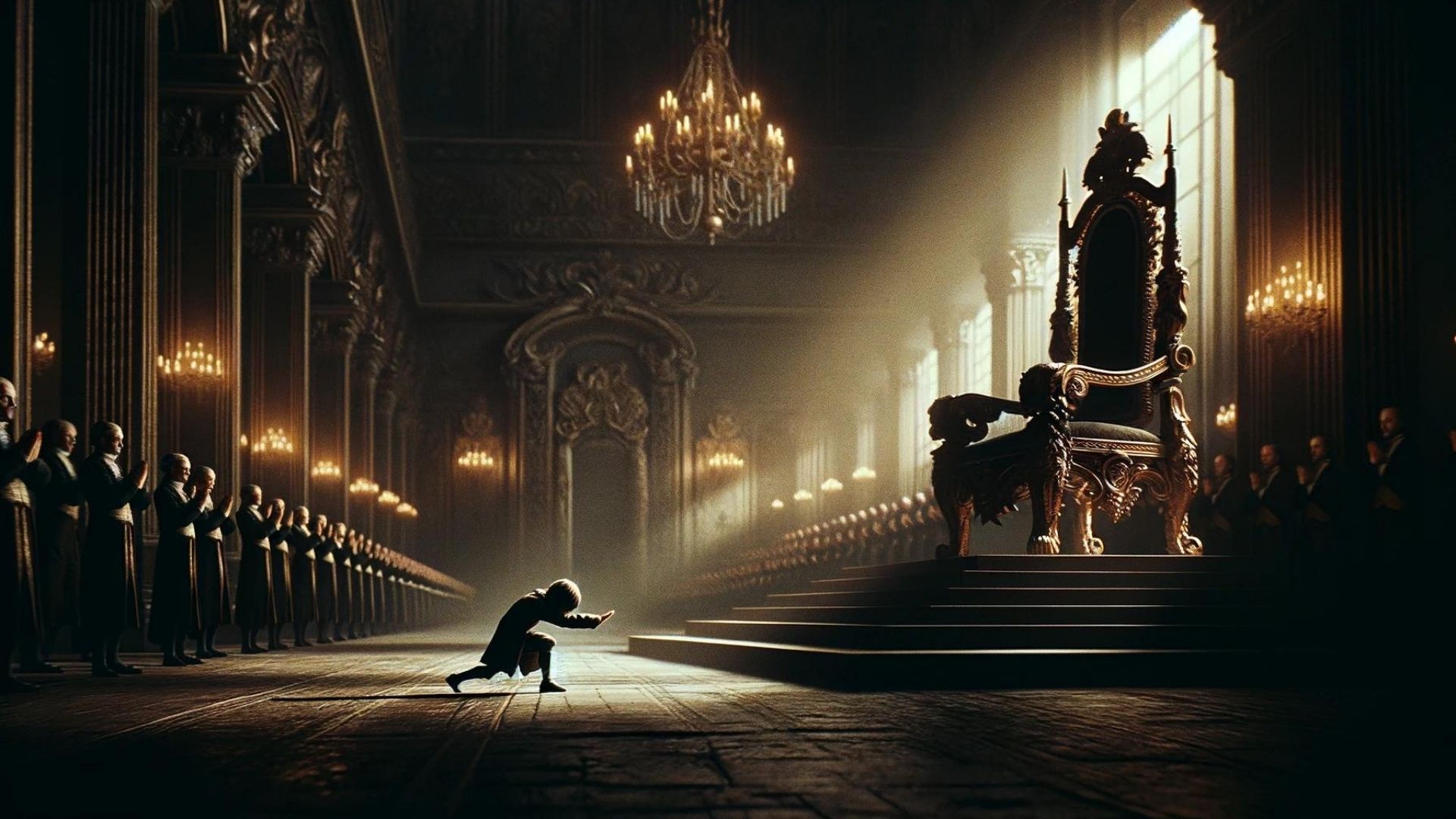
Learn the meaning of “obsequious,” why it’s often seen negatively, and how to spot this overly flattering behavior in everyday life.

Novels were once considered dangerous. Cinema was a fairground trick. Now it’s games. What happens to a story when you can move inside it, and how to argue about it in precise English.

A poetic dive into the Arabic phrase kasr al-khatir — “the breaking of the khatir” — and why one language decided that wounding a person’s feelings is not an emotional event but a skeletal one.

Declan hears a laugh track only when his thoughts turn violent. A psychological horror story, plus author commentary, craft notes, and C1-C2 lessons.

Cleopatra wasn’t a seductress who stumbled into history. She was a working monarch who ran a bankrupt kingdom, spoke nine languages, and out-negotiated Rome for twenty-one years. Here’s the ruler behind the legend.
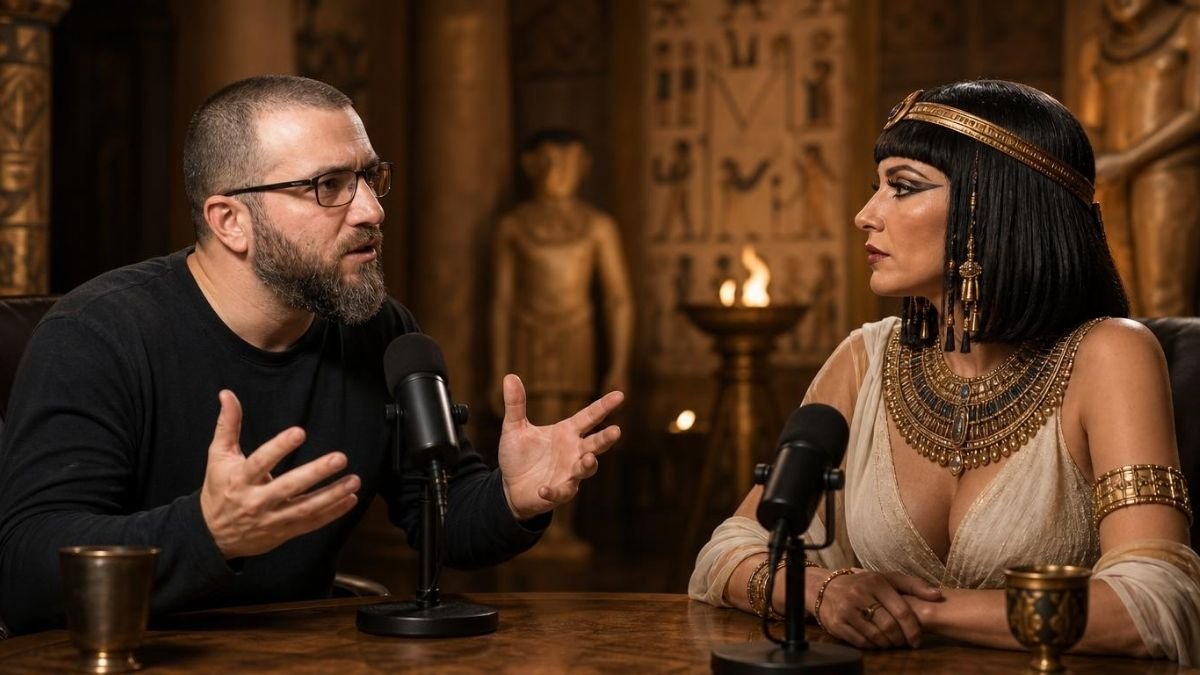
Cleopatra takes the chair. Danny puts her on trial for the murders, the money, Actium, and the son she spent. She gives back better than she gets.

Learn the English of stress and mental fatigue — extreme adjectives, the language of support, and the precise vocabulary that separates tired from drained from burnt out. Plus what actually helps, and what only looks like rest.