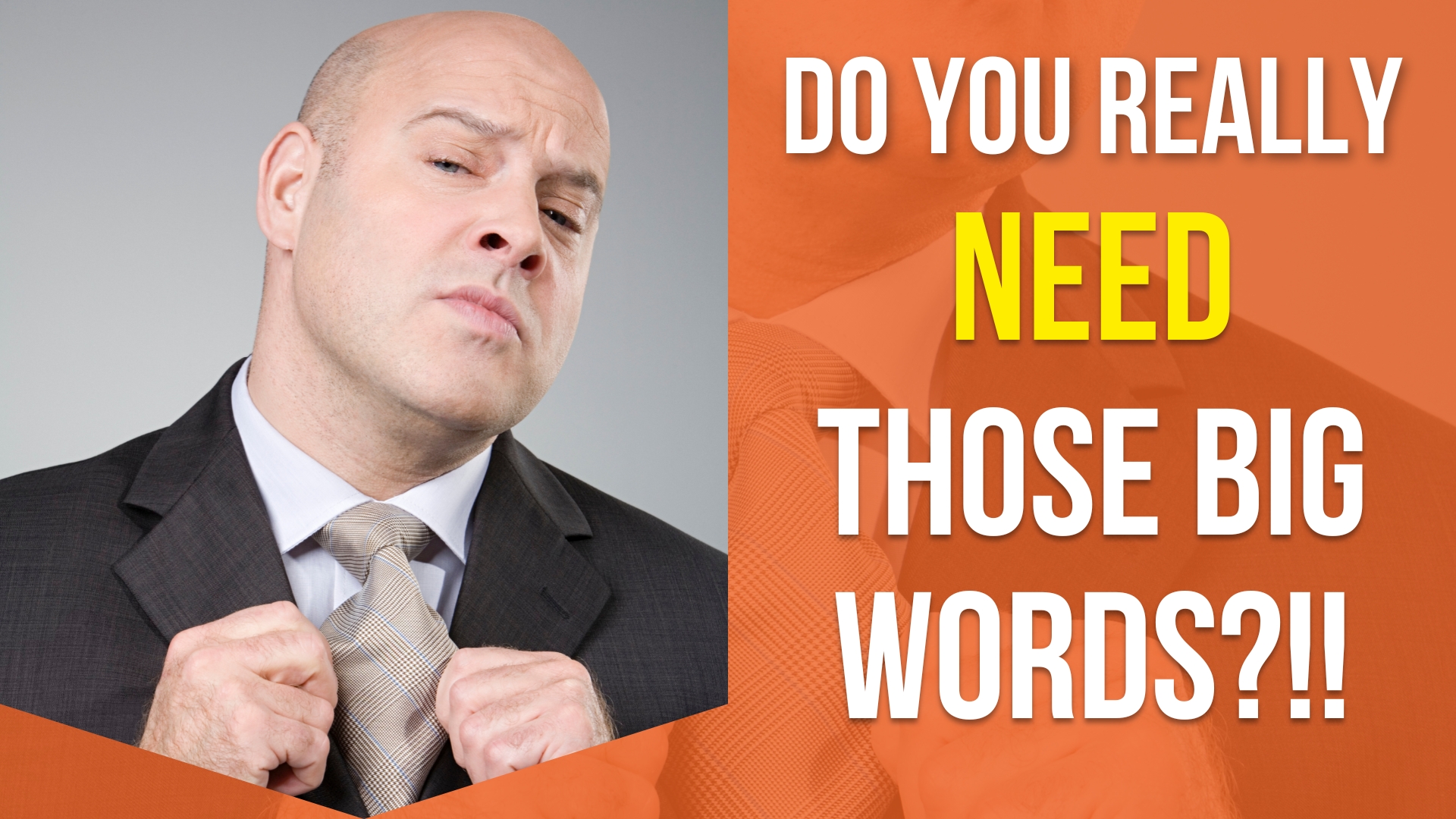
The Big Words Dilemma
Have you ever been in a conversation where someone uses words so grandiose you start to wonder if they're casting a spell instead of communicating? You nod along, pretending to comprehend, while secretly questioning if they're speaking the same language. But here's the million-dollar question: Are we ourselves guilty of tossing around elaborate, impressive-sounding words just to appear smarter?
Today, let's dive into the age-old debate: Should we use ten-dollar words to elevate our speech, or should we stick to the everyday terms that make sense to everyone?
The Role of Big Words: Necessary or Nonsensical?
Let's explore why we have these gargantuan words in our language in the first place. Think of terms like "antidisestablishmentarianism" or "sesquipedalian"—ironically, a word describing someone who uses long words. Are they intended to make us feel inadequate, a clever conspiracy by English teachers to keep their jobs, or do they genuinely serve a purpose?
Spoiler alert: It's a bit of everything, with a dash of showing off. Big words are like exotic spices; they can make a conversation more interesting. But, just as adding saffron to cereal is bizarre, knowing when and how to use these polysyllabic gems is crucial. In an academic setting, it might be appropriate to delve into epistemological frameworks, but in a coffee shop, ordering a latte should remain straightforward.
The Overuse Conundrum: Connecting or Confusing?
There's a special breed of people—let's call them "overdoers"—who believe syllable count correlates to respect. They drop words like "quintessential" or "pulchritudinous" in casual chats about weekend hikes. If there's one thing we don't need, it's feeling insecure about vocabulary while trying to enjoy nature.
The essence of communication is connection, not intimidation. If you're losing half your audience, you're not impressive—you're isolated.
Simplifying Without Sacrificing Substance
On the flip side, using too many simple words can also cause misunderstandings. Imagine a doctor vaguely saying, "Your leg is kinda broken, and we gotta do some stuff to fix it." A little jargon can convey the necessary confidence and precision.
The key is striking the right balance. When used correctly, sophisticated language can convey expertise, but turning every sentence into a thesaurus entry can backfire.
Consider this simple rule: Fancy words should add clarity, not confusion. Ask yourself if you're trying to communicate or just flaunt your vocabulary. Language should serve the message, not overshadow it.
Tailoring Language: Audience Matters
Knowing your audience is crucial. If you're discussing last night's game with friends, avoid phrases like "exacerbation of our team's offensive deficiencies." But for a sports analytics piece, feel free to go in-depth. Tailoring language isn't dumbing it down—it's being considerate.
Use humor to deflate the pompous balloon of big words. If you must drop a hefty term, acknowledge it with humor, like joking that the word sounded like a sneeze.
A Call for Relatable Eloquence
Language, above all, is about connection. Each word, from "it" to "floccinaucinihilipilification," has a role. Words used just to impress miss the mark. While it feels good to sound impressive, wouldn't it be better if everyone understood you?
Imagine a world where we can be both smart and relatable—a revolutionary concept, I know! Next time you feel the urge to peacock with big words, consider this: What's more important, sounding impressive or being understood? The challenge lies in choosing words that bridge gaps, not widen them.
Join the challenge. Let's make communication a two-way street, not a one-man parade with extravagant words as confetti.
Share Your Thoughts
Are you guilty of using big words in the wrong contexts? Share your stories in the comments. And remember, never stop learning!
Thank you for engaging with this discussion. Stay curious with English Plus Podcast!






0 Comments