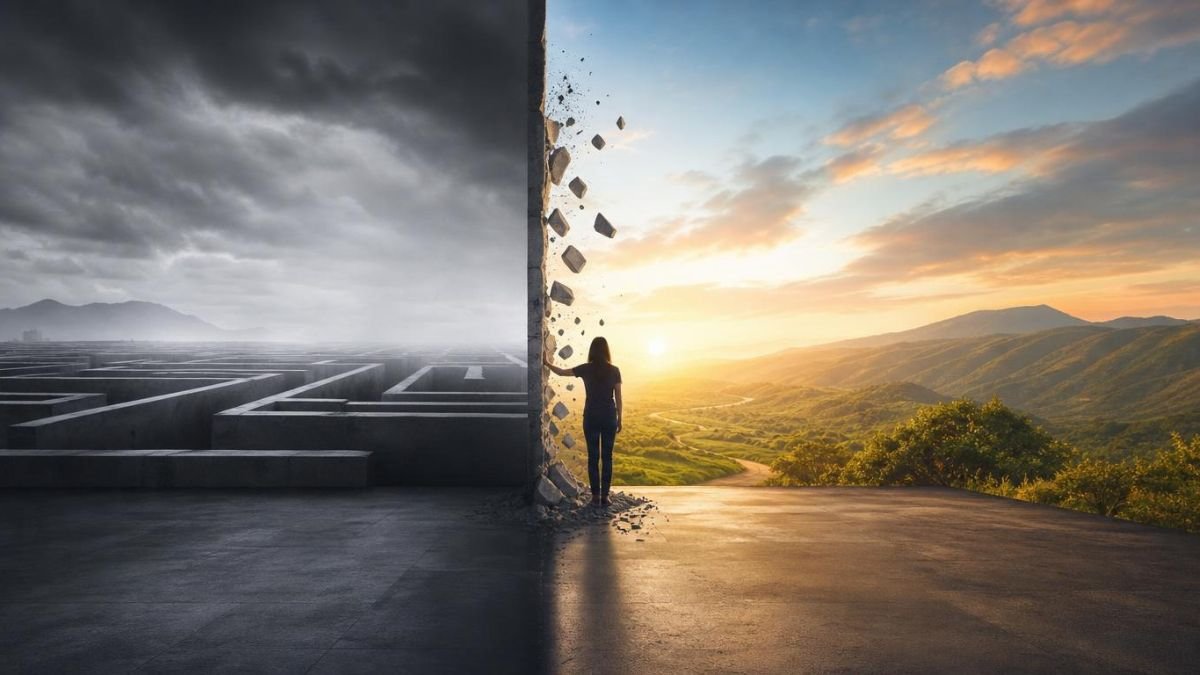
What if the thing standing between you and the truth isn't a missing fact — but the entire way you've been looking?
We tend to think of learning as adding. You didn't know something, and now you do; you collect facts the way you'd collect coins, one at a time, and slowly your pile of understanding grows. And a lot of learning really is like that. But every so often, something far stranger and far more powerful happens. You don't add a fact. Instead, the whole framework you were using to make sense of everything suddenly rearranges itself — and all the facts you already had snap into a completely new shape. Nothing was added. Everything changed. That's a paradigm shift.
The phrase comes from a philosopher of science named Thomas Kuhn, who was trying to explain something puzzling about how science actually progresses. He noticed it doesn't just crawl forward, fact by fact, in a smooth straight line. Instead, it moves in long calm stretches followed by sudden, violent revolutions — moments when the entire underlying model, the paradigm, the deep set of assumptions everyone was quietly working inside, collapses and gets replaced by a new one. And after that shift, scientists looking at the exact same evidence see something completely different. The facts didn't change. The lens did.
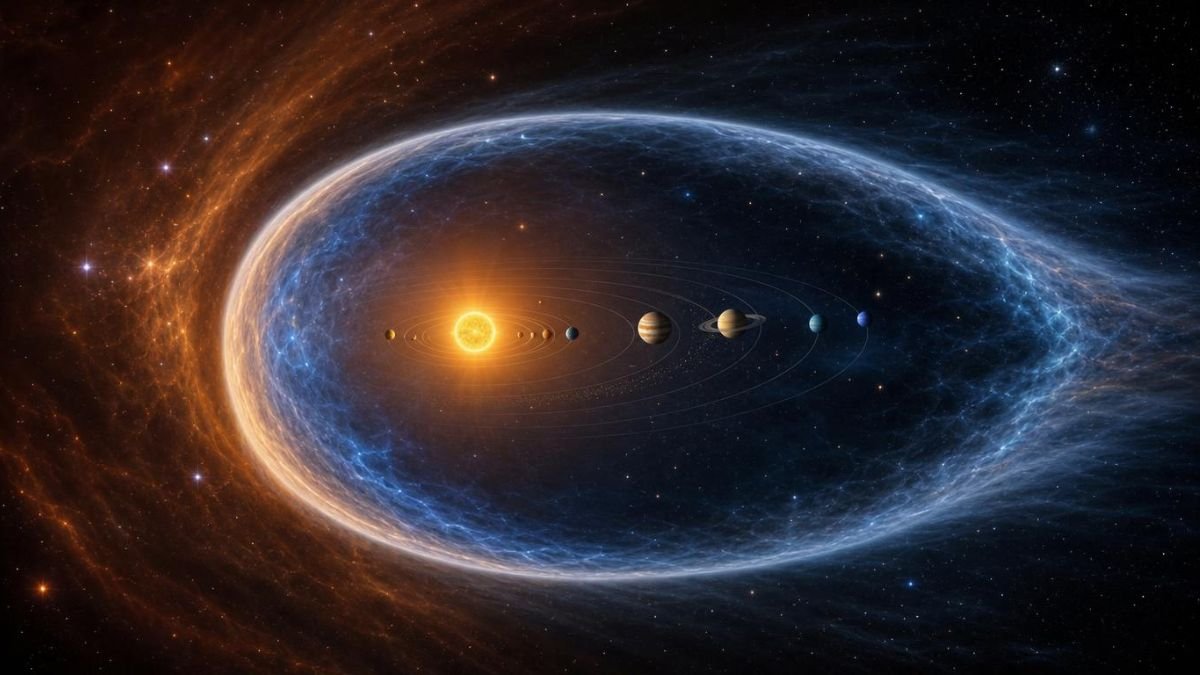
Think of the great examples. For most of human history, people looked up and saw the sun move across the sky, and everyone knew, obviously, that the Earth stood still at the center of everything while the heavens turned around it. The evidence seemed overwhelming — you can feel that you're not moving, you can watch the sun rise and set. And then came the shift: the Earth is not the center. It's the one that's moving. And suddenly every single thing people had observed — every sunrise, every season, every wandering planet — meant something entirely different. Not one new sunrise was needed. The old ones were simply reinterpreted, all at once, by a mind that had learned to stand somewhere new.
That's the thing that makes a paradigm shift so different from ordinary learning, and so much more disorienting. Ordinary learning leaves you standing where you were, just holding a little more. A paradigm shift moves the ground you're standing on. It's not a new piece in the puzzle. It's the sudden realization that you'd been assembling the pieces upside down. And there's a particular vertigo to it — because for a moment, everything you were sure of goes liquid, and you have to rebuild your whole sense of things from a new foundation.
And here's what I find so moving: this doesn't only happen to civilizations. It happens to you. Your own life is punctuated by private paradigm shifts — moments when your entire understanding of something reorganized in an instant. The day you finally saw a parent not as a parent but as a frightened, flawed human being who was just doing their best — nothing about your childhood changed, but suddenly all of it meant something different. The moment you realized the thing you'd been calling love was actually fear, or the thing you'd been calling failure was actually the beginning of something. The times you looked back at an old chapter of your life and saw, with a jolt, that the story you'd been telling about it was completely wrong — that you'd been the one at fault, or that you hadn't been at fault at all.
In each of those moments, you didn't gain new information. You already had all the facts. What shifted was the paradigm — the invisible frame through which you'd been reading everything — and the instant it shifted, the whole picture reorganized around a new center. That's why these moments feel less like learning and more like waking up. Because in a way, that's exactly what they are.
There's a famous kind of image that captures this perfectly — you've seen them — the drawing that's either a young woman or an old woman, or the one that's either two faces or a vase. The lines on the page never change. But your mind can hold it one way, and then, with a little click, flip to the other, and suddenly you cannot un-see the second image. That click is a paradigm shift in miniature. Same evidence. Different world. And once you've flipped, you can never fully return to only seeing it the first way.
That's the beautiful and slightly frightening thing about a real paradigm shift: it's irreversible. You can't un-know the new way of seeing. Once the Earth is moving, it never stands still again. Once you've seen your parent as human, they're never quite a god or a monster again. The shift doesn't just add to you — it changes who you are, because it changes the eyes you look through, and you carry those new eyes into everything you'll ever see afterward.
Which raises a quietly humbling question about right now. If your understanding of things has been reorganized this dramatically before — more than once — then it's almost certainly true that some paradigm you're standing inside at this very moment is wrong. Some assumption so deep you can't even see it as an assumption, some frame you're so used to looking through that you've mistaken it for the world itself, is one day going to flip. And when it does, everything you're sure of today will suddenly mean something you can't currently imagine.
That's not a reason for despair. It's a reason for humility, and even a kind of wonder. It means you're not finished. It means there are ways of seeing your own life that you haven't discovered yet, waiting on the other side of a click you haven't heard.
Here's my question to leave you turning over. If the deepest truths of your life have flipped before — if the frame you were sure of has shattered and reformed more than once — then what are you certain of right now that might, one day, look completely different the moment your paradigm shifts?

0 Comments