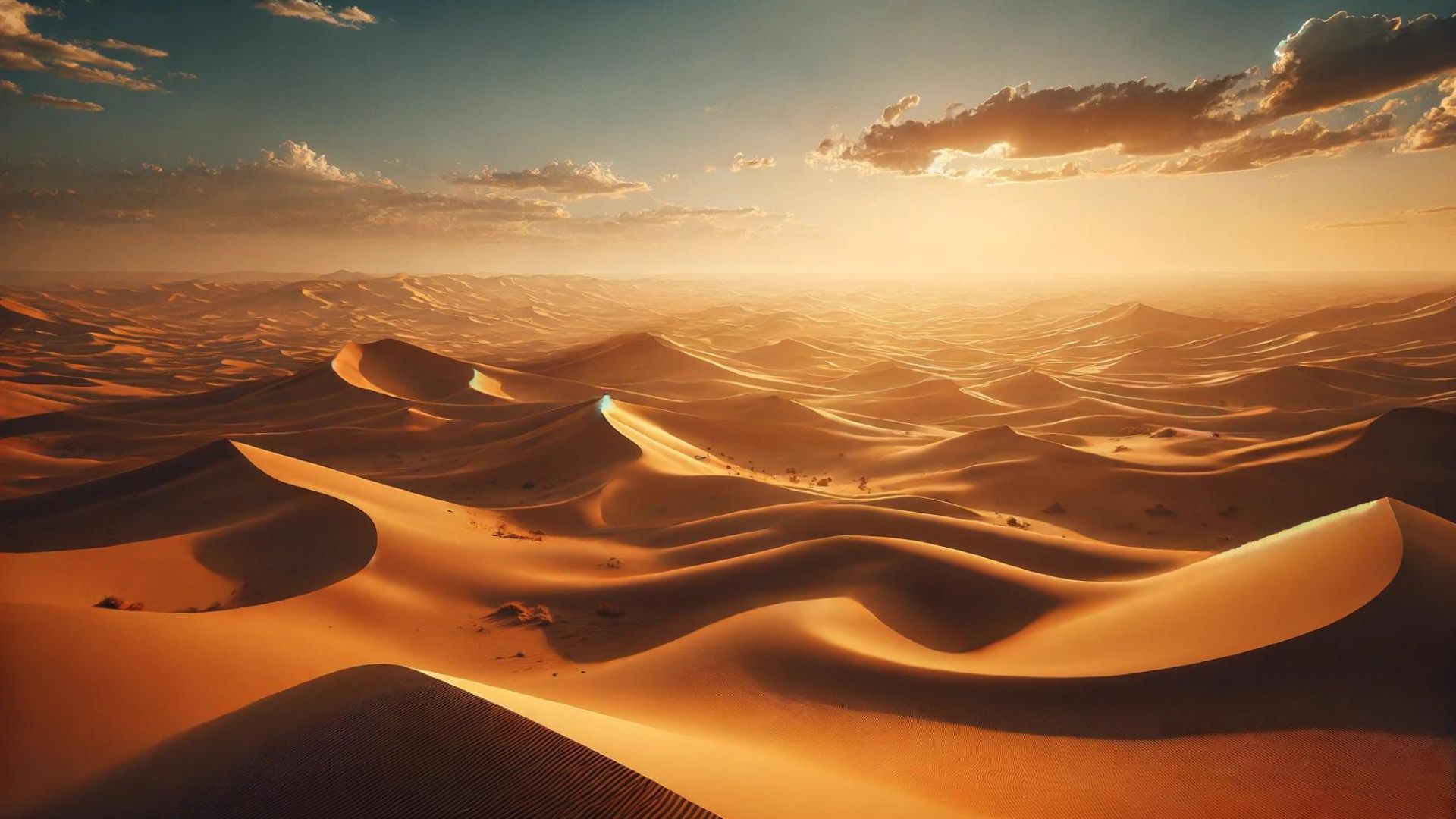
Imagine standing at the edge of a vast, rolling sea—not of water, but of golden sand dunes stretching as far as the eye can see. This is the Sahara Desert, an awe-inspiring testament to the beauty and diversity of our planet. Covering approximately 9.2 million square kilometers, the Sahara is the largest hot desert in the world, and it holds a unique place in Earth's natural splendor. Today, let's journey through this magnificent landscape to appreciate its majesty and understand why preserving our planet is crucial for future generations.
The Majesty of the Sahara Desert
The Sahara Desert, spanning North Africa, is a land of extremes. Its stark beauty is characterized by vast sand dunes, rocky plateaus, and ancient riverbeds. The desert's climate ranges from scorching hot days to freezing nights, creating a challenging yet fascinating environment for life to thrive.
One of the most striking features of the Sahara is its sand dunes. These towering formations, shaped by the relentless winds, can reach heights of up to 180 meters (590 feet). The dunes are constantly shifting, creating an ever-changing landscape that captures the imagination and symbolizes the dynamic nature of our planet.
Beyond the sand dunes, the Sahara is home to unique geological formations such as the Ahaggar Mountains and the Tassili n'Ajjer. These regions boast stunning rock art that dates back thousands of years, providing a glimpse into the lives of ancient civilizations that once thrived in this arid environment.
The Sahara's Role in Earth's Ecosystem
While the Sahara Desert might seem like an inhospitable place, it plays a crucial role in Earth's ecosystem. Here are some key aspects of the Sahara's ecological significance:
- Dust and Nutrient Transport: The Sahara is a significant source of dust that travels across continents. Winds carry millions of tons of Saharan dust across the Atlantic Ocean to the Amazon Rainforest, enriching the soil with essential nutrients. This dust helps sustain the lush biodiversity of the rainforest, illustrating the interconnectedness of Earth's ecosystems.
- Climate Regulation: Deserts like the Sahara play a role in regulating global climate patterns. The desert's high reflectivity, known as albedo, helps to balance the Earth's temperature by reflecting solar radiation back into space. This process is crucial for maintaining the planet's climate equilibrium.
- Biodiversity: Despite its harsh conditions, the Sahara is home to a variety of life forms, including resilient plants, insects, reptiles, and mammals. Species such as the fennec fox, dromedary camel, and various desert-adapted plants showcase nature's incredible ability to adapt and thrive in extreme environments.
Real-Life Connections and Lessons
The Sahara Desert teaches us several valuable lessons that are directly applicable to our lives and our efforts to preserve the planet:
- Resilience and Adaptation: Just as life in the Sahara has adapted to its harsh conditions, we too can learn to adapt to the challenges posed by climate change. By embracing sustainable practices and innovative solutions, we can build resilience against environmental impacts.
Example: Adopting renewable energy sources such as solar and wind power can help reduce our carbon footprint and mitigate the effects of climate change, much like how desert plants have evolved to conserve water and survive.
- Interconnectedness of Ecosystems: The Sahara's dust fertilizes the Amazon Rainforest, demonstrating how ecosystems are interconnected. Our actions have far-reaching consequences, and it's essential to consider the global impact of local decisions.
Example: Reducing plastic use and properly managing waste can prevent pollution that harms marine life, which in turn affects global biodiversity and ecosystem health.
- Appreciation and Conservation: By appreciating the beauty and majesty of natural wonders like the Sahara, we are more likely to take action to preserve them. Understanding the intrinsic value of these landscapes can inspire us to protect them for future generations.
Example: Supporting conservation efforts and protected areas helps safeguard unique habitats and the species that depend on them, ensuring that natural wonders remain for future generations to enjoy.
Take Action: Protecting Our Planet
Now that you've journeyed through the Sahara Desert and explored its significance, it's time to take action. Here are a few steps you can take to help preserve our planet:
- Educate Yourself and Others: Learn about the various ecosystems and their roles in maintaining Earth's balance. Share this knowledge with friends and family to raise awareness.
- Support Sustainable Practices: Adopt sustainable habits in your daily life, such as reducing waste, conserving water, and using renewable energy sources.
- Get Involved: Participate in local and global conservation efforts. Volunteer with environmental organizations, support policies that protect natural habitats, and contribute to initiatives that promote sustainability.
- Advocate for Change: Use your voice to advocate for environmental protection. Encourage policymakers to take action on climate change and conservation, and support businesses that prioritize sustainability.
By appreciating the majesty of the Sahara Desert and understanding its importance, we can be inspired to take meaningful steps toward preserving the beauty and diversity of our planet. Every action counts, and together, we can make a difference in safeguarding the Earth for future generations. Let the lessons of the Sahara guide you in your journey toward a more sustainable and harmonious world.







0 Comments