SparkCast Episode
The SparkCast episode is not just a reading of the article below; it's a lively discussion based on the topic of the article, so you don't want to miss it!
[ppp_patron_only level=5]
The Illusory Flow of Time Transcript: Click to Open
The Illusory Flow of Time
Have you ever stared at a clock watching the seconds tick by and just felt that undeniable flow of time? What if I told you that constant forward-moving stream, that very feeling of now, might actually be the most convincing illusion your brain has ever spun? And if the past, present, and future all exist simultaneously, well, does free will even make sense anymore? And why does time feel so different when you're laughing compared to when you're, stuck waiting in line? Welcome to a new Sparkcast from English Plus Podcast. Today, we're diving deep into the profound mystery of time. We'll explore what it really is, according to, well, some pretty groundbreaking ideas from physics and philosophy.
And we'll try to peel back the layers on why it feels the way it does to us. It is really fascinating, isn't it, how something so fundamental, so everyday for us can be seen so radically differently, especially when you look at it through the lens of modern physics. It forces us, I think, to ask some really deep questions about reality itself and how we perceive it.
Yeah, we all share that intuitive feeling, don't we? That time flows like a river. We sort of picture ourselves on a raft, just floating along the past behind us, the future, unseen around the bend. It's just how we naturally think about it.
That's right. It's often called the presentist view. And in this perspective, only the present moment, this now, is truly real.
The past, well, it's gone. It's just memories, really. And the future is just possibilities.
It hasn't solidified yet. It's a very comfortable way to think and honestly, pretty practical for navigating life. We make plans, we learn from history, all from that perch of our moving now.
It feels so natural, that river analogy, so undeniable. But then, about a century ago, along came Albert Einstein. And his ideas basically shattered that whole picture of time, didn't they? He absolutely did.
Einstein's theory of relativity, well, it threw a massive cosmic curveball into that peaceful river idea. It tells us there's no single universal now that everyone shares. Time isn't this fixed, absolute thing ticking away uniformly everywhere.
No, it's relative. It can actually stretch and shrink. Scratch and shrink.
Yes, depending on how fast you're moving or the strength of gravity you're experiencing. And this isn't just theory. We've measured it.
Super precise atomic clocks on airplanes, they actually run slightly differently than clocks on the ground. Wow. Exactly.
It proves Einstein's predictions, even at speeds we encounter. So fundamentally, my now isn't necessarily the same as your now, or the now of an astronaut zooming around on the International Space Station, for instance. Okay, so if there's no universal now, that leads to this concept that's just... Well, it's truly mind boggling for most of us.
You mentioned imagining time not as a river, but like a giant loaf of bread. This is where it gets really interesting, I think. That's the heart of the block universe idea.
Yeah, the loaf analogy is pretty good. In this view, every single slice of that loaf, the past, the present, the future, it all exists simultaneously and equally real. It's equally real.
So like, dinosaurs are still happening. In their slice of the block universe, yes. Just as real as the moment you were born or you listening to us right now, or even, say, what you'll have for lunch next Tuesday.
It's all just there. Different points in this four-dimensional space-time block. Okay, hold on.
I know. It's a lot to take in. But if you connect this back, that feeling we have of time flowing, moving forward, in this view, that's just an illusion.
It's created by our consciousness as it sort of illuminates one slice after another. Like a spotlight moving along the loaf. Exactly.
Or think about a movie on a DVD. The whole film exists on the disc at once, right? Right. But you only experience it frame by frame.
But Buchanan definitely covers it. That's- Yeah, it's a challenging concept. But if that block universe thing is right, if our now is just us lighting up these pre-existing moments, then why? Why does the river illusion feel so incredibly real? Why do we perceive time as just relentlessly moving forward, always in one direction? That's the million-dollar question, isn't it? And the most compelling answer physics gives us right now involves a concept called entropy.
It's a fundamental law of physics. Basically, it says that things in the universe tend to move from a state of order towards disorder, towards increasing randomness. Okay.
So if I scramble an egg, it gets messier, more disordered, and you can't just unscramble it back into a perfect egg, right? Or a hot cup of coffee always cools down. It doesn't spontaneously heat up. Is that entropy? Precisely.
Those are perfect everyday examples. It's always a one-way street towards greater disorder, statistically speaking. And it seems our brains evolved to perceive time in a way that mirrors this, this one-way street of increasing entropy.
We remember the past, which relative to the future tends to be a more ordered state, but we can't remember the future because, well, for us, it's inherently more disordered. It hasn't unfolded into a specific state yet. So this arrow of time dictated by entropy gives us that powerful, undeniable feeling that time only moves forward, which of course raises another big question.
Is this perception of time, you know, a fundamental truth? Or is it more like a necessary trick our brains play so we can function, make sense of, and navigate reality effectively? Right. So where does that leave us? What does all this mean? Are we passengers on that raft floating down a river where the future really is unwritten? Or are we more like that flashlight moving along the loaf of bread, just illuminating moments that already exist baked into the block? Well, the debate is definitely still active. Physics, especially with relativity, strongly leans towards the loaf of bread, the block universe model.
All moments are equally real. But our direct subjective human experience, it screams river. It feels undeniably like it's flowing one way.
Yeah, it really does. Maybe the truth is somewhere in between those two. Or perhaps it's a concept that our minds, well, they just aren't equipped to fully grasp right now.
Maybe the real insight here is that our consciousness isn't just passively experiencing time. Maybe it's actively creating our perception of it, making us not just passengers, but maybe, in a way, the architects of our own personal now. Wow.
That really does twist your brain into a knot. Okay, but think about this then. If our now is just an illusion and the future is already written somewhere in that block universe, what does that do to the idea of free will? Are we just playing out a script that's already been written? And just think about your own experience.
How does time seem to speed up or slow down so much? When you're having fun versus when you're bored or maybe in pain, what does that tell you about the connection, that really intricate relationship between your mind and time itself? And this was another Spark!cast from English Plus Podcast. Don't forget to check out the full article on our website, englishpluspodcast.com, for more details. Thank you for listening.
Stay curious and never stop learning. We'll see you in the next episode.
[/ppp_patron_only]
Are You Sure It's 'Now' Right Now?
Look at a clock. You see the second hand ticking, moving forward, relentlessly marking the present moment as it slides into the past. It feels so real, so absolute. But what if I told you that this feeling, this constant, forward-moving flow of time, might be the most convincing illusion your brain ever created? It’s a thought that has kept philosophers and physicists up at night, and today, we're going to peek behind the curtain of this everyday mystery.
The River of Time: Our Default Setting
Intuitively, we all feel it. Time flows like a river. We're on a raft, floating along. The past is the landscape we've left behind, the future is the unseen territory around the bend, and the present is the ever-moving sliver of water we currently occupy. This is called the "presentist" view. Only the present is real. The past is gone, a collection of memories, and the future is just a sea of possibilities. It feels right, it feels comfortable, and it's how we navigate our entire lives. We make plans for the future and learn from the past, all from the perch of our moving "now."
Einstein Throws a Wrench in the Clock
Then along came Albert Einstein and his theory of relativity, and he basically threw a giant rock into our peaceful river. According to Einstein's physics, there's no universal "now." Time is relative; it can stretch and shrink depending on how fast you're moving and the gravity you're experiencing. For a person traveling near the speed of light, time slows down. This means that my "now" isn't necessarily the same as your "now" or the "now" of an alien in another galaxy. This idea leads to a mind-boggling concept called the "block universe."
The Block Universe: Time as a Loaf of Bread
Imagine time isn't a river, but a loaf of bread. Every single slice of that loaf—the past, the present, and the future—exists simultaneously. The dinosaurs, your birth, you reading this sentence, and what you'll have for lunch next Tuesday are all equally real "slices" in the block of spacetime. The flow of time, in this view, is just an illusion created by our consciousness as it "illuminates" one slice after another. We are just experiencing these moments sequentially, but they are all already there. It's a bit like a movie on a DVD. The whole film exists on the disc at once, but you only experience it one frame at a time. Spooky, right?
Why Does It Feel Like It's Flowing?
If the block universe theory is right, why does the river illusion feel so darn real? The most compelling answer has to do with a concept called entropy. It's the law of physics that says things in the universe tend to move from a state of order to a state of disorder. An egg can scramble, but a scrambled egg can't unscramble itself. A cup of hot coffee will always cool down, not heat up on its own. Our brains seem to have evolved to perceive time in a way that reflects this one-way street of increasing entropy. We remember the past (the more ordered state) but not the future (the more disordered state). This "arrow of time" gives us the powerful sensation that time is moving in one direction.
So, Am I a Raft or a Flashlight?
Ultimately, the debate rages on. Are we passengers on a raft floating down the river of time, where the future is unwritten? Or are we a flashlight moving along the loaf of bread, illuminating moments that already exist? Physics seems to lean towards the loaf of bread, but our human experience screams that it's a river. Perhaps the truth is somewhere in between, a concept our brains just aren't equipped to fully grasp. But isn't it wonderful to think that something as simple and constant as the ticking of a clock could be a gateway to one of the deepest mysteries of the universe?
Final Thoughts
Does the idea of a "block universe" where your future is already laid out excite you or terrify you? Which metaphor for time, the river or the loaf of bread, feels more real to you? Let me know what you think in the comments.
Discussion Questions
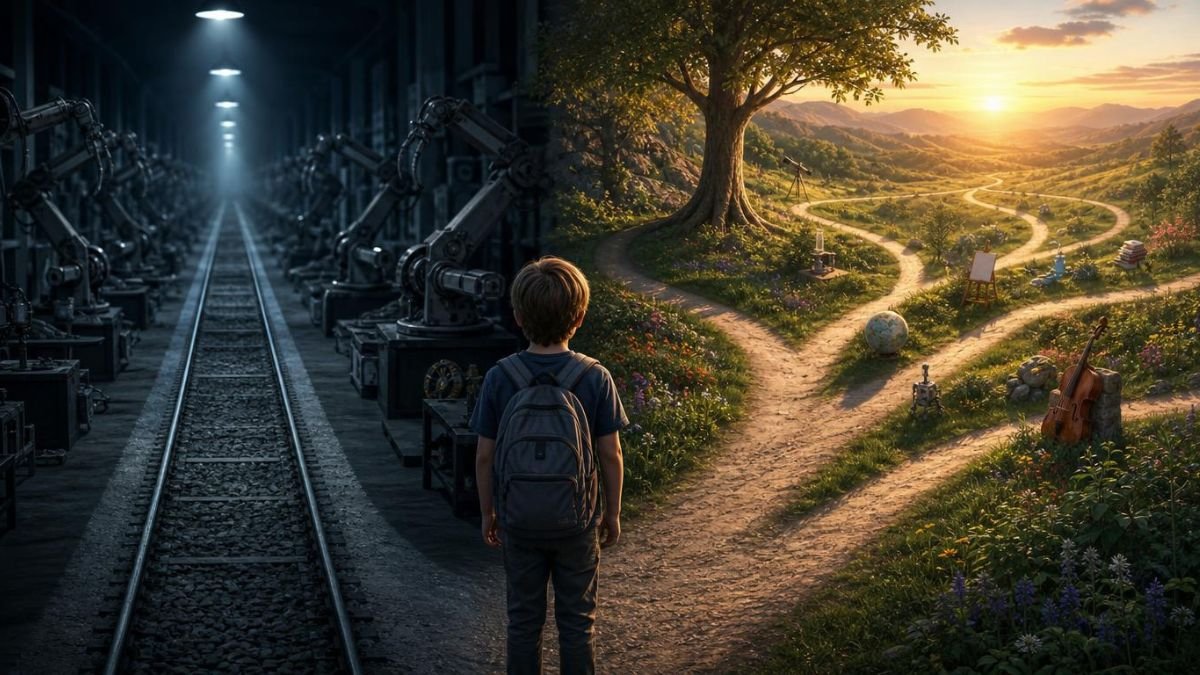
- If the future is already written, do you think we still have free will? Why or why not?
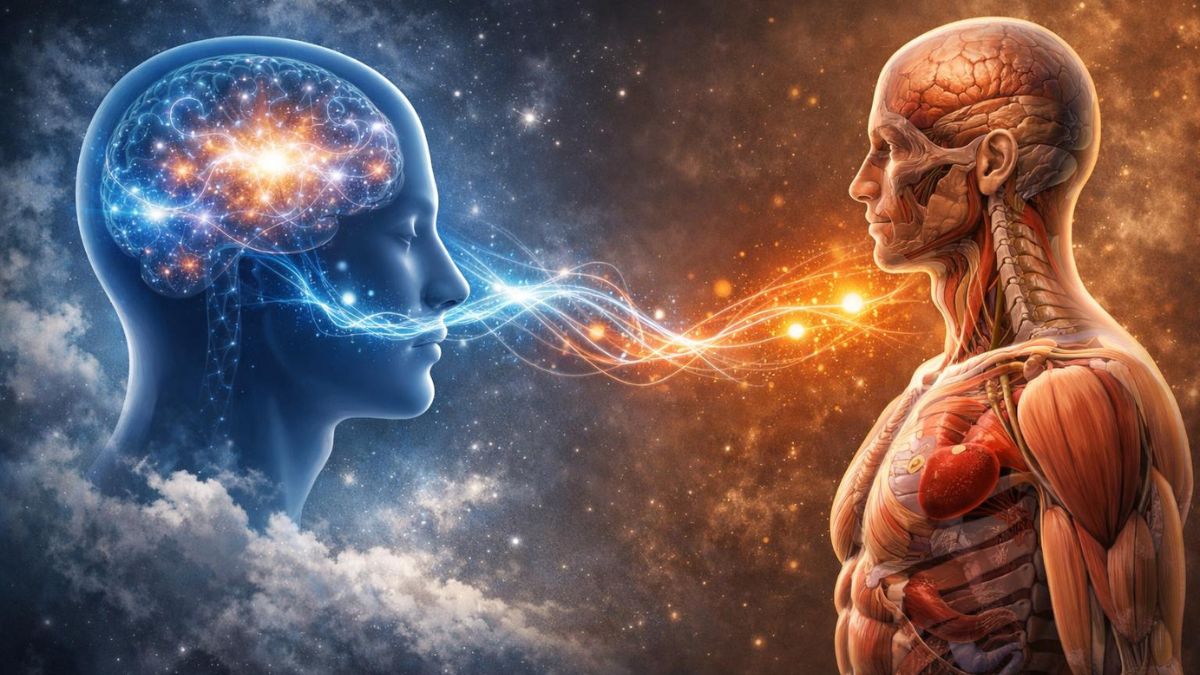
- How does your perception of time change when you're having fun versus when you're bored or in pain? What does this tell you about the relationship between your mind and time?
- Imagine you could step outside the flow of time and see your entire life—past, present, and future—all at once. What do you think you would learn?
Speaking Challenge
Here's a speaking challenge to get you playing with these concepts. Take one to two minutes to describe a favorite memory, but try to describe it from two different perspectives.
- Hint 1 (The River): First, describe it as something in the past that you are looking back on. Use past tense words. "I remember when I was a kid, we went to the beach. The water was so cold..."
- Hint 2 (The Block Universe): Now, try to describe that same moment as if it's a permanent place that still exists. Use present tense. "In one part of spacetime, I am a child, and I am standing on a beach. The water is cold on my feet. My family is there..."
This exercise can help you feel the difference between these two mind-bending ideas about time.





0 Comments