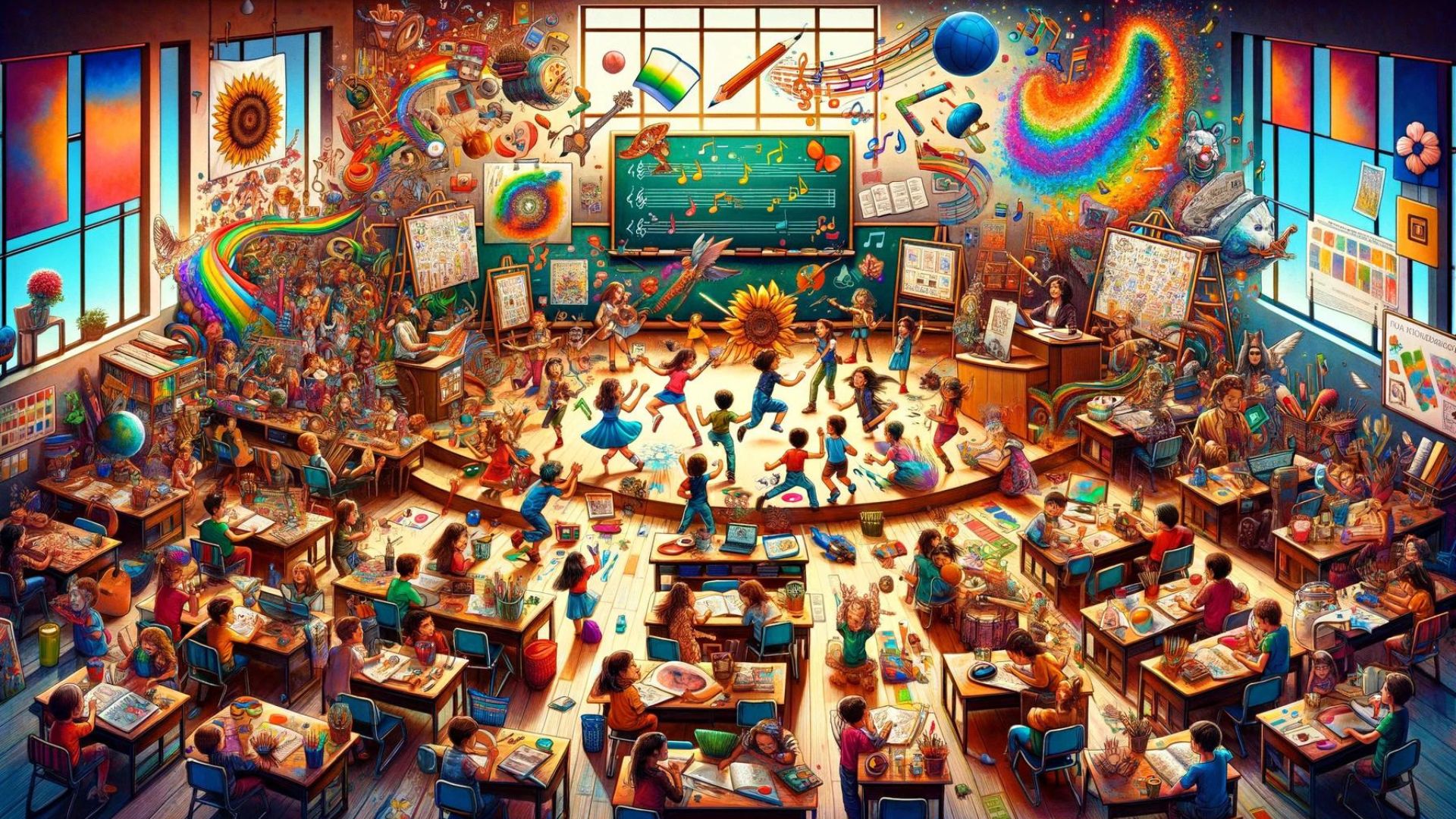
Arts Integration: More Than Just Fun and Games
Think of arts integration as the secret ingredient for unlocking kids' minds. It's weaving creative disciplines (visual arts, music, drama, dance) into core subjects like math, science, and language. Here's the magic:
- Learning with All Senses: Kids learn in different ways. Arts give them new avenues for absorbing information– visual, auditory, and kinesthetic.
- Making the Abstract Concrete: Geometry concepts become tangible when they're built, sung about when set to a tune, or danced to express shapes.
- Engagement & Joy Factor: When learning is fun and hands-on, kids are more motivated, retain information better, and discover a love for school.
- Critical Thinking Boost: Creating art requires problem-solving, innovation, and asking big questions, applicable to all areas of study.
Real-Life Case Studies
Let's see this in action:
- The Dance of Geometry: Students learn about angles and shapes not through worksheets, but by choreographing movements and forming their bodies into geometric patterns.
- Illustrating History: After studying the Civil War, children create dioramas depicting pivotal moments, or illustrate letters as if written by a soldier to family.
- The Science Songbook: Turning science facts into catchy songs or rhymes aids memorization and understanding of complex concepts.
The Results Speak for Themselves
Arts integration isn't just feel-good education; it has solid research behind it. Studies show students in these programs:
- Score higher on standardized tests in both the integrated subject and the art form itself.
- Have improved problem-solving skills and greater willingness to take creative risks.
- Show greater enthusiasm and better attendance, especially those from disadvantaged backgrounds.
Real-Life Takeaway
Even if you're not a teacher, understanding the power of arts integration has real-life applications:
- Advocate for Your Child: Does your child's school offer arts-rich learning? If not, speak up about the potential benefits.
- Creativity at Home: Encourage arts-based learning at home. Have a "science experiment" afternoon, draw family history timelines, act out stories.
- Community Connection: Support museums, after-school art programs, and initiatives that bring creative learning to more kids.
Arts can feel like a "nice to have" in education, but they're truly essential. When we give kids the tools to express ideas creatively, build connections across subjects, and discover the joy of learning, we set them up for success, not just in school, but in life.
Why Should You Care?
- Innovative Education: Arts integration challenges us to reimagine traditional learning and embrace strategies proven to engage and inspire kids.
- Student Success: Understanding the benefits helps advocate for wider implementation, ensuring more kids tap into their full potential.
- Well-Rounded Individuals: Learning extends beyond test scores. Arts integration fosters the creativity and problem-solving skills needed in the 21st century.
Key Takeaways
- Arts integration boosts learning: It's not just about entertainment; it enhances understanding across core subjects.
- Multiple Learning Styles: Arts connect with visual, auditory, and kinesthetic learners, increasing success for all.
- Joyful Learning: Creativity fosters a love of school, improved attendance, and motivation.
- Data Supports Results: Arts-integrated classrooms demonstrate higher academic performance and stronger soft skills.
Keywords
- Arts Integration: Seamlessly blending arts disciplines (visual, music, drama, dance) into core curriculum areas (language, math, science, etc.).
- Kinesthetic Learning: Learning through physical activity and movement.
- Critical Thinking: Analyzing information, questioning assumptions, and considering diverse perspectives.
- Engagement: Active participation and interest in the learning process.
- Standardized Tests: Assessments used for accountability, measuring student performance across a specific subject.
- Disadvantaged Backgrounds: Students who face socioeconomic challenges, impacting educational opportunities.
- Soft Skills: Abilities linked to success in school and life: collaboration, problem-solving, adaptability.
- Creative Expression: Communicating ideas and emotions through artistic mediums.
- Joy of Learning: The sense of excitement and satisfaction derived from the process of acquiring knowledge or skills.
- 21st Century Skills: The abilities seen as paramount for success in our rapidly changing world, including innovation, digital literacy, and collaboration.
Frequently Asked Questions
- My school doesn't have teachers trained in the arts. How can we do this? Collaborate! Classroom teachers and arts specialists can partner for innovative lesson plans.
- Are there resources to help with arts integration ideas? Yes! Many dedicated websites and organizations offer lesson plans, curricula, and professional development.
- How do you measure success beyond test scores? Look for increased student engagement, creative problem-solving, and more positive classroom culture.
Myth Buster
- Myth: Arts integration is only for naturally "artistic" kids.
- Reality: The benefits extend to all students! It's about offering different ways to understand concepts and build critical thinking skills.
Let's Talk
- Have you seen arts integration work successfully? Describe the experience!
- What obstacles do you think prevent more schools from adopting this approach?
- As a parent or educator, what's one creative idea you could implement in your learning environment?
Share your thoughts in the comments below!




0 Comments