
Why do we only find out how heavy something was after we put it down?
Because that's the strange sequence in this phrase, and I'd guess you've lived it. The difficult conversation you dreaded for weeks, and then had, and afterward walked outside and felt physically different — lighter, taller, as though someone had removed something. The decision finally made. The confession made. The resignation handed in.
And the sensation is unmistakable and slightly absurd. Nothing about your body changed. You are exactly the same mass you were an hour ago. And yet the shoulders come up, the breath goes deeper, and there's a lightness so physical you could almost weigh it.
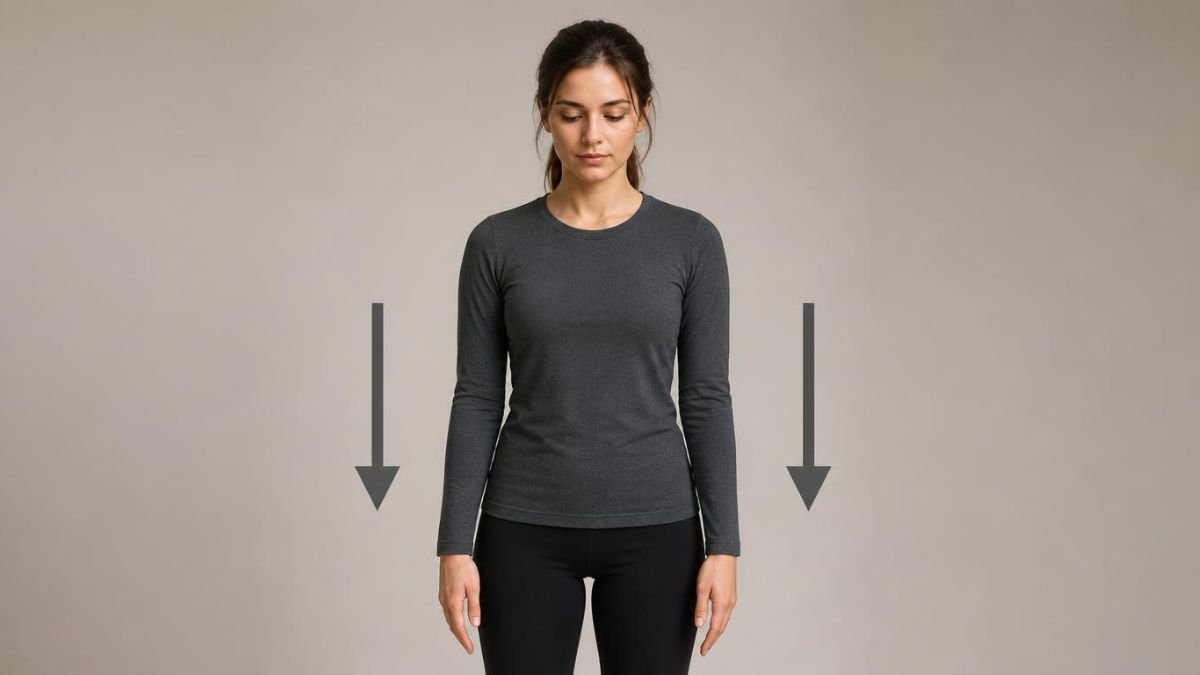
That's the phrase: a weight off your shoulders. And notice its precision — not off your back, not off your hands. The shoulders. That's where humans have always carried, and the anatomy is exact: the shoulders take the load, and when they're loaded they rise, they hunch, they draw in toward the ears. So a person carrying something invisible for a long time develops a posture. Which means burdens are visible from across a room, if you know to look, and the person carrying them is usually the last to notice.
But the thing I want to think about is the timing, because it's the most peculiar part.
You'd expect to feel a weight while carrying it. That's how weights work. But with the invisible kind — the unresolved thing, the withheld truth, the decision postponed — the experience is precisely the opposite. While you're carrying it, you feel nothing in particular. You feel normal. And you only discover the weight retroactively, in the split second of release, by inference from how good the absence feels.
Why? I think because adaptation is what nervous systems do best. Any sensation held constant fades from awareness — that's why you can't feel your clothes, why a smell disappears after ten minutes in a room, why the loudest fridge becomes silent. And a long-term burden is a constant. So it stops registering as an event and becomes the baseline. It stops feeling like something heavy and starts feeling like what life is like.
That's the actual danger. Not that we suffer under weights, but that we recalibrate around them and then describe the recalibration as our personality. I'm just an anxious person. I don't sleep well. I'm not very energetic. Sometimes those are true and permanent. And sometimes they're a description of what a person is like while carrying something they've stopped being able to feel.
Which means the phrase is doing something more useful than describing relief. It's providing a measuring instrument. The only way to know what you were carrying is to put something down and see what happens. That's real data, and it's available no other way.
And there's a whole category of these, if you go looking: the friendship you finally let end, and the surprising ease afterward. The commitment you dropped and immediately slept better. The unanswered message that had been quietly costing you something every day for a month. In every case, the size of the relief tells you the size of the weight — retroactively, and often shockingly.
Now, an honest complication, because not every load is one to shed.
Some weight is the good kind: children, work you believe in, promises you'd make again, people who depend on you. Putting those down would produce relief too, briefly, and then something considerably worse. So the presence of weight isn't a diagnosis. Plenty of the heaviest things in a life are the point of it.
The distinction I'd offer is this: some weights are carried toward something, and some are simply carried. A load you're taking somewhere has a destination and an end, and there's a specific satisfaction in bearing it. A load that has no destination — a resentment, an unsaid thing, an obligation whose purpose expired years ago — is just weight. You're not transporting it. You're holding it because you picked it up and never established a rule for setting it down.
And that's the category worth auditing. Not the things you're carrying for someone. The things you're carrying for no one, including yourself.
Here's one more observation, which is the practical center of this.
The weights that lift most dramatically are almost never removed by circumstances changing. They're removed by something being said. Look at the classic moments: the conversation had, the truth admitted, the request finally made, the apology given, the decision announced. In nearly every case, the external situation stays exactly as difficult as it was. The debt is still there. The illness is still there. What changed is that it stopped being carried alone and in silence.
Which suggests something about the nature of these weights. They may be made largely of concealment. It isn't the fact that's heavy — it's the holding of it out of view, the constant low-grade management of who knows what, the energy spent keeping a shape in place. Say it out loud to one person and the fact remains, unchanged, and somehow weighs a fraction of what it did.
That's not mystical. It's just that secrets require continuous labor, and facts don't.
And here's the last thing. There's a particular sadness in the phrase, because it's almost always said in the past tense — that's a weight off my shoulders — meaning we're describing something already over. Which means, statistically, right now you're carrying something. Something that will feel enormous the moment it lifts, and which you cannot currently detect at all, because you've been carrying it long enough to call it your life.
So here's what I'll leave you with. Somewhere on your shoulders, right now, is a weight you've completely stopped feeling — not because it's light, but because it's constant. So think about where the ache would be if you could feel it. What is the thing you've been holding out of view, managing quietly, for longer than you'd admit? And what would happen if you simply said it out loud, once, to one person?





0 Comments