The Oracle of Delphi Video
The Oracle of Delphi and Her Importance in Ancient Greece
When it comes to the history of Ancient Greece, the Oracle of Delphi stands out as one of the most fascinating and influential figures. This ancient priestess was believed to have the power of prophecy and was consulted by kings, generals, and common people alike for guidance on everything from personal matters to important political decisions. In this article, we will explore the history and significance of the Oracle of Delphi and how she shaped the course of Ancient Greek history.
The History of the Oracle of Delphi
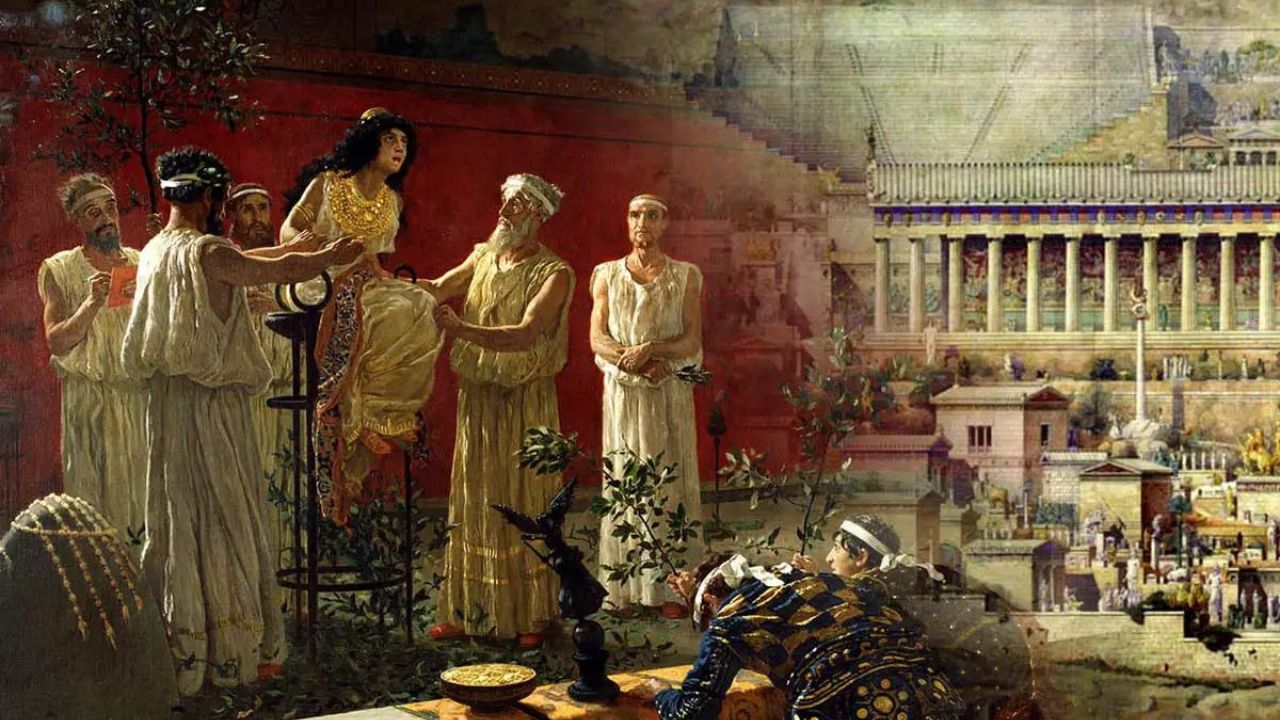
The Oracle of Delphi was a priestess who served at the Temple of Apollo in Delphi, Greece. The temple was built in the 4th century BCE and was considered the center of the world by the Ancient Greeks. According to legend, the Oracle of Delphi was established by Apollo himself, who had killed a giant serpent named Python on the site and claimed the land as his own. The Oracle was believed to be the voice of Apollo, who spoke through the priestess to deliver messages to those seeking guidance.
The first recorded consultation of the Oracle of Delphi was in 800 BCE, and she continued to be consulted until the 4th century CE when the Roman Emperor Theodosius I banned all pagan practices. During her time as the Oracle, she was consulted by everyone from common people to kings and generals, who sought her advice on a range of matters, including personal issues, political decisions, and military strategies. Her advice was highly regarded and often influenced the course of history.
How the Oracle of Delphi Worked
The Oracle of Delphi worked through a process called "divination." This involved the priestess, known as the Pythia, inhaling fumes from burning laurel leaves and sitting on a tripod stool over a fissure in the ground. The fumes were believed to put the Pythia in a trance-like state, during which she would receive messages from Apollo. The messages were often cryptic and required interpretation by a team of priests who would then deliver the response to the person who had sought the Oracle's advice.
The Importance of the Oracle of Delphi
The Oracle of Delphi was an important figure in Ancient Greece for several reasons. Firstly, she was seen as a link between the mortal world and the divine, which gave her advice a sense of authority and importance. Secondly, her advice was often sought by kings and generals, who valued her insights and believed that her advice could influence the outcome of battles and wars. Thirdly, the Oracle of Delphi was responsible for some of the most significant events in Ancient Greek history, including the founding of colonies, the outcome of wars, and the establishment of religious practices.
One of the most famous stories involving the Oracle of Delphi is the tale of King Croesus of Lydia. Croesus was one of the wealthiest kings in the ancient world and sought the Oracle's advice on whether he should go to war with the Persian Empire. The Oracle told him that if he went to war, a great empire would fall. Thinking that the Oracle was referring to the Persian Empire, Croesus went to war and was ultimately defeated. It wasn't until later that he realized that the empire that would fall was his own.
Another significant event involving the Oracle of Delphi was the founding of the city of Cyrene. The founder of the city, Battus, had consulted the Oracle and was advised to found a new city in Libya. The Oracle gave him specific instructions on where to found the city and how to govern it. Battus followed the Oracle's advice, and the city of Cyrene became one of the most prosperous and influential cities in the ancient world, thanks in part to the guidance of the Oracle.
The Oracle of Delphi also played a role in the establishment of the Pythian Games, which were athletic and artistic competitions held in Delphi every four years. The games were established in honor of Apollo, and the Oracle played a key role in their organization and promotion.
The Decline of the Oracle of Delphi
Despite her great importance in Ancient Greece, the Oracle of Delphi's influence began to wane in the 4th century CE. This was due in part to the rise of Christianity and the subsequent persecution of pagan practices. The Roman Emperor Theodosius I banned all pagan practices in 393 CE, which effectively put an end to the Oracle of Delphi's consultations.
In addition, there were several instances where the Oracle's advice proved to be inaccurate or misleading. For example, in 480 BCE, the Oracle advised the Athenians to put their faith in a wooden wall to protect them from the invading Persian army. Many Athenians interpreted this as a recommendation to build a physical wall around the city, but the Athenian general Themistocles argued that the "wooden wall" referred to the Athenian navy. Themistocles convinced the Athenians to invest in their navy, and they ultimately defeated the Persian fleet at the Battle of Salamis.
The Decline and Fall of the Temple of Delphi
The Temple of Delphi, which housed the Oracle, was an impressive and ornate structure that was considered one of the most important religious sites in Ancient Greece. However, over time, the temple fell into disrepair, and the Oracle's influence waned. In the 4th century CE, the temple was closed down by the Roman Emperor Theodosius I, who ordered the destruction of all pagan temples and the persecution of their priests.
Today, the ruins of the Temple of Delphi still stand as a testament to the Oracle's importance in Ancient Greece. Visitors can explore the remains of the temple and learn about the history of the Oracle and her consultations.
Conclusion
The Oracle of Delphi was an important figure in Ancient Greece, whose influence extended far beyond the confines of her temple. Her advice was sought by kings, generals, and common people alike, and her insights often influenced the course of history. While her influence waned in the 4th century CE, the Oracle of Delphi remains an important figure in the history of Ancient Greece and a testament to the power and influence of religion and prophecy in the ancient world.
Keywords:
- Oracle of Delphi: The ancient priestess who served at the Temple of Apollo in Delphi and was believed to have the power of prophecy.
- Prophecy: A message from a divine source that foretells future events or provides guidance.
- Temple of Apollo: A temple in Delphi, Greece, dedicated to the god Apollo.
- Pythia: The priestess who served as the Oracle of Delphi.
- Divination: The practice of seeking knowledge of the future or the unknown by supernatural means.
- Fumes: Smoke or vapors produced by burning substances.
- Trance: A state of altered consciousness in which a person is unaware of their surroundings and may be susceptible to suggestion.
- Cryptic: Having a meaning that is mysterious or obscure.
- Authority: The power or right to give orders, make decisions, and enforce obedience.
- Colonies: A group of people who settle in a new territory and establish political control over it.
- Lydia: An ancient kingdom in western Anatolia, which was famous for its wealth and prosperity.
- Persian Empire: An ancient empire based in Iran that was known for its military conquests and cultural achievements.
- Pythian Games: Athletic and artistic competitions held in Delphi every four years in honor of Apollo.








0 Comments
Trackbacks/Pingbacks