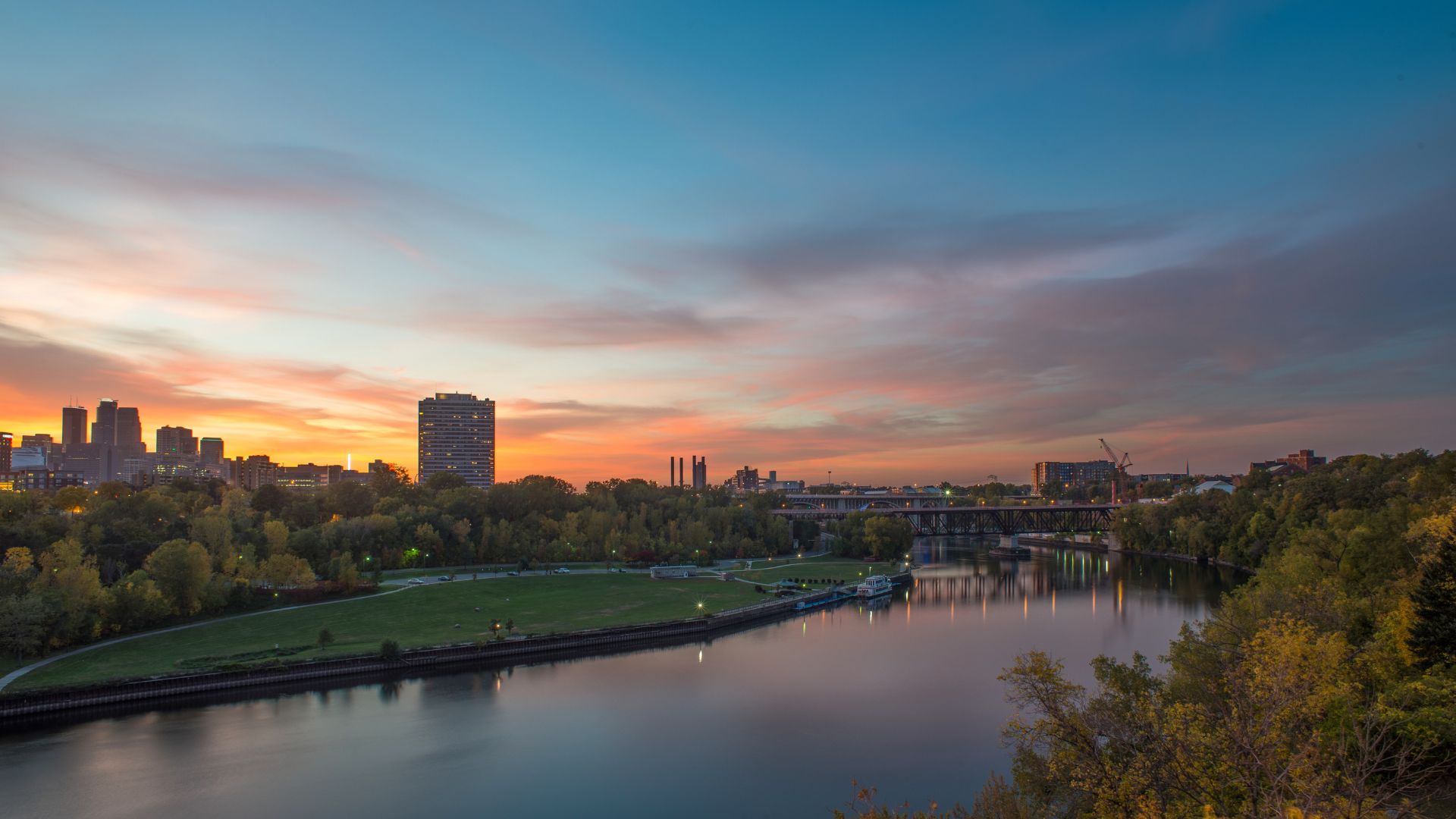
The Mississippi River is the most important river in North America. It provided a major highway for early explorers of North America. Many cities grew up along it. Furs and farm goods traveled from these settlements down the river to markets. Today, more freight travels on the Mississippi than on any other waterway within the continent.
FATHER OF WATERS
The Mississippi is known as the Father of Waters. It splits the United States from north to south in the nation’s heartland. The Mississippi gathers waters from rivers that lie between the Appalachian Mountains in the East and the Rocky Mountains in the West.
The Ohio River flows into the Mississippi at Cairo, Illinois. The Missouri River empties into it near St. Louis, Missouri. The Illinois and Arkansas are other major rivers that flow into the Mississippi.
LARGEST BUT NOT LONGEST
The Mississippi is the largest river in North America. This means that it carries more water than any other North American river. But the Mississippi is not the longest river. That honor goes to the Missouri. The Missouri is 200 miles (320 kilometers) longer.
The Mississippi starts at Lake Itasca in northern Minnesota. It flows southward through the central United States for 2,340 miles (3,770 kilometers). In southeastern Louisiana, the river empties into the Gulf of Mexico. Along the way, the Mississippi borders ten states.
CITIES ON THE RIVER
A number of important cities are located on the Mississippi River. Before railroads and roads were available, these cities shipped and received goods by keelboats, steamboats, and other vessels on the river. Today, coal, oil, grain, and other goods travel on barges along the river.
The biggest cities along the Mississippi are St. Paul and Minneapolis in Minnesota, St. Louis in Missouri, Memphis in Tennessee, and New Orleans in Louisiana.
CLAIMING THE RIVER
Native Americans lived along the Mississippi before European settlers arrived. Algonquian Indians gave the river its name. The name means “big water” in the Algonquian language.
Traders and colonists from France were the first Europeans to settle along the river. In 1682, French explorer René-Robert Cavelier, sieur de La Salle, claimed all the land drained by the Mississippi for France. In 1803, the United States bought the land west of the Mississippi from France. It was called the Louisiana Territory.
FLOODING
Heavy rains and melting snow sometimes cause the Mississippi to overflow its banks. It can cause severe flooding of nearby plains. A flood along the Mississippi in 1993 ranks among the nation’s worst disasters. Towns and farms from Minnesota to Missouri were flooded.
Levees, or high walls of dirt, line much of the Mississippi River. They help keep it from spilling over.









0 Comments