
English Plus Magazine
Dive into a world of ideas, stories, English and discovery.
Letter from the Editor
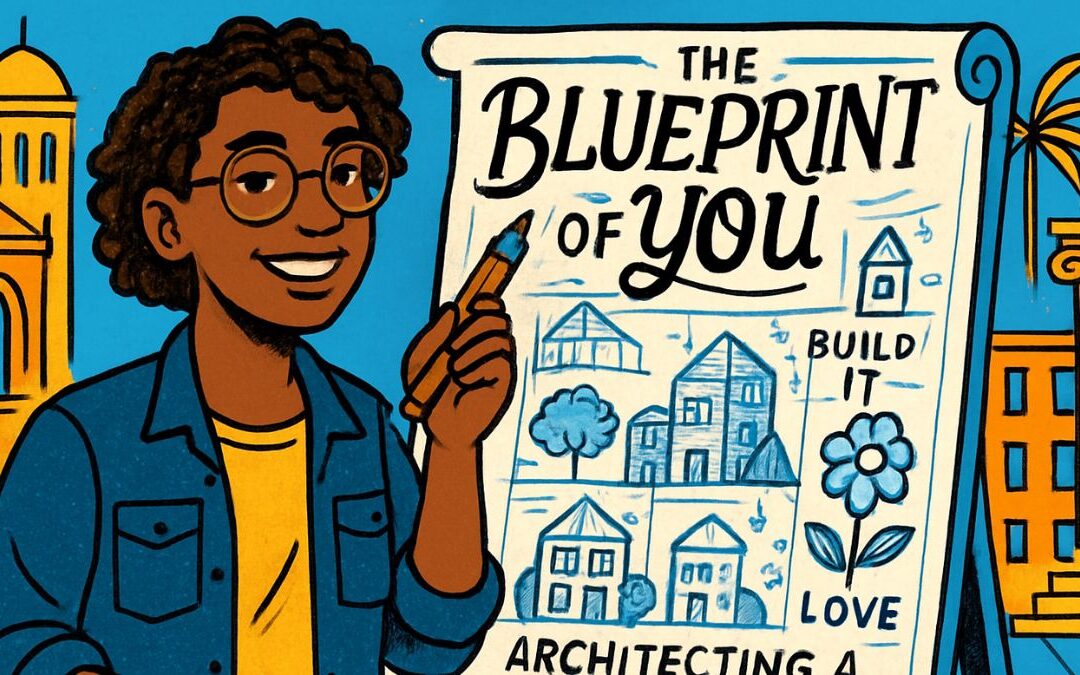
The Blueprint of You: Architecting a Future You’ll Love
When was the last time you let yourself truly, unapologetically daydream? I don’t mean worrying about next week’s grocery list or planning your commute. I mean that glorious, untethered, staring-out-the-window-with-a-goofy-grin kind of dreaming. It seems we get to a certain age, and the world subtly tells us to put away our crayons and our wild ideas. But what if the most practical, most adult thing you could do right now is to reclaim that ability to dream? What if the key to unlocking a life that genuinely thrills you is to start by creating a bold, brilliant future vision that feels less like a five-year plan and more like coming home?
Giving Yourself the Permission Slip to Dream
Remember being a kid on the playground? When someone asked what you wanted to be when you grew up, you didn’t say, “Well, considering the current job market and my pension plan options, I’m leaning toward a stable career in middle management.” Heck no. You were going to be an astronaut who was also a rock star. A dinosaur-taming chef. A secret agent who invented bubblegum that never lost its flavor. There was no ceiling, no budget, no voice of doubt whispering, “But how will you do that?” That voice comes later. It’s the ghost of a well-meaning relative, the echo of a failed attempt, the weight of a thousand tiny compromises we make just to get by. We trade our telescopes for microscopes, focusing so intently on the next tiny step that we forget to look up at the stars. The first step in building a vision isn’t about strategy; it’s about rebellion. It’s about writing yourself a permission slip, in big, loopy cursive, to be gloriously, wonderfully unrealistic.
Your Vision is Not Your To-Do List
Let’s clear something up right away. A “vision” is not the same as a “plan.” A plan is a spreadsheet. It’s a series of bullet points. It’s linear and logical and often incredibly fragile. The first sign of trouble, the first unexpected detour, and the plan shatters. A vision, on the other hand, is a feeling. It’s a vibe. It’s the Technicolor answer to the question: “How do I want to feel in my life?” It’s the scent of coffee in a sun-drenched kitchen you designed yourself. It’s the feeling of deep, belly-laughing contentment with people you love. It’s the quiet pride of mastering a skill you once thought impossible. A plan is about the “how.” A vision is about the “what,” and more profoundly, the “why.”1 When you lead with the “why,” the “how” has a funny way of revealing itself.
Setting the Universe’s GPS
Think of it this way: creating a vision for your future is like plugging a destination into your car’s GPS. You don’t need to know every single turn, every pothole, every red light you’re going to hit along the way. You just need to know where you’re going. You need to tell the universe, your subconscious, whatever you want to call it, “This is the destination. This is the energy, the feeling, the reality I’m navigating toward.” Once that destination is locked in, you can start driving. You might hit a traffic jam. The GPS might say, “Recalculating.” You might have to take a scenic route you never expected, one that turns out to be more beautiful than the highway ever could have been. Without a destination, you’re just driving in circles, burning gas, and wondering why you never seem to get anywhere new. Your vision is your North Star. It doesn’t eliminate the dark and winding roads, but it gives you a constant point of light to steer by.
Let’s Get Messy: How to Build Your Blueprint
So how do we do this? How do we move from a vague, fuzzy idea to something tangible? Let’s get our hands dirty. Grab a notebook, open a blank document, or just find a quiet corner of your mind for a few minutes. First, I want you to try the “Perfect Ordinary Day” exercise. Forget winning the lottery or becoming a global superstar for a second. Instead, imagine yourself five, maybe ten years from now, on a perfectly normal Tuesday. What time do you wake up, and without an alarm clock? What’s the first thing you see or hear? What does your home feel like? Who is with you? What work do you do, and how does it make you feel at the end of the day—drained or energized? What do you do for fun? What does your body feel like? Strong? Rested? Don’t just list things; immerse yourself in the sensory details. The goal here isn’t to create a list of stuff you want to own, but to identify the core feelings you want to inhabit: Peace. Creativity. Connection. Freedom. Vitality.
Chasing Feelings, Not Just Goals
Once you’ve identified those core feelings, you’ve struck gold. This is the secret sauce. So many of us chase external goals thinking they will deliver an internal feeling. We chase the promotion because we think it will bring us a feeling of validation. We chase the bigger house because we think it will give us a feeling of security and peace. But what if we flipped the script? What if you identified “validation” or “peace” as the true goal? You can start asking yourself a much more powerful question: “How can I cultivate more of that feeling in my life right now?” You don’t have to wait for the promotion to feel validated; you can find it by acknowledging your own progress or mentoring someone else. You don’t have to wait for the dream house to feel peace; you can create it with a five-minute meditation practice or by decluttering a single drawer. This isn’t about settling; it’s about aligning your present self with your future self. It’s about starting to live in that new reality before it has fully arrived.
When Your Inner Critic Crashes the Party
Right about now, that little voice of doubt might be clearing its throat. “That’s all very nice,” it scoffs, “but what about my student loans? What about my mortgage? My kids? My responsibilities? It’s irresponsible to just dream.” And you know what? That voice isn’t an enemy. It’s a scared part of you that’s trying to keep you safe. So don’t fight it. Acknowledge it. Say, “I hear you. Thank you for trying to protect me. I know this seems scary and impractical. But we’re just exploring right now. We’re just making a map. We’re not selling the house and joining the circus tomorrow… unless, of course, the circus turns out to be the destination.” The vision isn’t a denial of your reality. It’s a tool to transform it. It gives your daily struggles a purpose. Mowing the lawn isn’t just a chore; it’s tending to the home that’s a sanctuary for your peaceful future self. Working that extra shift isn’t just about paying bills; it’s funding the dream of starting your own business. The vision infuses the mundane with magic.
Your Vision is a Living, Breathing Thing
Finally, remember that this blueprint you’re creating isn’t etched in stone. It’s sketched in pencil. You are allowed to change. You are allowed to evolve. The person you are today might want something different than the person you’ll be in five years, and that’s not a failure—it’s growth. Revisit your vision. Check in with it. Does it still light you up? Does it still feel like home? Maybe the destination needs a little tweak. Maybe you’ve discovered a new passion along the way that needs to be added to the map. Your vision is a co-creation between who you are now and who you are becoming. It’s a dance. Let it be fluid. Let it be joyful. Let it be yours.
This isn’t just about wishful thinking. It’s about intentional creation. It’s the most profound act of self-love and respect—to believe that you are worthy of a future that you deliberately and lovingly build for yourself. It’s about becoming the architect of your own soul’s home.
So, I’ll leave you with this to ponder. If you silenced the voice of doubt, if fear and practicality and other people’s opinions were off the table for just one moment… what’s one audacious, beautiful, maybe even silly thing that would be part of your future vision? What does the future you feel like?
Let me know in the comments below. I’d genuinely love to hear about the worlds you’re building.
More Editorials
No Results Found
The page you requested could not be found. Try refining your search, or use the navigation above to locate the post.
Featured Articles

How Literature Inspires Social Change and Activism
Discover how literature has historically influenced social movements and inspired activism, from classic novels to modern writings that challenge injustice and inspire change.
Poland’s Rich Tradition of Folk Art: A Cultural Legacy
Explore the rich tradition of Polish folk art, from intricate paper cuttings to vibrant regional costumes. Discover how these timeless crafts continue to shape Poland’s cultural identity.
Setting and Achieving Short-Term and Long-Term Goals: A Guide to Success
Discover how to set effective short-term and long-term goals, why both are essential for success, and how to stay focused on achieving them in this practical guide.

The Life of a Defense Attorney: What Happens Beyond the Courtroom Drama
Discover the reality of being a defense attorney beyond the courtroom drama. Learn about the day-to-day responsibilities, challenges, and the skills required to succeed in this demanding legal career.
Does Everything Happen for a Reason? Exploring Fate, Chance, and Purpose
Explore the age-old question of whether everything happens for a reason. Dive into perspectives on fate, chance, and purpose, and how they shape our understanding of life’s events.
Exploring Sartre’s Nausea: A Journey into Existentialism
Dive into Jean-Paul Sartre’s Nausea, a foundational existentialist novel that explores the human experience of meaninglessness and existence. Discover the core themes and impact of this literary masterpiece.

The Power of Irony in Storytelling: How to Master this Literary Device
Learn how to effectively use irony in storytelling to engage readers and add depth to your narratives. Explore different types of irony and how they can enhance your creative writing.

Making Fitness Fun: Creative Exercise Ideas to Stay Active
Discover fun and unique exercise ideas to make fitness exciting again. From dance workouts to outdoor adventures, these creative activities will help you stay active and enjoy the process.
The Legacy of Paul Cézanne: Pioneer of Modern Art
Discover the lasting impact of Paul Cézanne, a master painter who laid the foundation for modern art. Explore his unique style, influence on other artists, and his journey to becoming an iconic figure in art history.
More Articles
Creating Complex and Relatable Side Characters: The Key to Enriching Your Story
Learn how to create complex and relatable side characters that enhance your story. Discover tips to give depth and personality to supporting characters in your creative writing.
Exploring ‘The Green House’ by Mario Vargas Llosa: A Tale of Power, Corruption, and Humanity
Discover the powerful themes of power, corruption, and human nature in Mario Vargas Llosa’s ‘The Green House.’ Explore a thought-provoking analysis of this classic literary work.
Stretches for Better Posture and Health: Simple Moves to Transform Your Well-Being
Discover effective stretches to improve posture and overall health. Learn how incorporating these simple movements into your routine can enhance your well-being.
Cesar Chavez: Champion of Farm Workers’ Rights and Civil Rights Leader
Explore the life and legacy of Cesar Chavez, a tireless advocate for farm workers’ rights and civil rights. Learn about his greatest achievements and lasting influence.
Racial Profiling and Police Brutality: A Deep Dive into the Ongoing Social Crisis
Explore the deep-rooted issues of racial profiling and police brutality, understanding their impact on society and the importance of taking action for change.
The Gunpowder Plot: The Infamous Conspiracy That Shaped England’s History
Explore the story of the Gunpowder Plot, the failed conspiracy to blow up the English Parliament, and its lasting influence on British history and culture.
The Legend of the Fountain of Youth: Myth, Exploration, and the Quest for Eternal Life
Discover the myth of the Fountain of Youth, its origins in Spain, and the legend tied to Florida. Learn how the quest for eternal youth has shaped history and inspired modern-day explorations.
Cognitive Load Theory: How Much Information Can Your Brain Handle at Once?
Discover how cognitive load theory explains the brain’s ability to process limited information at a time. Learn how to manage cognitive load and improve learning efficiency.
The Expanding Universe: How We Know Our Universe is Growing
Discover the fascinating science behind the expanding universe. Learn how scientists measure cosmic growth and why this knowledge matters in understanding our place in the cosmos.
How Dreams Help with Memory Consolidation
Discover the fascinating link between dreams and memory consolidation in neuroscience. Learn how dreams might help your brain organize and store memories while you sleep.
Learn English Magazine

William Tell, Man or Myth? Separating Fact from Fiction
Explore the origins of the William Tell legend and separate fact from fiction in Swiss folklore. Learn about the evidence for his existence, the embellishments to his story, and the enduring legacy of this legendary figure in Swiss culture.

A Tale of Two Cities: A Classic Novel of Love, Revolution and Redemption
Discover the enduring appeal of Charles Dickens’ classic novel “A Tale of Two Cities.” From its vivid portrayal of the French Revolution to its exploration of themes of love, sacrifice, and redemption, this literary masterpiece continues to captivate readers over 160 years after its initial publication. Learn about the plot, characters, themes, writing style, and historical context of this beloved classic, as well as its adaptations and legacy in popular culture.

Rangoli, Art at the Threshold
Rangoli is a traditional Indian art form that has been passed down through generations of Indian women. It is a way to express creativity, mark important events, and create a sense of warmth and hospitality. Discover the significance of Rangoli in Indian culture, its spiritual and symbolic meaning, and how it connects people and showcases regional diversity.

The Dark and Twisted World of “Wuthering Heights”
Discover the enduring appeal of Emily Bronte’s Wuthering Heights, a novel that explores the destructive power of obsession, the impact of social class on people’s lives, and the complex dynamics of family relationships.

The Phoenix Poetry | Don’t Cry
Have you been frustrated lately? You see all your world closing down on you, don’t cry, do something. Enjoy the poem Don’t Cry — by D. H. Phoenix

Poetry | Pyramid
How is the world classified today? Has it changed since ancient history or is it still the same, and more importantly who is to blame. Enjoy my poem, Pyramid, from my poetry collection, The War Edition in this episode of Poetry from English Plus Podcast.

Poetry | Bombardment
What can be the thinking of an officer ordered to drop a bomb on a place teeming with civilians and life, but that’s an order. Bombardment is the poem I chose for today’s Poetry episode.

Poetry | War Against Everybody
Have you ever waged any kind of war and you were too angry to question why you have waged this war and against whom? Today’s poem is War Against Everybody from Chaos poetry collection by Danny Ballan.

Poetry | Curly
Poets are dreamers, idiots who believe in their own worlds and can sharpen their imagination to reach unbelievable depths, but they pretty much live there on their own. Curly is a new poem by Danny from English Plus Podcast.

Poetry | To A Stranger
To all strangers who are reading or listening to this poem, I salute you. Without you, I could have never called myself a writer. I dedicate this poem to you.
Literary Magazine
No Results Found
The page you requested could not be found. Try refining your search, or use the navigation above to locate the post.