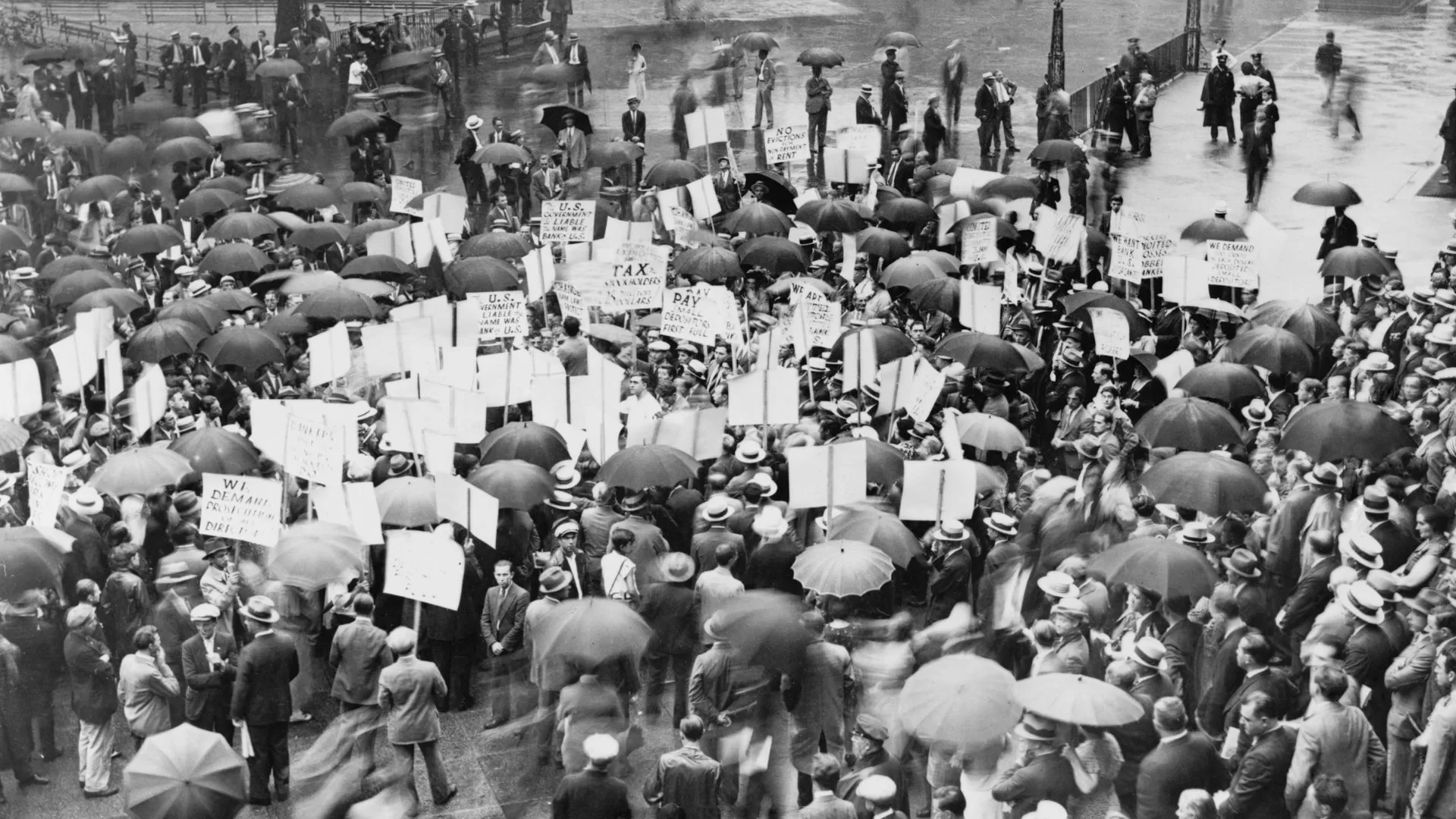
The Great Depression, a tumultuous period in the early 20th century, stands as a stark testament to the interconnectedness and fragility of global economies. Originating from the United States in 1929, following the catastrophic stock market crash, this economic maelstrom swiftly engulfed the world, leaving indelible marks on societies, politics, and the global economic framework.
At the heart of this economic debacle was the unprecedented stock market crash on Wall Street. Speculative fervor had inflated stock values to untenable heights, creating a financial bubble that, when burst, resulted in a cataclysmic downward spiral. Millions saw their life savings evaporate overnight, engendering a palpable sense of despair and hopelessness.
The United States, the epicenter of this crisis, witnessed a dramatic escalation in unemployment rates. Industries faltered, businesses collapsed, and banks failed in droves, leaving a quarter of the workforce jobless. The ripple effects transcended national borders, impacting countries worldwide. Nations heavily reliant on American trade, investments, and loans found their economies in a precarious position.
In Europe, already reeling from the aftermath of World War I, the Depression exacerbated existing economic woes. Countries like Germany, burdened by war reparations and reliant on American loans, faced dire economic straits. This turmoil laid fertile ground for political extremism, contributing to the rise of authoritarian regimes, most notably Adolf Hitler’s Nazi Germany, fundamentally altering the course of history.
The global agricultural sector faced its own set of challenges. Overproduction, coupled with plummeting prices, led to widespread rural distress. In the United States, this was exemplified by the Dust Bowl, an ecological catastrophe that devastated the Great Plains, displacing thousands of farmers and exacerbating the country's economic woes.
Governments worldwide scrambled to respond to this crisis. In the United States, President Franklin D. Roosevelt’s New Deal marked a significant shift in government policy, emphasizing state intervention in the economy. Public work programs, financial reforms, and social welfare initiatives were introduced in an attempt to revitalize the economy and mitigate the suffering of the populace.
The Depression also spurred a rethinking of economic theories. John Maynard Keynes, a British economist, challenged the prevailing laissez-faire approach, advocating for increased government spending to stimulate demand. His ideas reshaped economic policies and laid the foundation for modern macroeconomics.
Culturally, the Great Depression left a profound legacy. It influenced a generation of writers, artists, and filmmakers, who captured the struggles and resilience of people during these trying times. This era saw the emergence of works that blended realism with social commentary, reflecting the hardships and spirit of the age.
In conclusion, the Great Depression was not merely an economic downturn; it was a pivotal event that reshaped the global order. Its impacts were profound and far-reaching, influencing economic policies, political ideologies, and cultural expressions. It serves as a poignant reminder of the vulnerabilities and complexities of the global economic system, lessons that continue to resonate in contemporary times. This historical epoch, with its myriad tales of despair, resilience, and reform, remains a powerful allegory of human endurance and the relentless pursuit of recovery in the face of overwhelming adversity.
Crossword Puzzle in Context
All the words you need to solve the crossword puzzle below can be found in the article above. Enjoy!
Crossword Puzzle PDF (With Answers)
Master the New Words
Don't stop here! Keep practicing these words and add them to your permanent vocabulary bank.








0 Comments