- FAQ #1: Was Everyone Constantly Dirty and Diseased?
- FAQ #2: Was the World Believed to be Flat?
- FAQ #3: Did Everyone Live in Drafty Castles?
- FAQ #4: Were Knights in Shining Armor the Ultimate Heroes?
- FAQ #5: Did Women Have No Power?
- The Medieval World in Color
- Action Point
- Why Should You Care?
- Key Takeaways
- Keywords
- Myth Buster
- Let's Talk
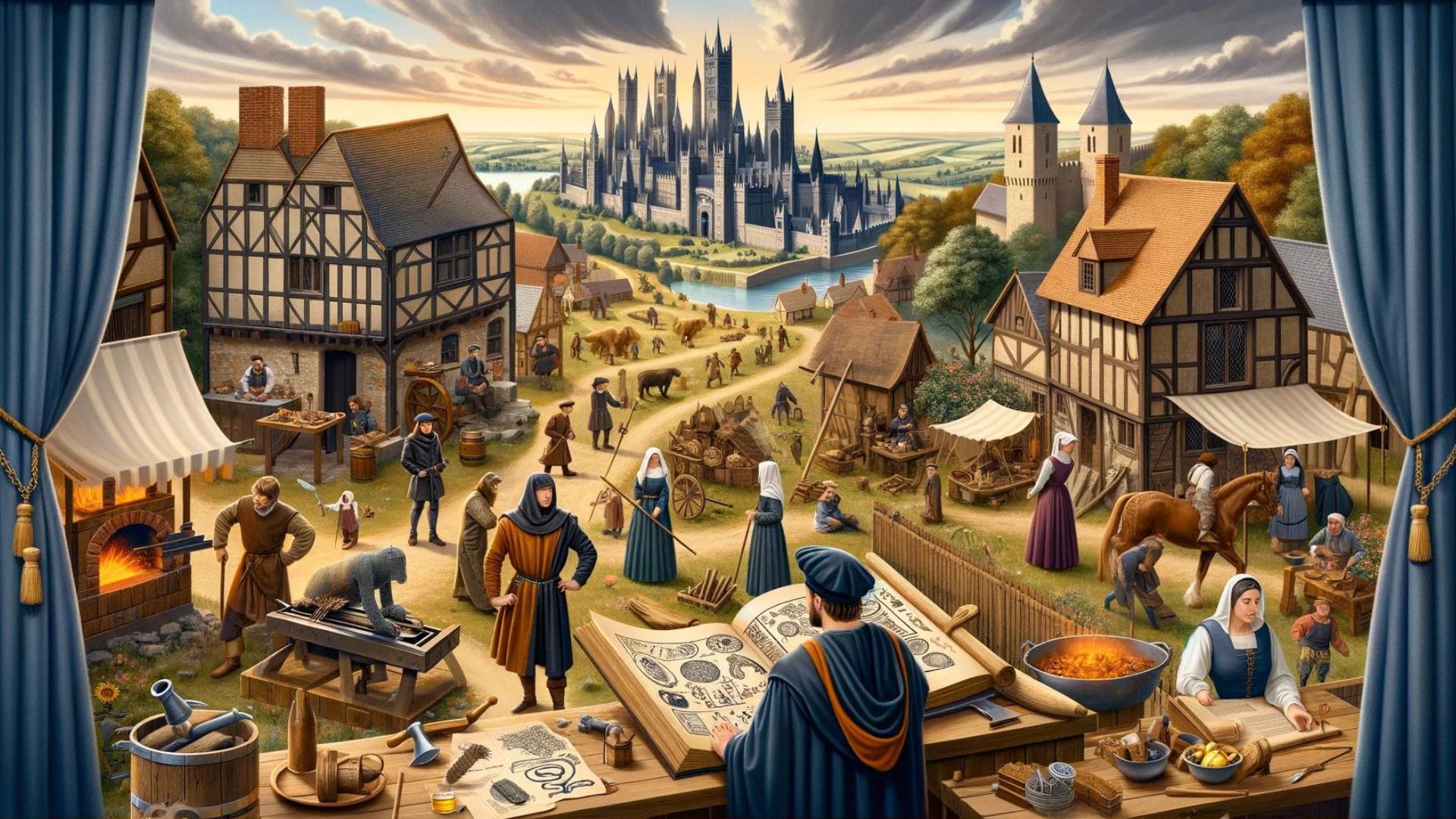
Picture the Middle Ages: what comes to mind? Jousting knights? Plague-ridden cities? Damsels in distress? While some images hold truth, Hollywood and popular misconceptions have painted a skewed picture of this complex period. Let's time travel and answer some FAQs:
FAQ #1: Was Everyone Constantly Dirty and Diseased?
While hygiene standards differed from ours, it wasn't all filth. Bathing was less frequent, but clean towns and a focus on public bathhouses existed. The Black Death was devastating, but not a constant reality for a millennium!
FAQ #2: Was the World Believed to be Flat?
Educated people in the Middle Ages knew the Earth was round. Sailors navigated with that knowledge! The misconception arose much later.
FAQ #3: Did Everyone Live in Drafty Castles?
Castles were fortresses, not cozy homes! Most people lived in villages in simpler structures. Think wood, thatch, and a whole lot of community life.
FAQ #4: Were Knights in Shining Armor the Ultimate Heroes?
Knighthood was tied to a code of chivalry, emphasizing honor and protecting the weak. But, the reality? Warfare was brutal, and some knights were far from noble.
FAQ #5: Did Women Have No Power?
Think again! Women held diverse roles: Peasants worked alongside men, nuns wielded influence in the Church, and figures like Joan of Arc even led armies. While rights were limited, it wasn't a monolith of helplessness.
The Medieval World in Color
The Middle Ages were far from the uniformly "Dark Ages" they're often labeled. It was a period of immense change, faith, artistic beauty, and scientific progress occurring alongside violence and hardship – not unlike any era of history!
Action Point
This week, pick a medieval topic that sparks your curiosity – the Crusades, gothic architecture, a famous ruler – and do some digging. Seek out reliable sources for a more nuanced picture!
Why Should You Care?
- Busting Stereotypes: Understanding the Middle Ages helps us dismantle harmful stereotypes and see historical periods with more nuance.
- Appreciating the Past: Exploring this era reveals how past events and ideas have shaped our world today.
- Curiosity is Contagious: Debunking myths about the Middle Ages helps promote a love of learning and critical thinking about all areas of history.
Key Takeaways
- The Middle Ages weren't uniformly dirty or disease-ridden. Standards differed from ours, but hygiene and knowledge existed.
- Educated people knew the Earth was a sphere throughout this period.
- Most people lived in rural villages, not castles.
- Knighthood was complex - some honored codes of chivalry, but brutality was part of medieval warfare.
- Medieval women held more diverse roles and power than commonly assumed.
- The term "Dark Ages" misrepresents a time of vibrant change, violence, beauty, and progress.
Keywords
- Middle Ages: European historical period spanning roughly 5th to the 15th centuries.
- Chivalry: Code of conduct for medieval knights, emphasizing bravery, honor, and protecting the weak.
- Black Death: Bubonic plague pandemic that ravaged Europe in the 14th century.
- Peasant: A low-status agricultural laborer in the medieval period.
- Gothic Architecture: A style featuring pointed arches, stained glass windows, and soaring ceilings, often in grand cathedrals.
- Crusades: Religious wars between Christians and Muslims over control of the Holy Land.
- Joan of Arc: French peasant girl who believed she had divine visions, led armies, and became a national hero.
- Monastery: A religious community where monks live and dedicate themselves to prayer and work.
- Feudal System: Medieval social structure with kings, lords, knights, and peasants in a hierarchy of obligations.
- Renaissance: Period of artistic and intellectual awakening following the Middle Ages.
Myth Buster
- Myth: The Middle Ages were a time of intellectual stagnation and lack of progress.
- Truth: It saw significant advances in agriculture, architecture, philosophy, and early scientific ideas within the context of their time.
Let's Talk
- If you could ask someone from the Middle Ages about their life, what would your top question be?
- Which major invention or discovery from this period has the most impact on our world today?
- Do we still have "modern-day" equivalents of knights and chivalry? Discuss.
Let's keep the exploration going in the comments!





0 Comments