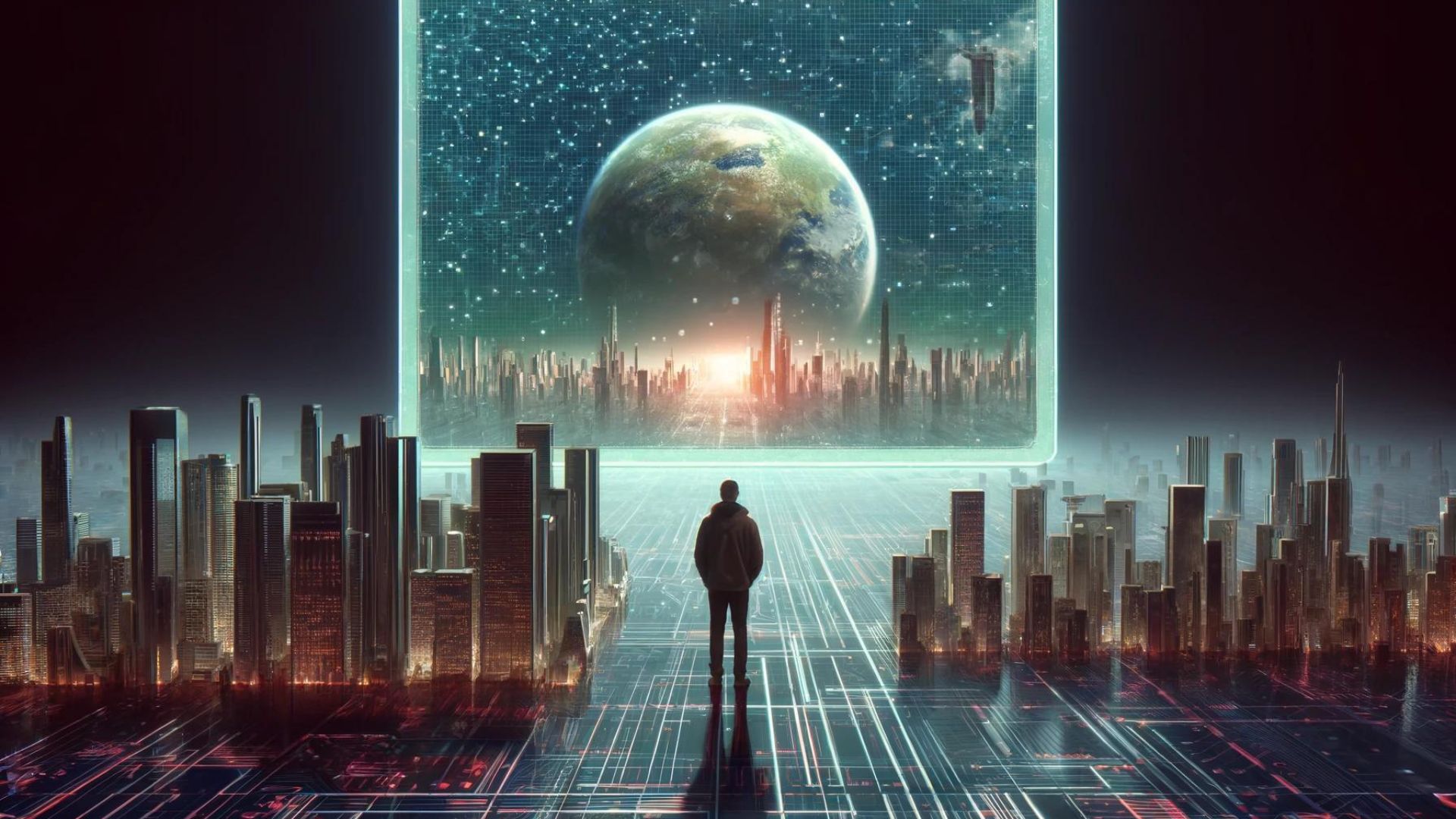
Down the Rabbit Hole: Could Our Reality Be a Simulation?
The simulation hypothesis is a tantalizing, almost dizzying, idea: what if our entire reality, everything we perceive as real, is actually a sophisticated computer simulation? It's a concept beloved by science fiction, but it's also pondered by some philosophers and scientists.
The Argument for Simulation
The core of the argument goes something like this:
- Technological Progress: If technological advancement continues, we may reach a point where we have the power to simulate entire universes that are indistinguishable from our own.
- Ancestor Simulations: If these simulations house conscious beings, those beings might themselves create new simulations. This raises the possibility that we are in a simulation created by an advanced civilization.
- Statistical Chances: If many simulated realities exist, it seems more likely that we inhabit one of those simulations than being in the one "base reality."
Searching for Glitch in the Matrix
If we're in a simulation, could we discover evidence? Theorists suggest looking for potential 'tells':
- Computational Limits: Are there glitches in the laws of physics, or limits in the resolution of our world hinting at underlying coding?
- Superintelligence's Signature: Could unexplained events or phenomena be the result of interventions by the simulators?
- Artificial Restrictions: Do constraints in our world exist to prevent simulated beings from realizing their true nature?
Mind-Bending Implications
If we are in a simulation, the implications are staggering:
- The Purpose Question: Why create a simulated universe, and what would be our role within it?
- Redefining Reality: What we consider 'real' would need to be completely re-evaluated.
- Existential Implications: Would this knowledge influence how we live and the choices we make?
Simulation or Not: A Thought-Provoking Idea
While there's currently no definitive proof for the simulation hypothesis, it poses fascinating questions about the nature of reality, the potential limits of our knowledge, and the possibilities of technological advancement. Whether or not you believe in the simulation hypothesis, it undeniably forces us to reconsider what we take for granted as the fundamental fabric of our existence.







0 Comments