English Plus Magazine
Dive into a world of ideas, stories, English and discovery.
Coming Soon!
Some of these articles are already published, and some will be published very soon. Check out the new articles below…
Danny's Column
Echoes of a Silent Past: What If War Was Never Invented?
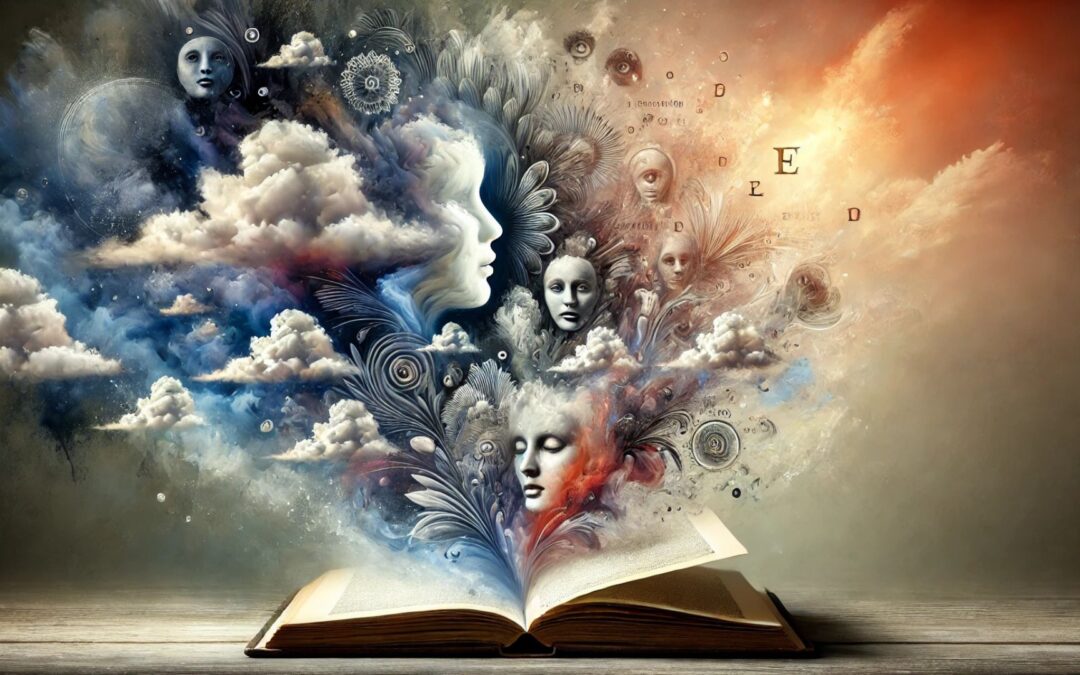
What sound does a history book make when you rip out all the pages about battles? Is it a lighter book, easier to carry? Or is it an empty one, its spine broken and its story gone? Let’s try something fun. For the next few minutes, let’s get our hands dirty with imagination. Let’s build an alternate reality, a grand thought experiment, and ask a question that feels both impossible and essential: what if humanity had never, ever known war? I’m not just talking about a peaceful decade or a quiet century. I’m talking about a deep, fundamental absence of organized conflict in the human story. Let’s try to imagine a world without war, not as a utopia, but just as… a different path taken.
The Great Accelerator or The Great Destroyer?
Okay, let’s get the big, practical question out of the way first, because I know the pragmatist in you is already shouting it. What about our technology? So many of the things that define our modern world were forged in the crucible of conflict. The internet began as a military project to create a decentralized communication network that could survive a nuclear attack. GPS was built for guiding missiles, not for helping you find the nearest coffee shop. Jet engines, nuclear power, even advances in surgery and penicillin production were all massively accelerated by the urgent, life-or-death pressures of war.
So, in our peaceful timeline, are we all just riding horses and communicating by carrier pigeon? Maybe. Or maybe not. It’s true that war is a powerful accelerator. It’s a brutal, high-stakes, no-budget-limit form of problem-solving. But is it the only accelerator? Think about the Space Race. Yes, it was born out of the Cold War, but the driving force was primarily competition, national pride, and the sheer, unadulterated wonder of exploration. Could a “Health Race” to cure cancer have spurred the same medical innovations as a World War? Could a global competition to build the first sustainable city on the moon or at the bottom of the ocean have driven the same computational leaps as the arms race? Progress might have been slower, more deliberate. Perhaps we would have reached the digital age in 2075 instead of 1995. But maybe we would have arrived there with more wisdom, having asked not just “Can we build this?” but also “Should we build this?” along the way.
A Map Drawn with Bridges, Not Borders
Now, close your eyes for a second. Picture a world map. Those lines, those borders that carve up the continents—so many of them are scars. They are the outcomes of treaties signed in the shadow of battlefields, the ceasefire lines that hardened into frontiers, the ghosts of fallen empires. In a world without war, what would a map even look like?
Perhaps it wouldn’t be a patchwork of nations defined by defensible rivers and mountains, but a web of city-states defined by their culture, their art, their primary trade. Maybe the most important lines on the map wouldn’t be political borders but great trade routes, the paths of grand scientific expeditions, or the migratory patterns of artists and philosophers. Without the constant threat of invasion, would societies have been more open, more porous? You might have seen cultures blend in ways we can barely imagine, creating beautiful, hybrid civilizations over centuries of peaceful exchange. The architecture of a city in what we call Italy might have Persian influences, not because of conquest, but because a generation of builders went to study there and brought back ideas they loved. The map of humanity might look less like a shattered plate and more like a beautiful, intricate mosaic.
The Stories We’d Tell Ourselves
This is where it gets really interesting for me. Think of the stories that have shaped us. The Iliad, the Odyssey, the Mahabharata, the Aeneid, Beowulf. Think of Shakespeare’s histories, War and Peace, All Quiet on the Western Front. Even our modern myths, like Star Wars or The Lord of the Rings, are fundamentally about war. Conflict is the engine of our epic narratives. Heroes are forged in battle; villains are defined by their lust for conquest.
So, in our peaceful world, what are the epics about? What stories do parents tell their children? Maybe the greatest human epic isn’t about the Trojan War, but about the “Great Planting,” the centuries-long, planet-wide effort to reverse a desert and build a forest. Maybe the hero isn’t a warrior with a sword, but an explorer who charts the deepest trench in the ocean, a scientist who eradicates a deadly disease, or a team of engineers who build a bridge that connects two continents. What would heroism even mean in a world without warriors? Would it be defined by courage in the face of the unknown? By compassion in the face of suffering? By the sheer creative force required to build something beautiful and lasting? The library of this alternate world makes my heart ache with curiosity. I want to read those stories.
Who Are ‘We’ Without a ‘Them’?
This next one gets a little deeper, a little more into the marrow of who we are. So much of our identity, on a tribal and national level, is built on differentiation. We are who we are because we are not them. Our flag is different from their flag. Our history is a story of our triumph over their aggression. The “other,” the “enemy,” the “rival”—they are the dark mirror in which we see our own reflection. It’s a powerful, and often dangerous, bonding agent. It’s easy to rally people together against a common foe.
Without that external threat, how would humanity have grouped itself? How would we have forged a sense of “us”? Perhaps our identities would be more fluid, more chosen. You might feel a stronger kinship with every scientist on the planet than with your next-door neighbor. Your “tribe” might be fellow musicians, or people who love to study stars, or those dedicated to preserving a particular ecosystem. The absence of an external enemy might have forced us to look inward and to define ourselves by what we love and what we create, rather than what we fear and what we fight. It might have given rise to a true, global human identity much earlier in our history. Or, would it have left us adrift, a collection of individuals without the strong, binding force of a shared struggle?
The Scars We Wouldn’t Carry
Finally, let’s just sit for a moment with the silence of this thought. The silence of cannons that were never built. The silence of cities that were never bombed. The silence of cries that never echoed across a battlefield. Think of the immense, immeasurable reservoir of human potential that has been lost to war. Every soldier who died was a universe of possibility. A father, a daughter, a potential poet, a farmer, a comedian, a lover. War hasn’t just taken lives; it has stolen entire futures. It has left behind a phantom limb of generational trauma, of hatreds that are passed down like heirlooms, of distrust that poisons the well for centuries.
In a world without war, this incredible burden of pain would simply not exist. The energy we’ve spent on fighting, on grieving, on rebuilding, on remembering the dead—all of that creative, emotional, and intellectual energy would have gone… where? Into art? Into exploration? Into understanding ourselves and our universe? It’s almost too much to comprehend. It’s the thought of a humanity with fewer ghosts, a humanity with a lighter heart.
Reimagining Our Tomorrows
Okay, let’s open our eyes. We’re back in our world, with its history, its scars, and its headlines. We can’t change the past. But this exercise in imagination isn’t just a whimsical fantasy. It’s a tool. By picturing a world that took a different path, we can more clearly see the path we are on. It reminds us that war is not an inevitable law of nature, like gravity or entropy. It’s a human invention. It is a choice. And if we invented it, we can, perhaps, choose to un-invent it.
By imagining the epics we could have written, the bridges we could have built, and the discoveries we could have made, we give ourselves a blueprint for a better future. We remind ourselves what we are actually fighting for when we advocate for peace. We are fighting for that world, the one that lives in our collective imagination.
So, let’s keep playing. What’s the one thing you think would be most profoundly different in a world that never knew war? What would our greatest global project be, the one that defines our species? Let that creative kid inside you run wild in the comments below. I honestly can’t wait to see the worlds you build.
English Plus Magazine
Discovering the Spiritual Journey of the Labyrinth: An Ancient Symbol of Wholeness
Explore the labyrinth as an ancient symbol representing wholeness, balance, and a spiritual journey. Learn how walking a labyrinth connects us to deeper aspects of self and spirituality.
Nuclear Fusion: Unlocking the Sun’s Power on Earth
Discover nuclear fusion, the energy process that powers the sun, and learn how scientists are working to harness this clean, limitless energy source here on Earth.
Understanding Multiculturalism: Frequently Asked Questions
Explore frequently asked questions about multiculturalism, including its benefits, challenges, and impact on society. Get clear answers to better understand this essential topic.
Mastering Succinct Communication: Why Less Is Often More
Discover the power of being succinct in communication. Learn what it means to be succinct, why brevity matters, and how to say more with fewer words in both personal and professional settings.
The Pacific Ring of Fire: Nature’s Most Active Zone of Earthquakes and Volcanoes
Discover the Pacific Ring of Fire, a region of intense seismic activity responsible for most of the world’s earthquakes and volcanic eruptions. Learn why this area is prone to natural disasters and how it impacts global geology.
Fact or Fiction: Does the Great Sphinx of Giza Really Have the Head of a Pharaoh?
Discover the mystery behind the Great Sphinx of Giza and whether it truly bears the face of an ancient Egyptian pharaoh. Explore fascinating theories and historical insights surrounding this ancient monument.
Just When the Caterpillar Thought the World Was Ending, He Turned into a Butterfly
Discover the inspiring message behind the proverb “Just when the caterpillar thought the world was ending, he turned into a butterfly.” Learn how this quote represents transformation, resilience, and the beauty of change.
The Meaning Behind “Still Waters Run Deep”: Understanding the Power of Quiet Strength
Discover the true meaning of the proverb “Still waters run deep.” Learn how this timeless saying reflects inner depth, quiet strength, and the power of subtlety in today’s fast-paced world.
The Philadelphia Experiment: Unveiling the Mystery Behind the Naval Conspiracy
Discover the secrets behind the Philadelphia Experiment, a WWII naval mystery rumored to involve invisibility, teleportation, and bizarre government experiments. Dive into the story and decide for yourself if it’s fact or fiction.
The Discovery of Exoplanets and What It Means for the Search for Extraterrestrial Life
Dive into the exciting world of exoplanet discoveries and explore how these distant worlds could be key in our search for extraterrestrial life. Find out what this could mean for the future of humanity’s biggest question.
The Art of Storytelling in Oral Traditions and Folklore
Explore the captivating art of storytelling in oral traditions and folklore. Discover how tales passed down through generations preserve culture, values, and shared human experience.
Exploring the Cultural Significance of Irish Music Sessions in Ireland
Discover the rich cultural heritage of Irish music sessions in Ireland. Learn how these gatherings preserve tradition, foster community, and bring the spirit of Ireland to life.
Also in English Plus Magazine
Mini Podcasts Network
No Results Found
The page you requested could not be found. Try refining your search, or use the navigation above to locate the post.
Stories
Poetry Plus | Not Black
Today’s poem is called Not Black. You all know what that is about, and it was triggered by a certain event that happened not long ago. Another poem by Danny from Poetry Plus by Plus Podcast Network.
Poetry Plus | Mall Dreams
Today’s poem is called Mall Dreams. It is a poem about the very nature of our dreams and why we should care about that. Another poem by Danny from Poetry Plus by Plus Podcast Network.
Poetry Plus | Symphony
Today’s poem is called Symphony. It’s a poem about what the world expects of me and what I expect of the world. Another poem by Danny from Poetry Plus by Plus Podcast Network.
Poetry Plus | Imperfect
Today’s poem is called Imperfect. It’s a poem about the kind of love my heart can give and the kind of relationship I can venture into. Another poem by Danny from Poetry Plus by Plus Podcast Network.
Spectrum Radio Mixes
No Results Found
The page you requested could not be found. Try refining your search, or use the navigation above to locate the post.