
English Plus Magazine
Dive into a world of ideas, stories, English and discovery.
Letter from the Editor

The User’s Guide to Purchasing Your Very Own Senator: A Consumer Report
Let’s be real for a second. You are tired. You are exhausted by the quaint, antiquated notion of “civic duty.” You wake up every four years, stand in a line that smells like damp wool and despair, poke a hole in a piece of cardstock or tap a screen that hasn’t been calibrated since the Bush administration, and then you go home and wait for nothing to change. It is adorable, really. It is the political equivalent of writing a letter to Santa Claus and expecting a pony, only to wake up to find a lump of coal that taxes your income at thirty percent.
We need to stop pretending that democracy is a participation sport for the masses. It isn’t. It is a luxury boutique, and you, my friend, have been window shopping for far too long. You have been standing outside the glass, fogging it up with your breath, complaining that the mannequins inside—the ones in the Italian suits with the flag pins—aren’t listening to you. Of course they aren’t listening to you. You aren’t a customer; you’re traffic.
The truth they don’t teach you in civics class—mostly because the textbooks are printed by companies owned by the people I’m about to describe—is that the government is just a shopping mall with a very strict dress code. Everything in it has a price tag. If you can’t see the price tag, that just means you can’t afford it. But for the discerning individual who has realized that “one person, one vote” is a lovely slogan but a terrible business model, there is a better way.
Welcome to the exciting world of constituent ownership. Why rent a politician with a vote when you can lease one with a donation? Why hope for a law to pass when you can write it yourself and have it delivered via a “think tank” directly to the Senate floor? Today, we are going to walk through the aisle of power. We are going to look at the specs, compare the models, and help you find the Senator that fits your lifestyle—and your profit margins.
First, we must adjust your mindset. You have to stop thinking of corruption as a crime. That is such a pedestrian, working-class way to view the world. Corruption is for people who use cash in envelopes in the back of a steakhouse. We don’t do that. That is messy. That gets you indicted. We deal in “access.” We deal in “influence.” We deal in “speech.” Remember the golden rule of the American experiment: Money is speech. Therefore, the more money you have, the more you have to say. If you are broke, you are essentially a mute in the eyes of the law. Don’t take it personally; it’s just acoustics.
When you decide to enter the market for a Senator, you need to understand the product tiers. Not all politicians are created equal. You have your entry-level municipal models—the city council members, the mayors of mid-sized towns. These are the Hondas of the political world. Reliable, cheap, good for getting a zoning variance for your new pool house or getting a pesky stop sign removed. But you want the luxury package. You want the Senate. The Senate is the Rolls Royce of legislative stalling. It is designed to do nothing, but to do it with immense gravity and prestige. Buying a Senator isn’t about getting things done quickly; it’s about ensuring that nothing happens to hurt your bottom line. You are paying for a very expensive, very eloquent doorstop.
Before you even approach a potential purchase, you need a personal shopper. In the industry, we call this person a “Lobbyist.” Do not be put off by the term. A lobbyist is simply a sommelier for power. They know which Senators are vintage, which ones are corked, and which ones are currently on sale because they have a scandal brewing in a tabloid. A good lobbyist will sit you down and ask you what your goals are. Do you want to dump toxic sludge into a river without the EPA breathing down your neck? There is a package for that. Do you want a tax loophole that is so specific it practically has your name on it? We can tailor that.
Now, let’s talk about the currency. You cannot just write a check to “Senator Bob” and write “Bribery” in the memo line. The system is designed to be opaque, not stupid. You need to utilize the “Super PAC.” Think of the Super PAC as a laundry service. You put your dirty, self-interested money in one side, it gets tumbled around with some patriotic imagery and vague slogans about “Freedom” and “The American Way,” and it comes out the other side as clean, sterile campaign ads.
The beauty of the Super PAC is that it allows you to support a candidate without technically coordinating with them. This is the greatest joke in modern history. It is like saying you are buying your teenager a car, filling it with gas, paying the insurance, and parking it in the driveway, but you are definitely not “coordinating” their driving. The Senator knows who bought the car. The Senator knows who keeps the tank full. And when the Senator drives that car to Washington, they know exactly which driveway to pull into.
But the transaction isn’t just about the election. That is just the down payment. The real relationship building happens in the maintenance phase. You have to feed your investment. This brings us to the delightful concept of the “Fundraising Dinner.” These are essentially Tupperware parties for the oligarchy. You pay fifty thousand dollars for a plate of rubber chicken and some lukewarm asparagus, not because you are hungry, but because you are buying proximity.
At these dinners, you will engage in the sacred ritual of the “listening tour.” This is where the Senator leans in close, furrows their brow with practiced concern, and listens to you complain about how difficult it is to be a job creator when the government keeps insisting your employees need things like “safety equipment” or “living wages.” The Senator will nod. They will say things like, “That sounds incredibly burdensome,” and “We need to unleash the power of the market.” They won’t promise anything explicitly—that would be crude. They will just promise to “look into it.” And miraculously, three months later, a rider will be attached to a completely unrelated bill about highway maintenance that just happens to exempt your industry from the safety regulations you found so annoying. It is magic. It is the best customer service on the planet.
Let’s discuss the “Speaking Fee.” This is the loyalty rewards program of the political class. Let’s say your Senator is about to retire, or perhaps they lost an election. You might worry that your investment is depreciating. Not at all. You hire them to come to your annual corporate retreat in Aspen. You pay them two hundred thousand dollars to stand on a stage for twenty minutes and talk about “Leadership in Challenging Times.”
Now, let’s be honest. This person has never led anything other than a filibuster. They couldn’t lead a dog to a bone. But you aren’t paying for the speech. You are paying for the back pay. You are signaling to every other sitting politician, “Look how well we treat our friends. If you play ball with us now, there is a golden parachute waiting for you when you jump.” It is a deferred bribe. It is a brilliant way to keep the current staff motivated. They look at the retired guy getting rich for doing nothing, and they think, “I want that life.” And they will do whatever you ask to get it.
But what if you need something more personal? What if the standard package isn’t enough? Enter the “Family and Friends” add-on. This is my absolute favorite feature of the American political marketplace. It is nepotism, rebranded as “meritocracy.” Let’s say a powerful Senator has a son. Let’s call him James, or Don Jr., or whatever generic name implies a trust fund and a lack of consequences. This son is, objectively speaking, useless. He has failed at every legitimate business venture he has touched. He has the business acumen of a ham sandwich.
However, miraculously, your company realizes that this fail-son is actually a “Consultant in International Energy Strategy.” You put him on the board. You pay him fifty thousand a month. Why? Is it because of his deep insights into natural gas markets? Please. He thinks fracking is a Battlestar Galactica reference. You are paying him because he is a hostage. He is a human conduit to his father. Every time the Senator sees his son driving a new Porsche, he is reminded of your generosity. It is biological blackmail, and it is completely legal. We don’t call it nepotism; we say he is “biologically predisposed to excellence.”
There is a level of sophistication that goes beyond just money, though. You want to buy the narrative. You don’t just want the Senator to vote your way; you want the Senator to believe they are doing it for the good of the country. You need to buy their conscience. This is where the “Think Tank” comes in.
A Think Tank is a factory where you manufacture facts. You don’t like the science on climate change? It’s inconvenient for your oil portfolio? No problem. You donate a few million to the “Institute for Reasonable Progress.” They hire a few scientists who couldn’t get tenure at a community college, give them fancy titles like “Senior Fellow,” and have them write papers saying that actually, carbon dioxide is plant food and we are doing the rainforest a favor.
You then hand these “studies” to your Senator. Now, the Senator isn’t a shill for the oil company; the Senator is “following the science.” They can go on television and wave the white paper around and say, “The experts at the Institute say this regulation is job-killing hysteria.” You have given them the intellectual armor to defend your interests. You haven’t just bought their vote; you have bought their reality. It is gaslighting on an industrial scale, and it is breathtaking to behold.
Of course, the savvy consumer must be aware of the “Revolving Door.” This is the ultimate warranty on your purchase. The staff members who write the laws—the twenty-five-year-olds in the cheap suits who actually read the bills—they are all underpaid and overworked. They are living in DC, one of the most expensive cities on earth, on a salary that barely covers their happy hour tab. They are looking for an exit strategy.
You are the exit strategy. You let it be known that if they are “helpful” during their time on the Hill, there is a Vice President of Government Relations job waiting for them at your firm. Suddenly, the language in that bill becomes a lot friendlier. That loophole becomes a little wider. They aren’t writing laws for the public; they are writing their own job descriptions. It is a beautiful ecosystem of self-interest. The public sector is just a farm league for the private sector. You scout the talent, you draft them, and you pay them to dismantle the very agency they used to work for. It’s the circle of life, if the circle was made of non-disclosure agreements and stock options.
Now, I know what you are thinking. “Isn’t this… risky?” What about the press? What about the voters? Oh, you sweet summer child. You are still thinking like a citizen. You are worried about “accountability.”
The modern media cycle is a goldfish with ADHD. If your Senator gets caught in a scandal—say, they are photographed on a yacht with a lobbyist while their state is literally underwater—it doesn’t matter. You just activate the “Distraction Protocol.” You launch a culture war. It is the easiest thing in the world. You find something innocuous—a children’s book, a beer can, a pronouns usage on a nametag—and you scream about it. You scream that it is the end of Western Civilization.
You have your Senator go on the news and talk about how the “Radical Left” or the “Reactionary Right” is coming for your hamburgers. The voters, bless their hearts, have been trained like Pavlov’s dogs to salivate at the bell of culture war nonsense. They will completely forget that the Senator is pocketing millions from the insurance industry because they are too busy being angry about Mr. Potato Head. Outrage is the ultimate camouflage. As long as you keep the voters angry at each other, they will never look up long enough to see your hand in their pocket.
And let’s discuss the product guarantee. What happens if, despite all your money, the Senator develops a conscience? It is rare, like finding a unicorn or a printer that works on the first try, but it happens. This is where “Primarying” comes in. This is the threat of termination. If your Senator steps out of line, if they decide to vote for something crazy like “consumer protection,” you don’t just stop donating. You fund their executioner.
You find a challenger. Someone younger, louder, and more desperate. You dump money on them. You run attack ads calling your old Senator a “Washington Insider” who has “lost touch.” The irony, of course, is that they only lost touch because you stopped paying them to hold your hand. You burn them down. You make an example of them. You mount their political head on the wall of the Capitol as a warning to the others. “Look at poor Senator Bob,” you say. “He grew a spine, and now he’s selling reverse mortgages on daytime TV.” The herd will get the message.
The beauty of this system is its bipartisan nature. I don’t want you to think this is a Republican thing or a Democrat thing. Please. That is for the peasants to argue about on Facebook. The color of the tie doesn’t matter; the fabric is all woven from the same corporate silk. You can buy a Democrat to kill a pharmaceutical bill just as easily as you can buy a Republican to kill a banking regulation. They just require different keywords.
For the Democrat, you frame your purchase in the language of “protecting innovation” and “saving union jobs.” For the Republican, you frame it as “cutting red tape” and “personal liberty.” It’s the same product, just different packaging. You are buying the same inaction, the same protectionism, the same status quo. You just have to know which buzzwords trigger the dopamine release in their specific donor base. It’s like training a dog; some sit for “treat,” some sit for “cookie.” The result is the same: they sit.
There is a delightful irony in the fact that we call this “Representative Democracy.” It is representative, absolutely. It represents the people who bought the ticket. If you aren’t at the table, you are on the menu. That is the oldest saying in Washington, and it is the only one that is consistently true.
But let’s pause and look at the “Reform” aisle. Every few years, a politician will run on a platform of “Cleaning up Washington.” They will talk about banning lobbyist money, overturning Citizens United, and draining the swamp. You might be worried that this will ruin your shopping spree. Don’t be. Reform is just another product line.
The “Reformer” is usually the most expensive model of all because they have to be seduced slowly. You can’t just buy them; you have to “partner” with them. You have to convince them that your interests are actually the “people’s interests.” You have to co-opt their language. “We aren’t a massive monopoly crushing competition; we are a ‘connected community platform’.” “We aren’t polluting the air; we are ‘transitioning to a sustainable future’.” You help them write the reform bill, ensuring that it is filled with enough exemptions and grandfather clauses to render it toothless. The Reformer gets to hold a press conference and claim victory. You get to keep doing exactly what you were doing, but now with the government’s stamp of approval. It is the ultimate jujitsu move. You use their momentum to flip them onto your payroll.
So, how do you know if you have succeeded? How do you know if your purchase was worth it? Simple. Silence. The best government money can buy is a government that you never hear from. You want a regulatory environment that is as quiet as a library. You want the IRS to be underfunded and understaffed. You want the SEC to be looking the other way. You want the legislative branch to be deadlocked in performative arguments about nothing, while the machinery of your profit margins hums along in the background, uninterrupted.
If you turn on the news and see your Senator screaming about a scandal that has absolutely no impact on your business, congratulate yourself. You have successfully distracted them. You have given them a toy to play with while you loot the house.
There are some who might say that this cynical view is dangerous. They might say that by treating democracy as a marketplace, we are eroding the foundations of society. They might say that integrity matters. To those people, I say: You are adorable. You probably also believe that the terms and conditions on your iPhone update are there for your protection.
The reality is that the system is not broken. It is working exactly as it was designed by the people who paid for the design. It is a highly efficient machine for converting public trust into private wealth. You can stand outside and yell at the machine, or you can insert your credit card and take it for a ride.
The entry fee is high, yes. It requires you to abandon certain sentimental attachments to concepts like “fairness” and “equality.” But think of the perks! You get to live in a world where the rules don’t apply to you. You get to watch the economy crash and know that your bail-out is already printed and waiting in an escrow account. You get to watch the world burn and know that you own the company selling the fire extinguishers.
So, go ahead. Browse the catalogue. Pick out a Senator with a nice smile and a malleable moral compass. Take them for a test drive at a fundraiser. Kick the tires on their voting record. And remember, in the grand shopping mall of American politics, the customer is always right—provided the customer has a Net Worth of at least nine figures.
For everyone else? well, there is always the food court. Enjoy your overpriced pretzel and the illusion of choice.
But for you, the savvy shopper, the doors are open. The sales associates are standing by. The “For Sale” sign isn’t on the lawn of the Capitol; it’s practically projected onto the dome like the Bat-Signal. They are waiting for you. They need you. Without you, they might actually have to do their jobs, and nobody in Washington wants that.
It is a symbiotic relationship. They get the power, you get the policy. They get the fame, you get the fortune. It is the perfect marriage, held together not by love, but by wire transfers and mutual assurance of destruction.
And really, isn’t that what America is all about? The freedom to buy whatever you want, including the law itself. It brings a tear to my eye. Or maybe that’s just the smog from the factory you paid your Senator to deregulate. Either way, it smells like victory.
So, check your bank account. If the number is long enough, congratulations. You are now a citizen. If it isn’t? Well, you can always retweet this article and hope someone important sees it. That’s almost the same thing as power, isn’t it?
No. No, it isn’t. But it’s cute that you think so. Happy shopping.
But before I go, let’s dig a little deeper into the accessories, shall we? Because no purchase is complete without the optional extras. You’ve got your Senator, you’ve got your Super PAC, but have you considered the “Charitable Foundation”?
The Charitable Foundation is the ultimate accessory for the oligarch on the go. It screams, “I am a good person,” while simultaneously functioning as a tax-exempt holding tank for your wealth and a hiring hall for your political cronies. Let’s say you need to bribe—sorry, “incentivize”—a local official to rezone a wetland so you can build a luxury condo complex called “The Wetlands” (irony is included in the price). You can’t just hand them cash. But, you can donate a million dollars to their favorite charity, “The Society for the Preservation of One-Legged Pigeons.”
Suddenly, you are a philanthropist. You get a plaque. You get a gala dinner in your honor. And coincidentally, the zoning board approves your condo project the next week. The official looks like a community hero for raising money, you look like a saint for giving it, and the one-legged pigeons… well, they probably get eaten by the cats in your new condo development, but that’s the circle of life.
The Foundation is also excellent for legacy washing. If you made your fortune doing something unsavory—like selling addictive painkillers or foreclosing on orphanages—you simply slap your name on a hospital wing or a museum gallery. The “Robber Baron Center for the Performing Arts” has a lovely ring to it. It drowns out the screams of the people you stepped on to get there. It’s reputation laundering. You scrub the blood off the money, and use it to buy a nice shiny coat of paint for your soul.
And let’s not forget the “Shadow Campaign.” This is for the advanced user. Sometimes, you don’t want to support a candidate; you want to destroy their opponent. But you don’t want your fingerprints on the knife. So, you fund a “Dark Money” group with a name like “Citizens for kittens and sunshine.” This group runs ads claiming the opponent hates kittens and wants to block out the sun.
Because the group is a 501(c)(4) “social welfare” organization, they don’t have to disclose their donors. That’s you! You are the invisible hand. You are the ghost in the machine. You can destroy a career from the comfort of your yacht, and the public will never know it was you. You can watch the polls tank and sip your martini, knowing that you are the architect of that destruction. It gives you a god-complex that is frankly addictive.
But perhaps the most insidious, and therefore most delightful, part of the shopping experience is the “Regulatory Capture” module. This is where you don’t just buy the politician; you buy the referee. You lobby to have your own former executives appointed to head the agencies that regulate your industry.
Imagine you run a bank. You want to take risky bets with other people’s money. Who should run the Treasury Department? Why, your old CEO, of course! He “understands the market.” He “knows the players.” He knows that regulations are just suggestions. It’s like letting the fox design the security system for the henhouse. The fox suggests that the best security is to leave the door open and put out a welcome mat.
When you achieve Regulatory Capture, you have won the game. You have eliminated the risk of enforcement. You can break the law, and the person in charge of punishing you is the guy you played golf with last weekend. He’s not going to fine you; he’s going to ask for a mulligan.
It creates a closed loop of impunity. The government becomes a subsidiary of your corporation. The seal of the United States might as well be your corporate logo.
Now, you might be asking, “Is there any hope? Is there any way to break this cycle?”
Oh, you’re serious?
Well, sure. Theoretically. If millions of people stopped watching reality TV and started reading legislative text. If voters stopped treating politics like team sports and started treating it like hiring an employee. If people stopped being distracted by the shiny objects the culture war dangles in front of them and followed the money.
But that sounds like a lot of work, doesn’t it? It sounds exhausting. It’s much easier to just buy the T-shirt, post the hashtag, and complain. And that is exactly what the people in charge are counting on. They are banking on your fatigue. They are betting that you will get bored. They are betting that you will accept the corruption as the cost of doing business.
And looking at the scoreboard? They are winning the bet.
So, unless you plan on becoming a billionaire overnight, or unless you plan on leading a revolution (which, let’s be honest, cuts into your streaming time), you might as well accept your place in the ecosystem. You are the krill. They are the whales. The mall is open, but you are not the shopper. You are the product.
But hey, at least the mall has air conditioning. And if you squint, and turn your head just right, and ignore the price tag dangling from the Senator’s suit jacket, it almost looks like freedom.
almost.
So go forth, you aspiring oligarchs. The world is your oyster, and the government is just the shucking knife. Use it well. Or don’t. It doesn’t really matter, does it? The check has already cleared.
Danny Ballan (The Critic)
Editor-in-Chief
English Plus Magazine
More Editorials
Are Comfort Foods, Music and Movies Good for You?
Explore why comfort foods, movies, and music may not be enough for real growth. Step out of your comfort zone and discover the power of trying new, creative, and non-mainstream content.
Am I Foolish to Be a Poet in the 21st Century? Why Creativity Still Matters in the Digital Age
In a world dominated by AI and technology, is pursuing creative endeavors like poetry and music still important? Explore why staying connected to our creativity is vital to preserving our humanity in this thought-provoking editorial.
Stop Responding to Everything People Say with, “I Know”
In our age of instant information, it’s easy to assume we know it all. This editorial explores the importance of listening before responding with ‘I know’ and how real expertise requires more than just quick online searches.
Is Back to School only for School Students, or Is It Really for Everyone?
Explore the importance of lifelong learning in this engaging editorial. Discover why ‘back to school’ isn’t just for kids and how embracing continuous education can enrich your life. Get inspired to learn something new today!
How Many More People Have to Die for Us to Wake up?
An urgent editorial on the futility of war and the necessity of peace, questioning how many more lives must be lost before humanity awakens to the only viable solution for a better future.
So You Already Think You Can’t Get Any Better? Think Again.
If you really think you’ve hit your limit and you can’t get any better, think again. There’s always a way for us to reach new heights…
Do We Really Need to Insult Each Other’s Faiths and Beliefs to Prove That We Are Free?
Do We Really Need to Insult Each Other’s Faiths and Beliefs to Prove That We Are Free? Is that really necessary to preserve our freedom. If you think so, well, think again.
Why Did You Lose Track of Your Dreams?
Discover why you may have lost track of your dreams and learn how to reignite your passion at any age. This motivational editorial encourages you to pursue your dreams, no matter the circumstances. It’s never too late to live the life you’ve always imagined.
You Can Also Learn from Audio
Discover the unique benefits of audio learning through podcasts and audio courses. This editorial explores how listening can enhance your knowledge on the go, providing flexibility, enhanced focus, and accessibility.
You Can Learn English from Anything
Discover how learning English can be a fun and engaging adventure with our editorial, “You Can Learn English from Everything.” Explore tips and tricks for picking up the language through movies, music, conversations, games, and everyday activities. Embrace a positive mindset and enjoy the journey as the world becomes your classroom.
Featured Articles

The Economics of Peace: Why Stability Out-Earns War—In Budgets, Jobs, and Daily Life
War drains treasuries; peace fills them. This deep dive shows how stability boosts trade, investment, innovation, and human capital—and offers practical language, speaking tips, and a writing clinic to turn insight into action.

Who Benefits From War? Following the Incentives That Keep Peace Out of Reach
If everyone says they want peace, why is war so common? This deep dive traces the incentives—from industry and politics to identity and media—that profit from conflict, and shows how to redesign them so peace can compete and win.

Disinformation: The Silent Enemy of Peace—and How to Fight It Without Losing Ourselves
Bombs destroy cities; lies destroy trust. This deep dive explains how disinformation spreads, why it’s so persuasive, and practical ways communities and individuals can build resilience—plus a full language, speaking, and writing workshop.

When Guns Went Silent: The Rare Pauses That Prove Peace Is Possible
From the 1914 Christmas Truce to humanitarian corridors and local deals, this deep dive explores extraordinary moments when war stopped—briefly—and humanity took over. Learn the language, the lessons, and the craft of turning pauses into lasting peace.

Can War Ever Bring Peace? History’s False Promises—and What Truly Builds Peace
Leaders often claim war is “the price of peace.” This in-depth analysis tests that idea across empires, world wars, and modern conflicts—and shows what actually makes peace last.

Ancient Rome’s Fake News Playbook: How History Can Defeat Modern Disinformation
Feeling overwhelmed by modern fake news? Discover how the techniques of today’s propagandists are ancient. From Roman coins to Reformation pamphlets, we explore the historical playbook for manipulation and how understanding it can make you more resilient.

The Trust Apocalypse: How Disinformation is Cracking Society’s Foundations
A deep, sociological look at how the constant barrage of fake news erodes our trust in media, science, government, and medicine. Using case studies like climate denial and the anti-vaxx movement, we explore the devastating, real-world consequences of a post-truth society.
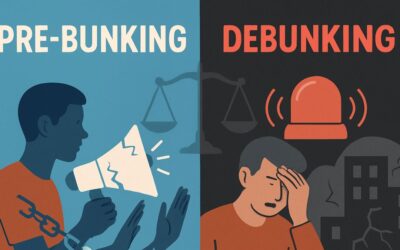
A Vaccine for Lies: How “Pre-bunking” Can Inoculate Your Mind Against Misinformation
Tired of playing catch-up with fake news? Discover “pre-bunking,” a science-backed strategy that acts like a mental vaccine. We explore how exposing people to weakened doses of manipulation tactics can build cognitive immunity and fight the infodemic.

Digital Ghosts: Can We Trust Our Eyes in the Age of AI Deepfakes?
A deep dive into the world of AI-generated deepfakes and synthetic media. We explain the technology, explore the “liar’s dividend” that threatens our shared reality, and reveal the high-tech arms race to tell what’s real from what’s fake.
More Articles
Beyond Automation: How to Future-Proof Your Career with Human Skills
AI is automating routine tasks, but it’s not making humans obsolete. Discover the future of work and learn how to thrive by developing the three pillars of irreplaceable human skills: emotional intelligence, creative problem-solving, and critical judgment.
Algorithmic Bias: Unmasking the Flaws in Our Digital Mirrors
Discover the hidden world of algorithmic bias, where AI systems in hiring, loans, and justice perpetuate and entrench societal inequality. Learn about the “black box” problem, the push for Explainable AI (XAI), and the practical steps we can take to build a fairer automated future.
AI’s Unlikely Co-Pilot: Why the Human-in-the-Loop is the Future of Automation
AI isn’t here to replace us, but to augment us. Explore the “human-in-the-loop” concept, discovering why human oversight, empathy, and judgment are becoming more critical than ever in a world of powerful algorithms. Learn about the future of work and our role in an automated world.
The Lifelong Learner’s Manifesto: 10 Principles for a Curious and Growth-Oriented Life
Feeling stuck? Adopt a new philosophy for life with these 10 powerful principles for lifelong learning. A motivational manifesto to guide your personal and professional growth, rooted in curiosity and resilience.
Future-Proof Your Career: A Step-by-Step Guide to Building Your Skill Stack
Feeling anxious about AI and automation? This practical guide shows you how to future-proof your career by identifying skill gaps, curating learning resources, and building a sustainable learning habit that fits your life.
Rewire Your Reality: How Learning a Language Physically Rebuilds Your Brain
Discover the science of neuroplasticity and learn how acquiring a second language can physically grow your brain, enhance cognitive function, and even delay dementia. An awe-inspiring look at the brain’s power to change.
Unlock Your Potential: 5 Questions to Reveal Your Growth Mindset
Feeling stuck? Discover if a “fixed mindset” is holding you back. Take our interactive quiz to uncover your core beliefs about learning and challenge, and get actionable tips to cultivate a growth mindset for lifelong success.
Hashtag Activism: Is It Changing the World, or Are We Just Clicking ‘Like’?
A deep dive into the complex world of social media activism. We explore its powerful successes, the pitfalls of “slacktivism,” and whether your share is making a real difference.
The Ghost in the Machine: Why We’re Obsessed with Haunted Technology
From cursed video games like Polybius to haunted recordings, we explore the psychology behind our fear of haunted tech and our anxiety that our creations will turn on us.
Sewer Alligators and Bodies in the Bed: The Shocking Urban Legends That Are Actually True
Think all urban legends are fake? Think again. We investigate the chilling cases, from sewer gators to hotel horrors, where unbelievable folklore has a basis in fact.