
English Plus Magazine
Dive into a world of ideas, stories, English and discovery.
Letter from the Editor
Do We Really Need to Insult Each Other’s Faiths and Beliefs to Prove That We Are Free?
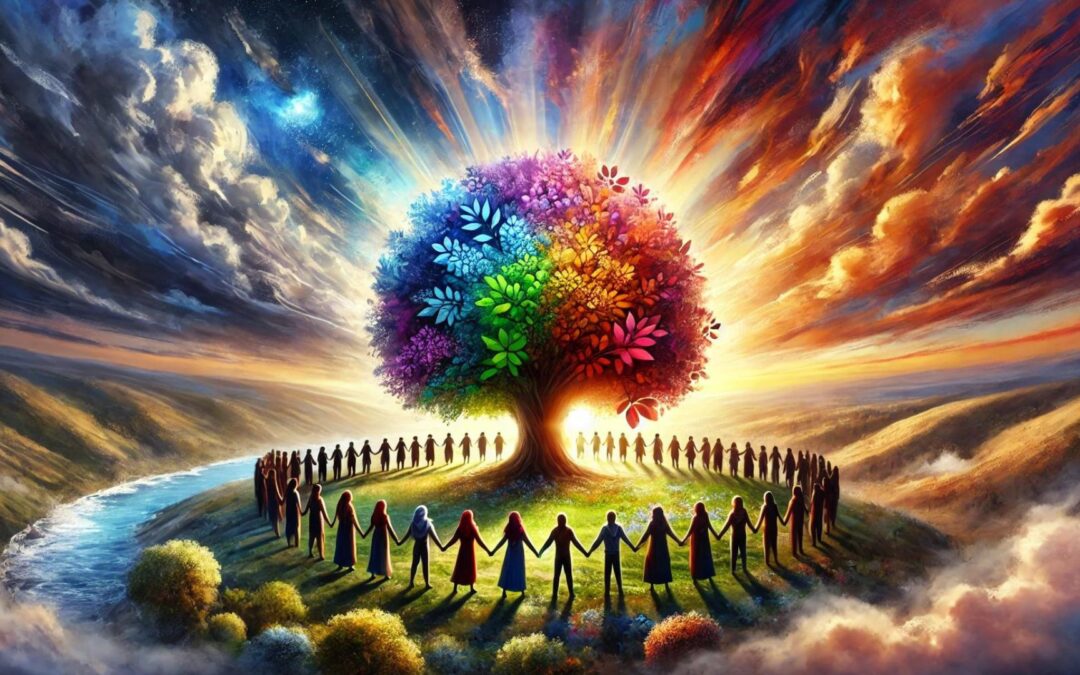
In the vast tapestry of human existence, our diverse beliefs and faiths form an intricate and beautiful mixture. Each thread represents the unique convictions and values that define us as individuals and communities. However, in our quest for freedom of expression, we sometimes forget that the essence of this freedom lies not in the right to belittle or insult, but in the ability to coexist harmoniously with those who hold different perspectives.
The cornerstone of a truly free society is the recognition that every person has the right to believe as they choose. This freedom, however, comes with a responsibility: to ensure that our beliefs and the expression thereof do not cause harm to others. Respecting others’ faiths and beliefs is not a limitation on our freedom, but rather an extension of it. It is an acknowledgment that our freedom is interconnected with the freedom of those around us.
When we insult or demean others’ beliefs, we do more than just express our own views—we undermine the very principles of respect and understanding that are essential for a cohesive society. Disparaging someone else’s faith is a direct attack on their identity and values. It creates a divide, fostering an environment of hostility and intolerance, rather than one of mutual respect and acceptance.
Imagine a world where every belief was met with contempt and every faith with mockery. Such a world would be devoid of the rich diversity that makes our global community so vibrant. Instead of celebrating our differences, we would be trapped in a cycle of animosity and division. Freedom of belief would be reduced to an abstract concept, overshadowed by the constant conflict and disrespect.
To truly honor the freedom we cherish, we must embrace the idea that our beliefs are just one piece of the larger human experience. This means listening to and learning from those who see the world differently. It means engaging in dialogue, not with the intent to convert or criticize, but to understand and appreciate the multitude of perspectives that exist.
This is not to say that we must agree with all beliefs or practices. There will always be differences that challenge our own viewpoints. However, disagreement does not necessitate disrespect. We can hold firm to our own convictions while still recognizing and honoring the right of others to hold theirs. This delicate balance is the hallmark of a mature and truly free society.
The strength of our convictions is not measured by our ability to tear down the beliefs of others, but by our capacity to uphold our own principles while allowing others the same freedom. In this way, our diverse beliefs can coexist, each contributing to the rich tapestry of human culture and experience.
It is also important to recognize that many of the conflicts arising from religious or ideological differences stem not from the beliefs themselves, but from a lack of understanding and empathy. When we take the time to learn about others’ faiths and the reasons behind their beliefs, we often find common ground and shared values. This understanding fosters a sense of community and reduces the inclination to view different beliefs as threats.
Promoting tolerance and acceptance does not diminish our own beliefs. Rather, it strengthens the bonds that hold us together as a society. It allows us to see the humanity in each other, beyond the labels and doctrines that often divide us. In this shared humanity, we find the true essence of freedom: the ability to live and let live, to believe and let believe.
In conclusion, the question is not whether we should insult each other’s faiths to prove our freedom, but whether we can rise above such actions to truly embody the principles of respect and acceptance that define a free society. Our freedom is not in jeopardy when we choose to honor and respect others’ beliefs. Instead, it is fortified. By embracing tolerance and fostering understanding, we pave the way for a more harmonious and inclusive world, where the freedom to believe is celebrated, not at the expense of others, but alongside them. Let us commit to building such a world, one where our diverse beliefs are seen not as points of contention, but as contributions to the rich mosaic of human experience.
Danny Ballan
Editor-in-Chief
English Plus Magazine
More Editorials
No Results Found
The page you requested could not be found. Try refining your search, or use the navigation above to locate the post.
Featured Articles

The Bystander Effect: Why We May Not Help in a Crowd
Learn about the bystander effect, the surprising psychological phenomenon that can make people less likely to help in an emergency when others are present.

Discover the Secrets of Your DNA: A Very Short Introduction to Genetics
What is genetics? This brief guide explores the building blocks of life, from inheritance to the fascinating applications of genetic science in medicine and beyond.

Unveiling the Darkness: Why Are Black Holes Black?
Ever wondered what makes a black hole so…black? Get ready to dive into the mind-bending physics of these cosmic enigmas and why not even light can escape their grasp.

Success Stories: How High Schools Are Tackling Bullying
Explore real-life examples of successful bullying prevention programs in high schools. Discover strategies that make a difference, and learn how to create a safer learning environment.

The Power of the Human Spirit: Overcoming Adversity
Explore the extraordinary power of the human spirit to rise above challenges. Discover the traits that fuel resilience and unlock our ability to persevere.

Sacagawea: The Guiding Star of Lewis and Clark’s Expedition
Discover Sacagawea’s remarkable life: from her early years as a Shoshone woman to her crucial role in the Lewis and Clark Expedition, and her lasting impact on American history.

Dick Whittington and His Cat: A Timeless Rags-to-Riches Tale
Rediscover the story of Dick Whittington and his loyal cat, their journey from poverty to riches, and why this folktale still resonates today.

Can Music Frequencies Change Your Mood?
Explore how different music frequencies can impact your emotions. Learn about the science behind music’s mood-altering power.

Your Gut’s “Second Brain”: The Surprising Neuroscience of Digestion
Did you know your gut has its own complex network of neurons? Discover the “second brain,” its role in digestion, mood, and overall health.
More Articles
Quantum Mechanics: Decoding the Weird and Wonderful World of Tiny Things
Ever wondered about quantum mechanics? Get ready to dive into the bizarre world of superposition, entanglement, and all things tiny in this FAQ explainer!
School Uniforms: Do the Benefits Outweigh the Drawbacks?
An in-depth look at the pros and cons of school uniforms. Should your child be wearing one? Let’s break it down and get informed.
Hurricanes: Nature’s Fury, Earth’s Warning
Discover the awe-inspiring power of hurricanes – swirling forces of nature that reveal the Earth’s dynamic energy and our responsibility to protect it.
If You Could Live Inside a Work of Art… Which Would You Choose?
Ever imagined stepping inside your favorite painting? We explore this idea, discussing the sensory appeal of artworks and what living within them might reveal.
Emily Dickinson: The Reclusive Poet Who Changed American Literature
Explore the extraordinary life of Emily Dickinson, the enigmatic poet whose intensely personal and innovative verses transformed the literary landscape.
The Kalevala: Unveiling Finland’s Mythical Epic
Explore the enchanting tales of the Kalevala, Finland’s national epic. Discover its heroes, villains, myths of creation, and profound influence on Finnish culture.
Can Mindfulness Reduce Anxiety and Stress? Here’s the Science
Is mindfulness truly effective for anxiety and stress? Discover the research-backed benefits and how to start incorporating mindfulness into your life.
The Fastest Pitch in Baseball History: A Blazing 105.1 MPH
Did you know a baseball was once clocked at an astounding 105.1 mph? Learn about the pitcher behind this record-breaking fastball and the science of extreme pitching.
Rescind: Meaning, Uses, and When to Choose a Different Word
Unsure when to use “rescind”? Learn the definition, appropriate contexts, and when you should consider other words for clearer communication.
Unlock Your Potential: Understanding Emerson’s Quote on Inner Strength
Explore the power of Ralph Waldo Emerson’s quote: “What lies behind us and what lies before us…” Discover when to apply this wisdom to overcome challenges and tap into your inner strength.