
English Plus Magazine
Dive into a world of ideas, stories, English and discovery.
Letter from the Editor
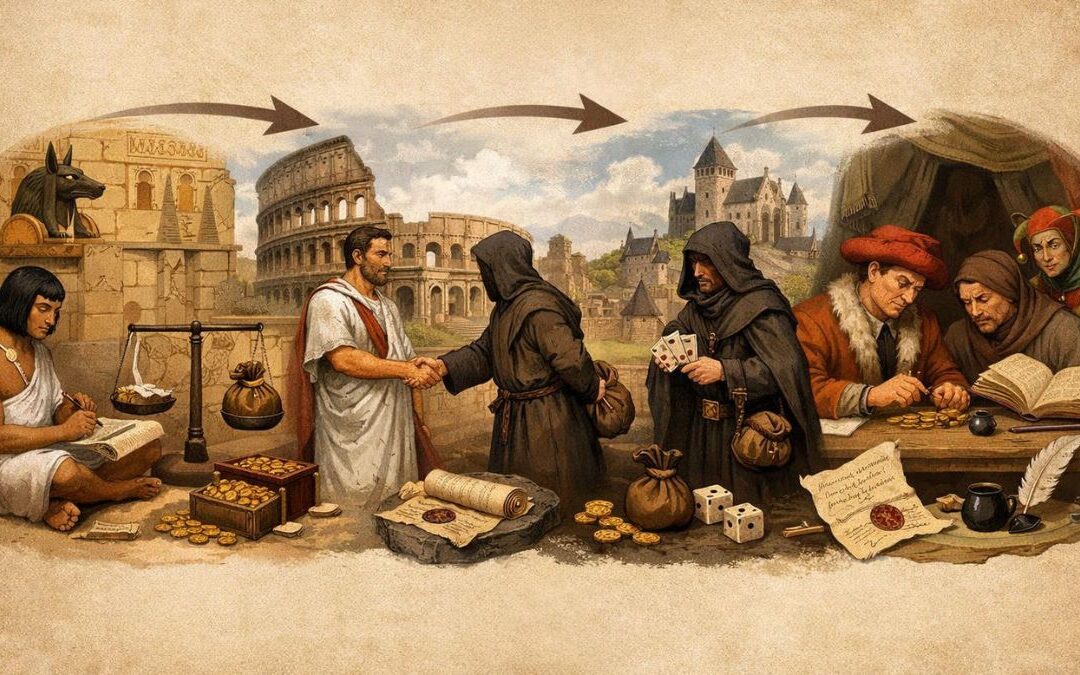
The Lexicon of Larceny: A Etymological Deep Dive into the Language of Corruption
We need to talk about words. Not just any words, but the specific, often misused, and fascinatingly specific vocabulary we have developed to describe the act of ripping someone off. You see, when we talk about corruption, we tend to use these terms interchangeably—fraud, scam, scheme, racket—as if they are all just different flavors of the same ice cream. But technically, they aren’t. They are distinct species. Each word is a fossil, a trapped piece of history that tells us exactly how a specific crime was committed, who committed it, and, in some cases, the specific animal or element it reminded people of at the time.
I have been diving into the archives of criminal terminology—because that is what I do for fun on a Tuesday—and I realized that our language of theft is actually a history of ingenuity. It is a catalog of human creativity applied to the wrong things. When we use a word like “Gerrymandering” or “Ponzi scheme,” we are invoking ghosts. We are referencing specific historical figures who were so audaciously corrupt that they literally became the definition of the act. That is a kind of immortality, isn’t it? Not the kind you want, perhaps, but immortality nonetheless.
Let’s start with one of the most misused and mispronounced words in the political dictionary: Gerrymandering. Now, historically speaking, this is a fascinating portmanteau. Most people know it has something to do with redrawing district lines to favor a political party, but the specificity of the origin story is just delightful. It takes us back to 1812 in Massachusetts. The Governor at the time was a man named Elbridge Gerry. Now, pay attention to the phonetics here because this is where the “actually” factor comes in. Elbridge Gerry’s name was pronounced with a hard ‘G’, like “Gary.” So, technically, we should be saying “Gary-mandering,” not “Jerry-mandering.” The fact that the entire English-speaking world has softened that ‘G’ over two centuries is a linguistic tragedy, but I digress.
So, Elbridge Gerry—a Founding Father, by the way, a signatory of the Declaration of Independence, which makes this even more tragic—signed a bill that redistricted the state senate to benefit his own Democratic-Republican party. This wasn’t just a subtle nudge of the lines; it was a radical, bizarre reshaping of the map. One district in Essex County was so contorted, so twisted and wrapped around itself to capture specific voter blocs, that it looked ridiculous on paper.
Here is where the etymology gets visual. The story goes that at a dinner party, or perhaps in the editorial office of the Boston Gazette—sources vary on the exact location, but the result is the same—someone looked at the map of this weird, claw-like district. It is often attributed to the famous painter Gilbert Stuart, though that might be apocryphal. Whoever it was, they looked at the shape and said, “That looks like a salamander.” Another person, seizing the moment for a pun that would last centuries, replied, “No, better yet, a Gerry-mander.”
They combined the Governor’s name with the amphibian, and the Boston Gazette published a political cartoon depicting the district as a literal monster with claws, wings, and a dragon-like head, labeling it “The Gerry-mander.” The image went viral, in the 19th-century sense of the word. It stuck. It stuck so hard that we still use it today. But think about the nuance here: the word implies that the corruption creates a monster. It implies that when you manipulate the natural order of geography for gain, you birth a grotesque creature. It is a perfect metaphor, preserved in a portmanteau.
Now, let’s fast forward a century to the 1920s and talk about Charles Ponzi. People use “Ponzi scheme” and “Pyramid scheme” as synonyms, but technically, they are structurally different mechanics. A pyramid scheme relies on recruitment; you have to find new victims to pay the person above you. A Ponzi scheme, however, is a hub-and-spoke model. The fraudster is at the center, taking money from investors and paying “returns” to earlier investors with the money from newer investors. No one has to recruit anyone else; they just have to trust the central figure.
Charles Ponzi didn’t invent this “robbing Peter to pay Paul” dynamic—that idiom, by the way, dates back to the 14th century and refers to taking funds from St. Peter’s Church in Westminster to pay for repairs at St. Paul’s Cathedral in London—but Ponzi did it with such spectacular flair that he branded it forever. And the mechanism he used is incredibly nerdy. He wasn’t selling invisible land or fake gold mines. He was arbitraging international postal coupons.
This is the kind of detail I love. In the early 20th century, you could send a letter to another country and include an International Reply Coupon (IRC). The recipient could take this coupon to their local post office and exchange it for stamps to send a reply. But here is the glitch in the matrix: due to currency fluctuations after World War I, the cost of buying an IRC in a country with a weak currency (like Italy) was much lower than the value of the stamps you could get for it in a country with a strong currency (like the US).
Ponzi realized—or claimed to realize—that he could buy coupons in Italy for pennies, send them to the US, exchange them for dollars’ worth of stamps, and make a massive profit. Technically, on paper, the math worked. It was a legitimate arbitrage opportunity. The problem, and the reason it became a crime, was logistics. To make the millions he was promising investors, he would have needed to buy and transport practically every IRC in existence. There weren’t enough ships in the Atlantic to carry the amount of coupons he would need to back his claims. But the “hook” of the scheme was grounded in a real, technical loophole in international postal treaties. That is why it was so effective. It sounded smart. It sounded complex. It sounded like the kind of loophole a genius would find.
The lesson of the word “Ponzi” is that the most successful frauds often start with a kernel of complex, technical truth. He didn’t just say, “Give me money.” He said, “I have discovered a disparity in the Universal Postal Union’s pricing structure.” The specificity was the camouflage.
Let’s move to a pair of words that often get confused: Graft and Grift. They sound similar, they both involve taking things that aren’t yours, but their etymological roots take us in completely different directions.
“Graft” is a botanical metaphor. If you are a gardener, you know that grafting involves inserting a shoot or twig (the scion) into a slit on the trunk or stem of another plant (the stock), so they grow together. The word comes from the Old French graife, referring to a stylus or a pencil-like tool, because the shoot looked like a writing implement. So, how did this become a word for political corruption?
In the mid-19th century, the meaning shifted. It started to refer to “digging,” perhaps from the idea of digging a ditch—work that was often associated with corrupt municipal contracts. But the botanical metaphor is much more potent. Political graft is about inserting yourself into the flow of money. It is about attaching a foreign object (your private interest) onto the main trunk (the public treasury) so that you can siphon off the nutrients (taxpayer dollars). It implies a parasitic, yet structural, relationship. The grafter doesn’t destroy the tree; they just divert some of its sap to their own branch. That is why we use “graft” for things like kickbacks, bribery, and skimming off the top of construction contracts. It suggests a biological, systemic process.
“Grift,” on the other hand, has a much seedier, more performative origin. It appears in the early 20th century as American slang, likely from the underworld of carnivals and circuses. It might be a corruption of “graft,” but it evolved to mean something distinct: a confidence game. A “grifter” is not a politician skimming off a contract; a grifter is a con artist. They are the three-card monte dealer, the snake oil salesman, the person who sells you the Brooklyn Bridge.
The distinction is crucial. Graft is passive; it’s about positioning. You sit in the office and collect the toll. Grift is active; it’s about persuasion. The grifter has to work the mark. They have to tell a story. When we call a modern influencer a “grifter,” we are accurately identifying that their crime is one of performance. They are selling a persona, a fake reality, to extract value. If they were just stealing your credit card info, that would be theft. But if they convince you to give them your credit card info because they are a “Nigerian Prince” who needs help, that is a grift. It requires the victim’s participation.
Now, I want to talk about one of the most pervasive metaphors in the world of finance and fraud: Water. Have you ever noticed how aquatic our financial vocabulary is? We talk about “cash flow.” We worry about “liquidity.” If you have no money, you are “insolvent”—you cannot dissolve your debts. If your assets are unavailable, they are “frozen.” We put money in “offshore” accounts. We track “revenue streams.” We face “waves” of volatility. And, of course, when dirty money needs to be cleaned, we call it “money laundering.”
This isn’t accidental. Language is how we conceptualize abstract forces, and money, like water, is a fluid, powerful, life-giving, and destructive force that is difficult to contain. It seeks the path of least resistance. It leaks. It floods.
Let’s look at “Money Laundering.” The popular myth—and I have heard this repeated so many times it makes my teeth itch—is that the term comes from Al Capone buying a chain of laundromats to hide his illegal income. While it is true that mobsters often used cash-heavy businesses like laundromats and car washes to mix illegal cash with legitimate earnings, the term “money laundering” itself didn’t actually appear in print until the Watergate scandal in the 1970s. It is a relatively modern term.
However, the concept of “washing” money goes back further. The metaphor is about purification. You take “dirty” money—money stained by the crime that generated it, whether that is drug trafficking or embezzlement—and you run it through a cycle (a series of transactions) until it comes out “clean” and usable in the legitimate economy. The water metaphor holds up because the process is about dilution and mixing. You mix the dirty water with the clean water until no one can tell the difference.
“Offshore” is another fascinating one. Originally, it was quite literal. In the UK, the Channel Islands (like Jersey and Guernsey) were separate jurisdictions just off the shore. But today, “offshore” has detached from geography. You can be “offshore” in a landlocked country like Switzerland or Luxembourg. The word has evolved to mean “outside the legal jurisdiction of the chaotic mainland.” It implies a safe harbor, an island of calm where the taxman’s boat cannot dock.
We also have “slush funds.” This is a nautical term! In the 18th century, “slush” was the fat or grease skimmed off the top of the boiling meat pot in the ship’s galley. The cook would collect this slush and sell it to candle makers when the ship reached port. The money from this sale was the “slush fund,” a small stash of off-the-books cash used for petty luxuries or bribes. It wasn’t strictly illegal, but it was a perk of the job, a little bit of grease on the side. Over time, it grew to mean any reserve of money used for illicit or corrupt purposes, particularly in politics. But originally? It was literal pig fat.
And what about “embezzlement”? This word comes from the Old French besillier, meaning “to maltreat, ravage, or destroy.” But it is also linked to the idea of “bezel”—the groove in a ring that holds the gem. To “embezzle” originally meant to steal away, to filch. But the nuance is that embezzlement is an inside job. You cannot embezzle from a stranger. You can only embezzle money that you have been entrusted to hold. It is a violation of a specific relationship. It is the act of prying the gem out of the ring while you are supposed to be polishing it.
There is a psychological power in knowing these origins. When you understand that “bankrupt” comes from the Italian banca rotta—meaning “broken bench”—it changes the image in your mind. In medieval Italy, bankers conducted business on wooden benches in the piazza. If a banker failed to pay his debts, his bench was literally smashed to pieces by the authorities. He was put out of business physically. Today, bankruptcy is a pile of paperwork, but the word carries the memory of that splintering wood. It reminds us that financial failure was once a public, physical shame.
I could go on for hours about “nepotism”—from the Latin nepos, meaning nephew, referring to Catholic Popes giving high offices to their “nephews” (who were often their illegitimate sons). Or “cronyism,” which comes from the Greek chronios, meaning long-lasting, implying that you give jobs to your long-time friends.
But the point—the data point I want you to take away—is that our vocabulary of corruption is not abstract. It is physical. It is salamanders, ditches, grease, broken benches, and reply coupons. When we use these words correctly, we are not just describing a crime; we are diagnosing the specific pathology of the deceit. We are seeing the mechanics of the machine.
And in a world that is increasingly complex, where fraud is hidden behind algorithms and shell companies, holding onto the precise meaning of these words is a form of defense. It is a way of seeing clearly. If you know what a Ponzi scheme actually is, you are less likely to fall for one. If you know what Gerrymandering actually means, you can look at a map and see the monster staring back at you.
So the next time you read a headline about a scandal, don’t just skim past the words. Stop. Look at them. Ask yourself: Is this graft or grift? Is it a pyramid or a Ponzi? Dig into the etymology. Because the devil, as they say, is in the details—but so is the truth. And the truth is usually much, much weirder than you think.
Now, let’s pivot slightly to a set of words that are adjacent to fraud but live in the gray area of “high finance.” I want to talk about “Speculation” versus “Investment.” People use these interchangeably, but etymologically, they are observing the world from two different vantage points.
“Investment” comes from the Latin investire, which means “to clothe” or “to dress.” Think of the word “vestments.” When you invest, you are wrapping your capital into something. You are giving it a new form, clothing it in a business or an asset, expecting it to grow. It implies a sense of permanence and protection. You are covering the nakedness of your cash with a productive asset.
“Speculation,” on the other hand, comes from the Latin specula, meaning a watchtower or a lookout post. To speculate is to look out into the distance, to try to see what is coming before anyone else does. It is visual. It is about sight, not substance. The speculator isn’t clothing the money; they are climbing the tower to spot the ship coming in. It implies risk, distance, and observation. The speculator doesn’t care about the asset itself; they care about the movement of the asset. They are watchers, not builders.
This distinction helps us understand the 2008 financial crisis, or the crypto bubbles of recent years. Were people investing? No. They were speculating. They were climbing the watchtower, looking for the next wave, hoping to spot it before the guy in the next tower. Understanding that distinction changes how you read the market. It changes your own behavior. Are you dressing your money for the winter, or are you standing on a tower betting on the weather?
And while we are on the topic of markets, let’s look at “Bear” and “Bull.” Everyone knows Bulls go up and Bears go down, but the origin stories are delightfully chaotic. The “Bull” is easy—bulls attack by thrusting their horns upward. But the “Bear”? The most likely origin comes from a proverb about selling the bearskin before you have caught the bear.
In the 18th century, “bearskin jobbers” were middlemen who would sell skins they didn’t have yet, hoping the price would drop before they had to deliver them. They were short-sellers! They were betting on a decline so they could buy the skin cheaper later. So a “Bear” is essentially a pessimist who is betting against the hunter. It connects modern short-selling to the fur trade of the 1700s. Again, the market is a fossil record of trappers and hunters.
I also want to touch on the word “Sabotage.” It’s often used in corporate contexts—”they sabotaged the deal.” The popular story is that French workers threw their wooden shoes, called sabots, into the machinery of the textile mills to break them during industrial disputes. Now, technically, there is some debate among etymologists about whether they literally threw the shoes or if the word just meant “to walk clumsily” (clatter like a wooden shoe) and thus work poorly. But the image of the shoe in the gears is so potent. It reminds us that corruption isn’t always top-down (graft); it can be bottom-up. It can be the resistance of the cog against the machine.
Let’s go deeper into the “White Collar” crime designation. We accept this term without thinking, but it is a vestige of early 20th-century fashion. The term was coined by sociologist Edwin Sutherland in 1939. At the time, manual laborers wore blue denim shirts to hide dirt, while office workers wore starched white collars because they didn’t sweat or get dirty. The distinction was purely sartorial. But Sutherland’s genius was to point out that the man in the clean white collar could steal a thousand times more with a fountain pen than the man in the blue shirt could with a crowbar.
The term “White Collar” was a revolutionary sociolinguistic reframing. Before that, “crime” meant street crime. It meant muggings and burglaries. By inventing a category for the crimes of the respectable class, Sutherland forced society to look at corruption differently. He used a fashion trend to expose a moral blind spot. Words can do that. They can create a category where none existed, and in doing so, they make the invisible visible.
I want to end this section with a word that feels very modern but is actually ancient: “Audit.” We dread the audit. It sounds like a crunching of numbers. But the word comes from the Latin audire, meaning “to hear.” Think “audio.” In the days before widespread literacy and spreadsheets, accounts were checked orally. The steward would read the numbers out loud, and the lord or the examiner would listen. An audit was a hearing.
This brings a human element back into the cold world of finance. Originally, you had to look someone in the eye and speak your truth. You had to say the numbers. It is harder to lie when you are speaking than when you are typing. Maybe that is what we are missing today. Maybe we need to stop looking at spreadsheets and start making people say the numbers out loud. We need to bring the “audio” back into the audit.
You see? Every word is a rabbit hole. Every term is a trapdoor into history. And the more you know about where these words come from, the less likely you are to be fooled by the people using them against you. Language is a tool, but it is also a weapon. And in the battle against corruption, your best defense is a really, really good dictionary.
Let’s do one final rapid-fire round of “technically correct” definitions to arm you for your next dinner party argument about politics or business.
The “Scapegoat”: We use this for the guy who takes the fall for the corporate scandal. But the origin is biblical and ritualistic. In Leviticus, two goats were chosen. One was sacrificed, but the other—the scapegoat—had the sins of the community symbolically placed upon its head by the priest, and then it was sent out alive into the wilderness. Technically, the scapegoat escapes. It carries the burden of sin away, but it survives. In modern usage, the “fall guy” usually goes to prison, so he is actually the sacrificed goat, not the scapegoat. If we were being precise, the CEO who resigns with a golden parachute while the company collapses is the true scapegoat—he carries the sin away into the wilderness of his private island, alive and well.
“Sycophant”: The “Yes Man” who surrounds the corrupt leader. The etymology here is bizarre and disputed, but the most fun theory involves figs. It comes from the Greek sukon (fig) and phainein (to show). “Fig shower.” In ancient Athens, exporting figs was illegal at one point. A “sycophant” was someone who informed on people smuggling figs—they “showed the fig.” It evolved to mean a malicious accuser, and then eventually, a flatterer who seeks favor. But deep down, every suck-up in your office is technically a “fig revealer.”
“Propaganda”: We think of this as a bad word, associated with dictators. But it started with the Catholic Church. In 1622, Pope Gregory XV established the Congregatio de Propaganda Fide—the Congregation for Propagating the Faith. It was just a committee for missionary work. “Propaganda” just means “things to be propagated” or spread, like seeds. It was a gardening metaphor for ideas. It only became negative in the 20th century during the World Wars. Technically, any time you spread an idea, you are engaging in propaganda. The corruption comes from the content, not the act of spreading it.
“Gaslighting”: This is the word of the decade. But please, I beg you, use it correctly. It comes from the 1938 play Gas Light (and the 1944 movie). The husband tries to drive the wife insane by dimming the gas lights in the house and then denying that they are dimmer when she points it out. He makes her question her own sensory perception. Lying to someone is not gaslighting. Disagreeing with someone is not gaslighting. Gaslighting is a specific, sustained psychological manipulation to make someone question their sanity. It requires a power dynamic and a manipulation of the environment. If a politician says “I didn’t say that” when they are on video saying it, that is gaslighting. If they just spin the facts, that is just spin.
This is why I love this stuff. It clears the fog. It wipes the grease off the lens. When you are precise with your language, you become immune to the vague, emotional manipulation that corruption relies on. They want you to be angry and confused. They want you to yell “Fraud!” at everything. But Danny the Nerd knows better. The Nerd knows that is a Ponzi scheme, that is a grift, that is a slush fund, and that guy over there is just a fig shower.
And knowing the difference? That is the first step to fixing it. Or, at the very least, it makes reading the news a lot more interesting. Stay curious. Stay pedantic. And watch out for the salamanders.
Danny Ballan (The Nerd)
Editor-in-Chief
English Plus Podcast
More Editorials
Don’t Give Up: The Real Journey Behind Success
Feeling stuck in your journey? Our latest editorial dives into why slow progress is still progress and why adapting, learning, and not giving up is the key to achieving your dreams. Read more for real-life stories and inspiration!
How Kind Will You Be This Christmas?
Discover the true meaning of Christmas—a celebration of giving, kindness, and peace that transcends traditions. This heartfelt editorial explores how small acts of care can transform lives and bring hope to a world in need.
Can You Really Resist Hatred in Your Life?
Explore how letting go of hatred can free your mind and make space for joy, love, and growth. Discover why resisting hatred is essential for living a fuller, happier life.
How Critical Are You Really?
Do we focus too much on finding flaws online? Discover how to balance critical thinking with appreciation and why it’s important to commend the good as much as we critique the bad. Learn how to avoid crossing into cyberbullying and become a more thoughtful, encouraging voice online.
Are You a Content Creator or a Content Curator?
Explore the role of AI in creativity and the fine line between content creation and curation. Are we losing our unique voices by relying too heavily on technology, or can AI help us create with more meaning and intention? Discover the balance in this week’s English Plus Magazine editorial.
Do You Really Know As Much As You Believe You Do?
Explore how short-form content shapes our understanding and the risks of thinking we know more than we do. This editorial dives into the importance of lifelong learning in an age of information overload.
Winning Right, Losing Well: The True Test of Character in Conflict
Explore how to handle victories and defeats with grace. Whether in personal battles or global conflicts, real strength lies in moving on with respect. Learn why being a greedy winner or a sore loser only leads to more trouble.
Finding Peace After Generations of Conflict: Can We Let Go of Grudges?
Explore how we can learn to trust, love, and reconcile with those we’ve been in conflict with for generations. Discover key vocabulary like grudges, reconciliation, and win-win resolutions, and reflect on how to create lasting peace in your life and relationships.
What Happens When You Kill All Your Enemies?
Explore the futility of war and the endless cycle of violence. What happens when you kill all your enemies? Discover the courage needed to choose peace over vengeance for a better tomorrow.
Why Ignoring Others’ Success Reveals More About You Than Them
Explore how dismissing others’ achievements reflects deep insecurities and emotional intelligence, and why it’s important to celebrate others’ successes instead of tearing them down.
Featured Articles

The Most In-Demand Skill: Why Critical Thinking is Your Biggest Career Asset
In an age of AI and automation, critical thinking is the top skill employers need. Learn how it drives innovation and leadership, and get practical tips to showcase it on your resume and in job interviews.

Beyond Memorization: How to Raise a Generation of Critical Thinkers
Discover why rote learning is failing our kids and how to fix it. This guide offers parents and educators practical tips on fostering curiosity, teaching media literacy, and promoting inquiry-based learning to raise a generation of critical thinkers.
From Socrates to the Scientific Method: A History of Critical Thinking
Explore the fascinating history of critical thinking, from the Socratic method in ancient Greece to the development of the scientific method. Learn how questioning dogma has fueled human progress for centuries.

The Author’s Shadow: Why a Writer’s Life Unlocks Their Masterpieces
Explore the debate: Should we read a book on its own, or does an author’s biography add profound meaning? Discover how the lives of Tolkien, Woolf, and Baldwin shaped their timeless works.

The Ghost in the Machine: Can AI Write a Novel That Makes You Cry?
A deep dive into the intersection of AI and literature. We explore if AI can be truly creative, the philosophical questions of authorship, and how AI might augment—not replace—human writers.

Is Your Favorite TV Show Literature? Redefining Storytelling in the 21st Century
Challenge the traditional definition of literature. Explore the literary merits of graphic novels like Maus, prestige TV like The Sopranos, and cinematic video games like The Last of Us.

Your Brain on Books: The Science of How Reading Rewires You for Success
Discover the hidden science of reading. Learn how literary fiction enhances brain connectivity, boosts empathy (Theory of Mind), and sharpens your problem-solving skills. Get tips for a better brain.

The Pen as a Lever: How Great Books Sparked Real-World Revolutions
Explore how literature acts as a powerful catalyst for social and political change. Discover case studies like “Uncle Tom’s Cabin” and “The Gulag Archipelago” that prove a single story can change the world.

The Psychology of Peace: How Empathy, Forgiveness, and Trust Outperform Aggression
Peace begins in the mind. Explore the psychology and neuroscience behind conflict and reconciliation—why empathy, forgiveness, and trust beat aggression—and learn practical language, speaking tools, and writing techniques to build peace where you live.
More Articles
A Vaccine for Lies: How “Pre-bunking” Can Inoculate Your Mind Against Misinformation
Tired of playing catch-up with fake news? Discover “pre-bunking,” a science-backed strategy that acts like a mental vaccine. We explore how exposing people to weakened doses of manipulation tactics can build cognitive immunity and fight the infodemic.
Digital Ghosts: Can We Trust Our Eyes in the Age of AI Deepfakes?
A deep dive into the world of AI-generated deepfakes and synthetic media. We explain the technology, explore the “liar’s dividend” that threatens our shared reality, and reveal the high-tech arms race to tell what’s real from what’s fake.
The Misinformation Marketplace: Who Gets Rich When We Believe Lies?
An in-depth investigation into the multi-billion-dollar economy of falsehood. From Macedonian clickbait farms to corporate consultants and wellness grifters, we expose the actors who profit from spreading disinformation and reveal the real-world cost of their lucrative lies.
Gut Feeling: How the Hidden World in Your Gut Controls Your Mood and Mind
Explore the revolutionary science of the gut-brain axis. This article explains how your gut microbiome influences anxiety, mood, and brain health, and offers a simple guide on what to eat to foster a powerful, positive connection.
Mental Health is Health: A Practical Guide to a Brain-Friendly Workplace
Create a workplace where people thrive, not just survive. Our blueprint for managers and employees covers how to foster psychological safety, talk about mental health, spot burnout, and implement supportive policies like flex time and mental health days.
7 Science-Backed Habits to Boost Your Brain Health for Life
An actionable guide to neurological well-being. Discover the powerful, science-backed impact of diet, sleep, exercise, mindfulness, and social connection on maintaining a sharp, resilient, and vibrant brain for years to come.
Not Lazy, Just Wired Differently: A Guide to Understanding Adult ADHD
A deep dive into adult ADHD, reframing it as a challenge of regulation, not a failure of will. Explore how ADHD impacts executive functions, emotions, and motivation in careers and relationships, with expert insights and strategies for thriving.
The Long Goodbye: A Compassionate and Practical Guide for Families Navigating Alzheimer’s
A deep dive into Alzheimer’s disease for caregivers and families. This comprehensive guide moves beyond clinical definitions to offer practical advice on communication, daily routines, caregiver self-care, and finding support networks to help you navigate this difficult journey with grace and strength.
Seeing Isn’t Believing: Your Guide to Navigating the Age of AI Deepfakes
In a world filled with realistic AI-generated fakes, how can we know what’s true? Explore the “epistemic crisis” and learn practical media literacy skills—from source verification to digital forensics—to become a smarter, more discerning consumer of information.
From Grammar to Prompts: Why AI Makes Your English Skills More Valuable Than Ever
AI is changing how we communicate. This guide for English learners shows how to use AI as a personal tutor for speaking, listening, reading, and writing, and introduces the essential new skill of prompt engineering to get powerful, tailored results.