
English Plus Magazine
Dive into a world of ideas, stories, English and discovery.
Letter from the Editor
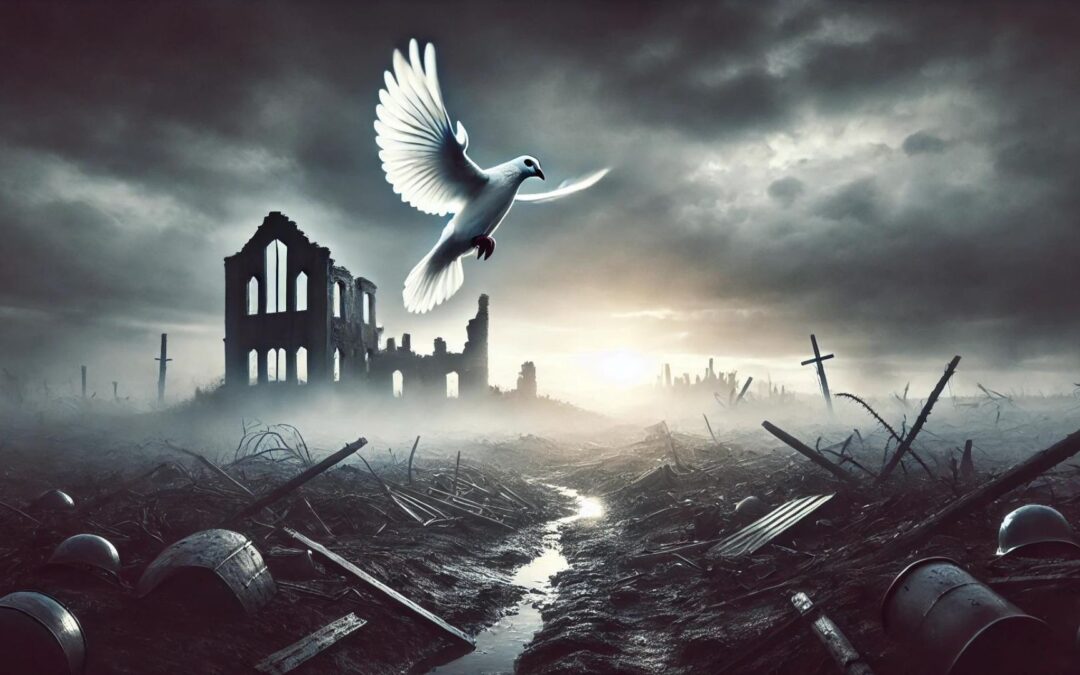
How Many More People Have to Die for Us to Wake up?
How many more people have to die before we realize the futility of war? How many more lives need to be lost, families shattered, and futures erased before we understand that no amount of land, power, or ideology is worth the blood we spill? These questions haunt us, yet history repeats itself as if we’ve learned nothing from the past. We live in a world where conflicts continue to rage, where war is seen as an inevitable means to an end, and where the cries of the innocent are drowned out by the roar of weapons.
War has been a constant companion of humanity, shaping the course of nations and the destinies of countless individuals. But what has it really brought us? Victory in war is often celebrated, but behind those triumphs lie the broken bodies and spirits of those who paid the ultimate price. For every inch of ground gained, there are thousands of lives lost. For every conflict resolved through violence, there is a generation left to pick up the pieces, to heal the wounds that will never truly close.
In the pursuit of power and dominance, we have lost sight of what truly matters—our shared humanity. The lines drawn on maps, the ideologies that divide us, and the flags we wave so proudly—none of these are worth the cost of a single human life. And yet, we continue to fight. We justify war in the name of security, freedom, and justice, but what kind of justice is there when the innocent suffer, when children grow up in the shadow of conflict, and when the echoes of war reverberate through generations?
And when we talk of peace, of laying down arms and choosing diplomacy over destruction, we are often dismissed as naive, as dreamers who don’t understand the complexities of the world. But who is really naive? Is it those who believe that endless cycles of violence can somehow lead to lasting solutions, or is it those who dare to envision a future where we break free from these destructive patterns? The world is complex, yes, but is it not more simplistic, even foolish, to think that war, with all its devastation, is a legitimate answer to those complexities?
Peace is often seen as an unattainable ideal, a dream that is too fragile to survive in the harsh realities of the world. But peace is not a luxury; it is a necessity. It is the only solution that can carry us forward as a species. The path to peace is not easy. It requires courage, patience, and a willingness to see beyond our differences. It demands that we put down our weapons and open our hearts. But most importantly, it requires us to wake up—to recognize that war is not the answer and that the only way to secure a future for ourselves and our children is through peace.
We have the capacity for immense cruelty, but we also have the capacity for immense kindness. We can choose to destroy, but we can also choose to build. The world is at a crossroads, and the choices we make now will determine the course of history. Will we continue down the path of violence, or will we finally learn the lessons that history has tried so hard to teach us?
Every life lost in war is a life that could have been saved. Every conflict avoided is a step closer to a better world. It is time for us to wake up, to open our eyes to the suffering that war brings, and to take action. Peace is not just a dream; it is a possibility. But it starts with us—with the choices we make and the actions we take. It starts with the understanding that every human life is precious and that the cost of war is simply too high to bear.
How many more people have to die before we choose peace? The answer lies in our hands. And perhaps it is not those who seek peace who are naive, but those who refuse to see that it is the only path that makes sense.
More Editorials
No Results Found
The page you requested could not be found. Try refining your search, or use the navigation above to locate the post.
Featured Articles

Sappho: Ancient Greece’s “Tenth Muse” and the Legacy of Lesbian Love
Explore the life and poetry of Sappho, the enigmatic Greek poet from Lesbos. Discover her passionate verses, enduring influence, and why she’s revered as an icon of queer love.

The State’s Responsibility: Exploring the Government’s Role in Citizen Well-Being
What are a state’s obligations to its citizens? This article examines the debate over the government’s role in providing essential services and promoting social well-being.

Mordant: Beyond the Bite – Meaning and Uses
Discover the multiple meanings of “mordant.” Learn when to use this word for its biting wit, chemical properties, or other surprising applications.

Mind-Blowing History: Cleopatra, Pyramids, and the iPhone
Did Cleopatra live closer to the iPhone than the pyramids? Uncover the surprising truth about this timeline twist and explore ancient Egypt’s enduring legacy.

The Zeigarnik Effect: Why Unfinished Tasks Haunt Your Mind
Ever feel stressed by incomplete tasks? Learn about the Zeigarnik Effect – the psychological reason unfinished business lingers in your thoughts and how to use it to your advantage.

Little Red Riding Hood: A Timeless Tale of Danger and Deception
Journey into the woods with Little Red Riding Hood! Rediscover this classic fairy tale, its enduring message, and the impact it has had on storytelling throughout history.

Harriet Tubman: Icon of Freedom and Courage
Discover the extraordinary life of Harriet Tubman, from escaped slave to legendary conductor on the Underground Railroad. Explore her achievements, bravery, and enduring impact.

Work: Mere Means or Path to Fulfillment?
Is your job just a paycheck or can it bring deep satisfaction? Explore the debate on work as a means to an end versus a potential source of personal fulfillment.

Happiness Is a Choice: Understanding Jim Rohn’s Philosophy
Is happiness a choice, as Jim Rohn suggests? Explore his quote, discover when it applies (and when it doesn’t), and learn how to cultivate your own happiness mindset.
More Articles
Albrecht Dürer: Renaissance Master and His Enduring Legacy
Explore the life and works of Albrecht Dürer, a towering figure of the Renaissance. Discover his masterpieces, innovations, and impact on art history.
The Ebbinghaus Forgetting Curve: Why We Forget & How to Fight It
Do you forget things quickly? The Ebbinghaus forgetting curve explains this memory phenomenon. Learn how to combat it for better learning outcomes.
Parenting Around the World: Why There’s No One “Right” Way
Ever wondered if your parenting style is the norm? Discover how diverse cultures shape child-rearing, from discipline to independence, and why understanding these differences matters.
Steve Jobs’ Wisdom: “Your Time is Limited” – Don’t Waste It
Find inspiration in Steve Jobs’ quote, “Your time is limited…” Learn how to live authentically, pursue your passions, and avoid the pitfalls of conformity.
Mushrooms and You Are Cousins? Surprising Facts About Fungi
Did you know mushrooms are more like you than a flower? Discover the surprising ways fungi are closely related to animals, not plants.
Panoply: Understanding a Word of Splendid Range
Explore the meaning of “panoply” and learn how to use this impressive word to describe a wide array or collection. Discover its origins and examples!
Discretion is the Better Part of Valor: Meaning & When to Apply It
Understand the meaning of “discretion is the better part of valor.” Learn when to use this proverb wisely and when a bolder approach is needed.
Beyond the Headlines: How Media Can Shape a More Peaceful World
Can the news change how we view conflict? Discover the power of media to promote peace by shifting narratives and fostering understanding.
Bigfoot: More Than a Tall Tale? The Enduring Myth of the Sasquatch
Is Bigfoot real or just a legend? Explore the history, sightings, and cultural impact of North America’s most famous cryptid.
The Samurai: Warriors of Legend in Feudal Japan
Explore the captivating world of the samurai, the legendary warriors of feudal Japan. Discover their code of honor, fierce battles, and lasting impact on Japanese culture.