English Plus Magazine
Dive into a world of ideas, stories, English and discovery.
Coming Soon!
Some of these articles are already published, and some will be published very soon. Check out the new articles below…
Danny's Column
The Unwritten Epic of You
Have you ever stopped to wonder if the way you remember your first heartbreak is the same way the other person does? Or if the golden, nostalgic glow you cast on your childhood summers was actually just a series of mundane, mosquito-bitten afternoons? We move through life collecting moments, curating memories, and telling ourselves a tale of who we are. But what if that tale is more than just a personal history? What if it’s literature? In a world saturated with epic blockbusters and bestselling memoirs, it’s easy to feel like a background character in someone else’s production. But the truth is, your stories matter. Your unique, flawed, and beautiful lens on the world is a narrative no one else can write, and it’s time we started treating our own lives with the reverence of a classic novel.
The Grand Delusion of the “Interesting” Life
Let’s get one thing straight. The idea that you need to have scaled Everest, negotiated peace treaties, or at the very least, invented a revolutionary new type of spork to have a story worth telling is, frankly, a marketing gimmick. It’s a myth sold to us to make us feel like we need to do more, be more, buy more, before we’re worthy of the page. We scroll through perfectly curated lives online, watching people who seem to be living in a permanent movie montage, and we think, “Well, my Tuesday consisted of finding a rogue sock in the dryer and debating the existential merits of a third cup of coffee. Who wants to hear about that?” I do. And so does the universe, in its own quiet way. The most profound human truths aren’t always found on the summit of a mountain; more often, they’re discovered in the space between the dryer and the coffee pot. They’re found in the silent conversations you have with yourself in traffic, the way your heart aches for a song you haven’t heard in a decade, the tiny, absurd moments of grace or frustration that make up a day. That’s not boring; that’s the texture of being alive.
You Are the Ultimate Unreliable Narrator
In literature, an “unreliable narrator” is a character whose telling of the story isn’t completely accurate or credible due to their own biases, limitations, or mental state. Sound familiar? Welcome to the club. Every single one of us is the unreliable narrator of our own life. And that isn’t a flaw; it’s the entire point. Think about a major event you shared with a friend or family member. A wedding, a vacation, even just a heated argument over a board game. If you each wrote down your version of what happened, you’d have two completely different stories. The facts might be the same—yes, Uncle Jerry did flip the Monopoly board—but the why, the how it felt, the subtle currents of emotion and meaning running beneath the surface? That’s all yours. Your story is filtered through a lens ground and polished by every experience you’ve ever had, every book you’ve read, every person you’ve loved, every fear that keeps you up at night. This unique filter doesn’t distort the truth; it creates your truth. And that personalized truth, that singular interpretation of reality, is the very essence of art. It’s what separates a dry historical account from a soul-stirring novel.
Finding the Universe in a Grain of Sand
We often think that to connect with others, we need to share grand, sweeping, universal experiences. But that’s backward. The real magic of connection happens when we get hyper-specific. You don’t relate to a character in a book because they “experienced loss.” That’s too abstract. You relate to them because of the way they describe the specific, agonizing detail of seeing their loved one’s half-finished cup of tea still sitting on the nightstand a week later. It’s the particular that unlocks the universal. Your most personal, idiosyncratic, and maybe even embarrassing stories are your most powerful ones. That memory of hiding in a closet as a kid, breathing in the scent of mothballs and your dad’s old coat, feeling like you’d discovered a secret kingdom? Someone on the other side of the world has a version of that closet. That specific, complicated feeling of both pride and sadness you felt when you dropped your child off for their first day of school? That feeling is a language understood across cultures and continents. When you dare to articulate the minute, specific details of your own heart, you’re not isolating yourself; you’re building a bridge. You’re holding up a lantern in the dark and allowing someone else to say, “Me too. I thought I was the only one.”
So, What’s Your Genre?
Let’s have some fun with this. If your life were a book, what genre would it be? Are you living a sprawling, multi-generational family saga, full of complex relationships and long-held secrets? Maybe it’s a gritty noir, where you’re the detective trying to solve the daily mysteries of your own motivations and desires. Some of us are in a comedy of errors, stumbling through life with good intentions and hilariously disastrous results. Others might be in a quiet, contemplative work of literary fiction, focused on internal growth and subtle shifts in perspective. Perhaps it’s an adventure novel, even if the adventures are more about navigating a new career path than trekking through a jungle. Or maybe it’s a thriller, with the plot twist being what you’re going to have for dinner. The genre can change, by the way. Your twenties might have been a chaotic road-trip novel, while your forties are shaping up to be a thoughtful memoir. Thinking of your life this way isn’t about trivializing it; it’s about giving it a framework. It helps you see the patterns, the character arcs, the rising action, and the moments of climax. It helps you recognize that you are, and always have been, the protagonist.
The Terrifying, Beautiful Act of Authorship
Okay, so if we accept that our lives are stories, that means we are the authors. And that can be… terrifying. It comes with responsibility. It means we’re not just passively experiencing life; we’re actively writing it with every choice we make. It also means facing the critic in our own head who tells us our prose is clumsy, our plot is predictable, and our main character is unlikeable. It’s so much easier to be a consumer of stories than a creator of one. To watch from the audience is safe. To step onto the stage, to pick up the pen, is an act of profound vulnerability. But here’s the secret: you don’t have to publish your story for it to be valid. You don’t need a million readers or a five-star review. The first and most important audience is you. The act of telling your own story—to yourself in a journal, to a trusted friend, to a therapist, or just by consciously reflecting on it—is an act of claiming your own existence. It’s you, looking at the messy, beautiful, contradictory, and glorious chaos of your own experience and saying, “This happened. This is how it felt. This is what it made me. This matters.”
We Are a Library of Souls
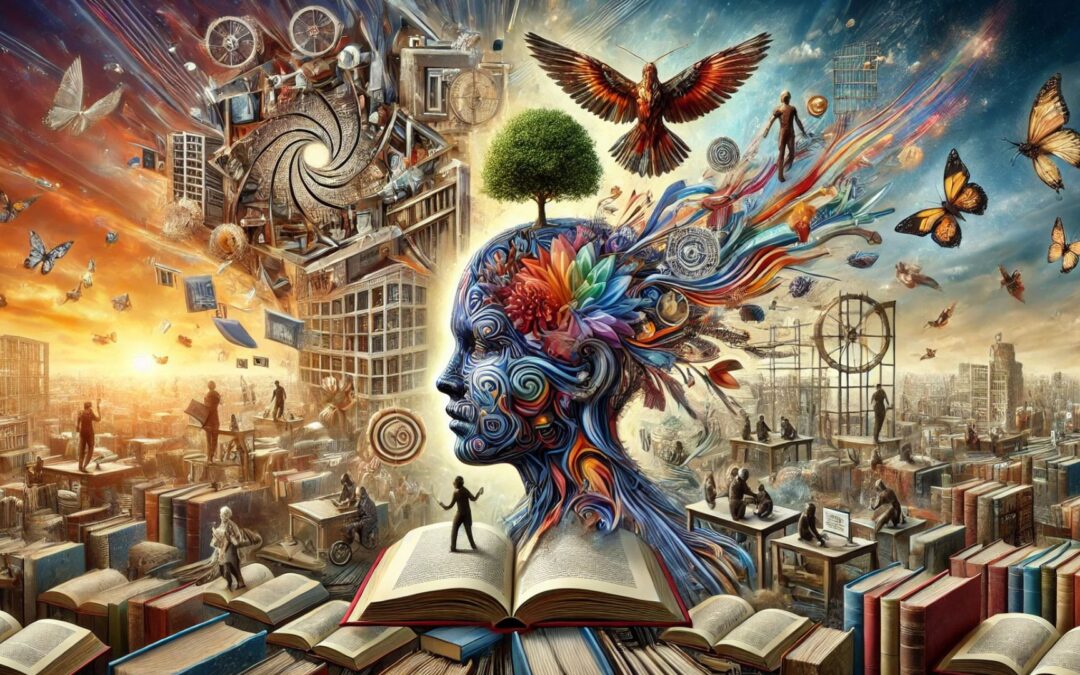
Every time someone lives their life with awareness, every time someone shares a sliver of their unique perspective, they are adding a volume to the great, invisible library of humanity. Your story is a book in that library. It might sit on a shelf next to an epic poem of war and peace, and it might be a slim volume about learning to bake the perfect loaf of sourdough bread, but it belongs there all the same. It adds a color, a texture, a voice that was missing before. We read novels and watch films to understand ourselves better, to feel less alone. What we forget is that we can find that same connection, that same sense of awe and understanding, in the stories living and breathing all around us—and most importantly, within us. Your perspective is not just a point of view; it’s a living document. It’s evidence of a life, a contribution to the whole. To deny its value is to tear a page out of the collective human story.
So, the next time you feel small or insignificant, the next time you think your life is just a series of uneventful days, I want you to pause. Think about the way the light hits your kitchen floor in the morning. Think about the joke you shared with a coworker that made you both laugh. Think about the quiet ache of a memory that still visits you. That’s not nothing. That’s a stanza. That’s a paragraph. That’s a chapter in the making.
What’s a small, seemingly “boring” moment from your life that, when you really think about it, holds a whole world of meaning for you? And what genre would you say your current chapter of life is? I’d love to hear your thoughts in the comments below. Let’s build a library together.
English Plus Magazine
Exploring Synthetic Biology: Designing and Building New Biological Parts
Discover the fascinating world of synthetic biology, where science meets engineering to design and construct new biological parts for medicine, agriculture, and more.
Frequently Asked Questions About the Theory of Relativity Explained
Explore the answers to frequently asked questions about the theory of relativity. Learn its concepts, significance, and practical examples in simple and clear terms.
Unlocking the Power of Felicity: Meaning, Usage, and Examples
Discover the meaning, origins, and versatile usage of the word felicity. Learn how to incorporate this beautiful word into your vocabulary with practical examples.
Exploring Karst Landscapes: Nature’s Masterpieces of Erosion
Dive into the fascinating world of karst landscapes, where water and limestone create breathtaking caves, sinkholes, and natural wonders. Discover the science behind their formation and their unique global significance.
Do Ostriches Really Bury Their Heads in the Sand? Fact or Fiction Unveiled
Discover the truth about the popular belief that ostriches bury their heads in the sand. Uncover the science and behaviors behind this fascinating bird in our fact-or-fiction breakdown.
Why Successful Entrepreneurs Give Positive Energy to Succeed
Explore how successful entrepreneurs thrive by giving positive energy. Learn how this mindset fosters collaboration, innovation, and sustainable success in business.
Understanding “The Apple Doesn’t Fall Far from the Tree”: Meaning and Origins
Explore the meaning, origins, and cultural significance of the proverb “The apple doesn’t fall far from the tree.” Discover how it applies in everyday life and relationships.
The Black Dahlia Murder: Unraveling a Chilling Mystery
Dive into the chilling mystery of the Black Dahlia murder. Explore the facts, theories, and why this infamous case continues to captivate the world decades later.
How Migratory Birds Navigate Their Incredible Journeys
Discover the secrets of how migratory birds navigate vast distances. Learn about their use of magnetic fields, celestial cues, and innate instincts to find their way.
Building an Inclusive Future: Education for Students with Disabilities
Discover how inclusive education empowers students with disabilities, promotes equality, and transforms schools into environments of understanding and collaboration.
The Journey of E-commerce: From Clicks to Delivery
Explore the fascinating journey of e-commerce, from the moment customers click ‘Buy Now’ to doorstep delivery. Learn how technology, logistics, and customer expectations shape the world of online shopping.
How Postcolonial Literature Shapes Cultural Identity: A Lasting Influence
Explore how postcolonial literature shapes cultural identity, shedding light on its impact in reclaiming narratives and fostering a deeper understanding of diverse cultural backgrounds.
Also in English Plus Magazine
Mini Podcasts Network
No Results Found
The page you requested could not be found. Try refining your search, or use the navigation above to locate the post.
Stories
Poetry | Crazy, Like God
Listen to Crazy, Like God, a poem by Danny Ballan from English Plus Podcast. I will start with some thoughts on the theme of the poem and then the poem.
Poetry | The Rain Must Fall
Listen to The Rain Must Fall, a poem by Danny Ballan from English Plus Podcast. I will start with some thoughts on the theme of the poem and then the poem.
Poetry | Dying at a Desk
Are you stuck with a dead-end job, and you cannot escape? Are the semi-walls of your cubicle closing in on you and you feel like you’re dying at your desk? This poem is just about that. I’ve been there before, and I am still not completely free, but I’m on my way.
Poetry | Be Gone
Why do you always have to explain that no means no? Why can’t you be a butterfly but not available to all, only the one you choose? Be Gone is a poem talking about this from Poetry by Danny Ballan and English Plus Podcast.
Poetry | War Child
Children are the most tragic casualties of war because they represent assassinating the innocence left in this world as they are themselves innocent. Listen to War Child a poem by Danny Ballan from English Plus Podcast.
Poetry | A Bullet’s Life
Have you ever thought about a bullet’s life? What would a bullet say about that? This poem is all about that and you will be shocked what a bullet may think all the way from its manufacturing to its final destination.
Spectrum Radio Mixes
No Results Found
The page you requested could not be found. Try refining your search, or use the navigation above to locate the post.