
English Plus Magazine
Dive into a world of ideas, stories, English and discovery.
Letter from the Editor
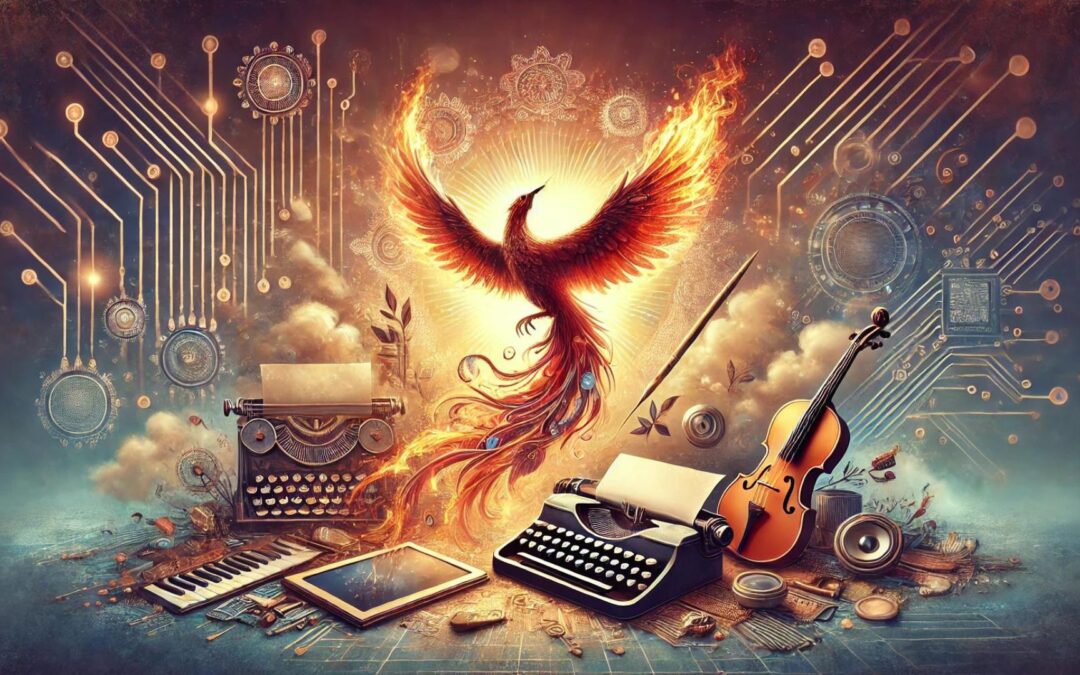
Am I Foolish to Be a Poet in the 21st Century? Why Creativity Still Matters in the Digital Age
Is poetry dead? Or worse, am I foolish to be a poet in the 21st century, clinging to rhymes and verses like an ancient relic in the middle of a tech-savvy crowd swiping through their lives? I mean, let’s face it—if we need a line that hits us right in the feels, there’s probably an app for that. But here’s the thing: poetry, storytelling, music—those are the very things that make us human. And while we live in an age where AI can compose a sonnet in the blink of an algorithm, I still believe there’s something irreplaceable about creating art ourselves.
Think about it. With every new technological leap, our capacity to achieve more with less human effort expands. I’m not going to stand here and preach against technology—far from it. I’m a proud user of all sorts of digital tools, and I know that AI is an incredible feat of human ingenuity. But here’s the catch: just because technology can do something doesn’t mean we should stop doing it ourselves. Cars didn’t stop people from walking; they made it even more essential for us to take a stroll to stay healthy. Likewise, in the age of AI, creating art, writing poetry, and composing music isn’t obsolete—it’s more important than ever.
Now, let’s imagine for a second something wildly hypothetical. What if one day we encounter an alien race that’s far more advanced than our own? I’m talking about a level of advancement where our latest technology looks like the equivalent of stone tools to them. What would we be proud of when we meet them? Would we boast about Facebook, YouTube, TikTok, or even our most cutting-edge technological advancements? I don’t think so. I suspect we’d reach for something deeper, something that speaks to the soul of our species. Wouldn’t we want to showcase our Mozarts, our Shakespeares, our Van Goghs? Isn’t that what makes us truly unique? Sure, this is all hypothetical, but isn’t it worth thinking about?
I chose the penname Danny B. Phoenix for a reason. The phoenix rises from the ashes, reborn, and stronger for it. That’s exactly what I believe we need to do as creators in this digital hurricane. The onslaught of technology is powerful, and it’s reshaping the world as we know it. But rather than letting it wash away the very things that make us human—our creativity, our emotions, our unique expressions—I believe it’s time to rise back up. We need to remind ourselves of the beauty in creating something with our hands, with our minds, with our hearts. It’s not just about leaving behind a legacy, but about staying connected to what makes us feel alive.
I’ll admit, sometimes I wonder if it’s crazy to keep writing poems in an era where TikTok trends rise and fall faster than you can finish a haiku. But then I remember: poetry is timeless. It’s not about chasing the latest trend or impressing a social media algorithm. Poetry is about understanding what it means to be human, and that’s something that no amount of machine learning can ever fully grasp.
AI can learn patterns, it can even write beautiful lines, but it doesn’t feel joy, heartbreak, or that quiet, inexplicable peace when you sit by the ocean and just listen to the waves. And honestly, that’s what makes creativity—whether it’s poetry, music, or art—so profoundly human. It’s about tapping into the parts of ourselves that aren’t logical or efficient but emotional, chaotic, and, sometimes, even nonsensical. It’s about the journey of creating, not just the final product.
I could write a poem that an AI would never understand. Not because it lacks the words or syntax, but because it lacks the soul. And that, I believe, is why we must continue to create—not because it’s easy or because the world demands it, but because we need it. We need it to remind ourselves of who we are, to give meaning to our lives in a world that’s increasingly defined by numbers and codes.
So, am I foolish to be a poet in the 21st century? Maybe. But I’d rather be foolish and filled with wonder than live in a world where everything is calculated, automated, and predictable. Creativity isn’t just a luxury; it’s essential. It’s what helps us make sense of the world, even when everything else feels like it’s spiraling out of control. And that’s why I’ll keep writing, keep composing, and keep chasing that elusive beauty, even in an age where a machine can do it faster.
And maybe, just maybe, that makes me human.
Danny Ballan
Editor-in-Chief
English Plus Magazine
More Editorials
No Results Found
The page you requested could not be found. Try refining your search, or use the navigation above to locate the post.
Featured Articles

If the Shoe Fits, Wear It: Meaning, Usage, and When to Tread Carefully
Explore the meaning and proper usage of the proverb “If the shoe fits, wear it.” Discover when it’s a fitting response and when it might be better to hold your tongue.

Life Goes On: Robert Frost’s Profound Wisdom on Resilience and Acceptance
Explore the deeper meaning behind Robert Frost’s quote, “In three words I can sum up everything I’ve learned about life: it goes on.” Learn when it’s a source of comfort and when a different approach is needed.

Christopher Columbus’s Voyages: A Turning Point in History
Embark on a journey through the four voyages of Christopher Columbus, their lasting impact on the world, and the complex legacy they left behind.

Plastic-Eating Fungi: Nature’s Solution to Our Pollution Problem?
Discover the fascinating world of plastic-eating fungi, a potential solution to the global plastic pollution crisis. Learn how these organisms could revolutionize waste management and help restore our environment.
A Guide to Curriculum Adaptation for Diverse Learners
Discover how curriculum adaptation can transform education for diverse learners, including those with special needs. Explore strategies to create inclusive classrooms where every student thrives.
Stem Cells: Your Body’s Hidden Superheroes
Dive into the fascinating world of stem cells! Discover how these tiny powerhouses hold the potential to transform medicine and understand why they’re often called the body’s master cells.
Ossify: More Than Just Bones
Ossify: A Word with Layers of Meaning The word "ossify" often conjures images of bones hardening, but its meaning extends far beyond the realm of anatomy. This versatile word has both literal and figurative applications, making it a valuable addition to your...
Rejection Hurts: Your Brain on Social Pain
Discover the surprising link between social rejection and physical pain. Learn how your brain processes rejection, its potential consequences, and strategies for coping.

Hunger is the Best Sauce: Truth or Taboo?
Ever heard the phrase “Hunger is the best sauce”? Explore the proverb’s meaning, appropriate and inappropriate uses, and how hunger affects our perception of food.
More Articles
Florence Nightingale: The Lady with the Lamp and Her Legacy of Compassion
Discover Florence Nightingale, the revolutionary nurse who transformed hospitals and elevated the nursing profession. Learn about her life, achievements, and continued impact.
Brer Rabbit: Trickster Tales and Their Enduring Legacy
Meet Brer Rabbit, the clever trickster of African American folklore. Read a classic tale, and learn why these stories of wit and resilience remain beloved.
Childhood Amnesia: Why Your Earliest Memories Are Missing
Ever wondered why you can’t remember your first birthday? Explore the science of childhood amnesia and why most early memories fade away.
Dolphins Have Names? Unraveling Their Signature Whistles
Did you know dolphins use unique whistles to identify themselves? Dive into the fascinating world of dolphin communication and their “name-like” sounds.
Anathema: A Word of Intense Dislike
Discover the meaning of “anathema,” its origins, and when (and when not) to use this powerful word expressing extreme aversion.
Helen Keller on Blindness and Vision: A Deeper Look
Explore Helen Keller’s quote, “The only thing worse than being blind is having sight but no vision.” Learn its meaning, applications, and limitations.
Don’t Throw the Baby Out with the Bathwater: Meaning & Wise Applications
Understand the proverb “Don’t throw the baby out with the bathwater” – explore its meaning, when to use it wisely, and when it might mislead.
Fostering Inclusive Classrooms: Why Diversity in Education Matters
Learn why promoting diversity and inclusion in schools is crucial for creating equitable learning environments and a better future for all.
Build Fantastic Worlds: A Guide to Believable World-Building
Ready to write amazing stories? Learn how to craft believable worlds that draw readers in. Tips and techniques for even beginner writers!
What Makes a Good Life? Unpacking a Timeless Question
What does it mean to live a good life? Explore different perspectives on happiness, purpose, and the ingredients of a life well-lived.