English Plus Magazine
Dive into a world of ideas, stories, English and discovery.
Letter from the Editor
The Narrative Thread: Are You the Author or the Character?
Have you ever tried to explain a part of your life to someone—a past relationship, a career change, a moment that changed everything—and found yourself instinctively shaping it into a story? You set the scene, you introduce the characters, you build the tension, you reveal the climax. We are, at our core, narrative creatures. We don’t just live; we interpret. But this raises a dizzying set of questions. If life is a story, who’s writing it? Are we free agents creating our own plot, or are we characters living out a pre-written script? The quest for finding meaning in life often feels like trying to read a book while you’re still in the middle of it, desperately trying to figure out the theme before the author has revealed the ending.
Free Will vs. Destiny: The Ultimate Writer’s Room Debate
Let’s start with the big one, the question that has kept philosophers up at night for centuries. Are you the author, or are you the character? One school of thought, the free will camp, hands you the pen. Every choice you make—from hitting the snooze button to changing your entire life’s trajectory—is you, writing your own story, sentence by agonizing sentence. You are the protagonist, the narrator, and the all-powerful author. It’s empowering, right? But it’s also terrifying. It means every bad decision, every cringey plot point, every narrative dead-end… that’s on you. There’s no one else to blame. Then you have the destiny argument, the idea that the book is already written. We are simply characters turning the pages, acting out our roles. There’s a strange comfort in this, isn’t there? It absolves you of so much pressure. That terrible breakup? That job you hated? It was all just a necessary part of your character arc, moving the plot forward. It’s so much easier to blame a celestial screenwriter for that time you decided bangs were a good idea in the middle of a humid summer. But the comfort comes at a cost: a loss of agency. Maybe the truth isn’t a choice between the two. Maybe life is more like a “Choose Your Own Adventure” book, where the structure is set, but your choices genuinely create different paths within the grander story. What does it feel like for you? When you look back, do you see a chain of deliberate choices, or a series of events that couldn’t have gone any other way?
The Editing Room of Memory: You and Your Biased Director’s Cut
No story is ever the raw, unedited footage of what happened. It’s a curated selection of scenes, arranged to create a specific effect. And your memory is the most biased editor in the business. Think about it. When you recall your past, you’re not accessing a perfect video file. You are reconstructing it. You choose the starting point. You choose which details to zoom in on—the triumphant moment you proved someone wrong—and which to let fade into the background—the ten years of hard, unglamorous work that led to it. We cast people in roles: the villain, the mentor, the comic relief. And funnily enough, in our own internal director’s cut, we are almost always the sympathetic hero. That argument you had last week? In your version, your points were eloquent and devastatingly logical; the other person was clearly being unreasonable. The “objective” truth is likely somewhere in the messy middle. This isn’t a moral failing; it’s a human survival mechanism. We craft narratives to make sense of the chaos, to justify our actions, to create a version of ourselves we can live with. The real philosophical workout is to ask: What am I choosing to leave on the cutting room floor? Who have I cast as a villain in my story that might be the hero of their own? Acknowledging your role as the editor of your own history doesn’t invalidate your story; it deepens it. It adds a layer of self-awareness that is, in itself, a mark of a great protagonist.
What’s the Theme Here Anyway? Uncovering Your Life’s Central Message
Every great book has a theme, a central idea it’s wrestling with. It might be the corrupting nature of power, the endurance of love, or the search for identity. So, what’s the theme of your book? This can feel like an impossible question. We’re too close to it, still stuck in the middle of Act Two, to see the big picture. Some people seem to be living a clear theme from the start—a life dedicated to service, or art, or family. For many of us, though, the theme is a moving target. Maybe your twenties were a chaotic adventure novel about freedom and self-discovery. Then a “plot twist”—a loss, a new love, a sudden responsibility—hits, and suddenly the book you thought you were in becomes a different genre entirely. The theme shifts from “freedom” to “resilience” or “connection.” Perhaps the most profound realization is that the theme isn’t something we find, as if it were a hidden clue. It’s something we create through the act of interpretation. By looking back at the seemingly random chapters of your life and asking, “What does this all mean?” you are actively weaving the narrative thread. You are assigning meaning. The search for the theme is the theme. It’s a lifelong story about the very human, very beautiful struggle of finding meaning in life.
The Supporting Cast and the Interwoven Narratives
No protagonist is an island. Your story is inextricably linked with countless others. The people in your life aren’t just minor characters who exist to move your plot forward; they are the protagonists of their own sprawling, complex epics, and you are a character in theirs. Sometimes you’re a main character in someone’s chapter, and sometimes you’re just a background extra who appeared in a single scene. This is where life becomes a vast, interconnected library of stories. Your narrative thread weaves around your family’s, your friends’, your community’s. Their triumphs become subplots in your story; their tragedies become turning points that shape your own arc. There is something both humbling and deeply comforting in this. It reminds us that our personal struggles are part of a larger human tapestry. And it means that when a major character exits our story—through distance, disagreement, or death—the hole they leave is profound. Their thread is gone, and the pattern is forever changed. The story must go on, but it will never be the same. Recognizing this interconnectedness forces us to ask: What role am I playing in other people’s stories? Am I contributing to a narrative of kindness, of conflict, of support? Our lives are not monologues; they are a constant, improvisational dialogue with the stories all around us.
Your life is not a tidy, linear novel with a clear beginning, middle, and end. It’s probably more like a messy first draft, full of crossed-out sentences, notes in the margins, and entire chapters you wish you could rewrite. But it is a story. And it is yours. The beauty isn’t in having it all figured out, but in the brave, ongoing act of trying to make sense of the pages, of finding the poetry in the chaos, and of continuing to write, even when you have no idea what happens next.
So, let me ask you this: If you had to give a title to the current chapter of your life, what would it be? Not your whole life, just right now, this very phase. Let us know in the comments below. Let’s see what kind of stories we’re all living.
More Editorials
No Results Found
The page you requested could not be found. Try refining your search, or use the navigation above to locate the post.
Featured Articles
Understanding Tropes in Creative Writing: What They Are and How to Use Them Effectively
Learn what tropes are, why they matter in creative writing, and how to use them effectively to craft engaging, memorable stories.

The Benefits of Strength Training: Why It Should Be Part of Your Fitness Routine
Discover why strength training is essential for your fitness routine. Learn about its benefits for muscle building, fat loss, bone health, and overall well-being.
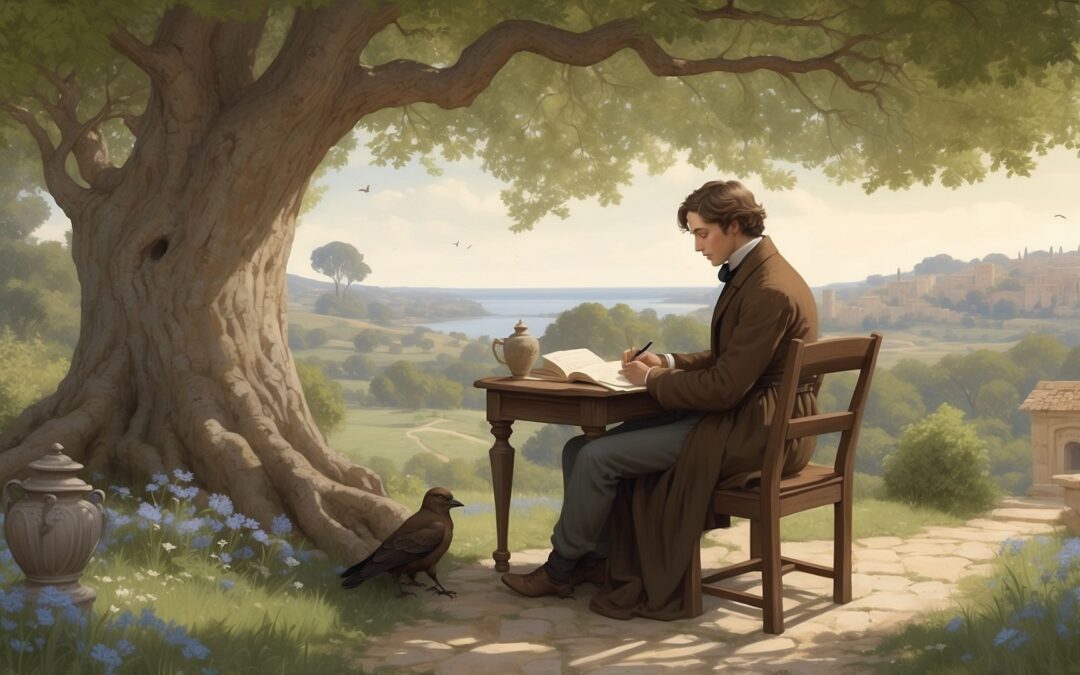
The Immortal Legacy of John Keats: A Poet’s Journey Through Time
Explore the life and legacy of John Keats, one of the greatest Romantic poets, whose timeless works like Ode to a Nightingale continue to inspire the world.
The Tale of Peter Rabbit: A Timeless Story by Beatrix Potter
Discover the charm of Beatrix Potter’s The Tale of Peter Rabbit, a beloved children’s story about curiosity, adventure, and the lessons of mischief.
The Impact of Popular Culture on Body Image: Shaping Perceptions and Realities
Explore how popular culture influences body image, shaping perceptions of beauty, self-esteem, and societal norms, and learn strategies for fostering a healthy body image.
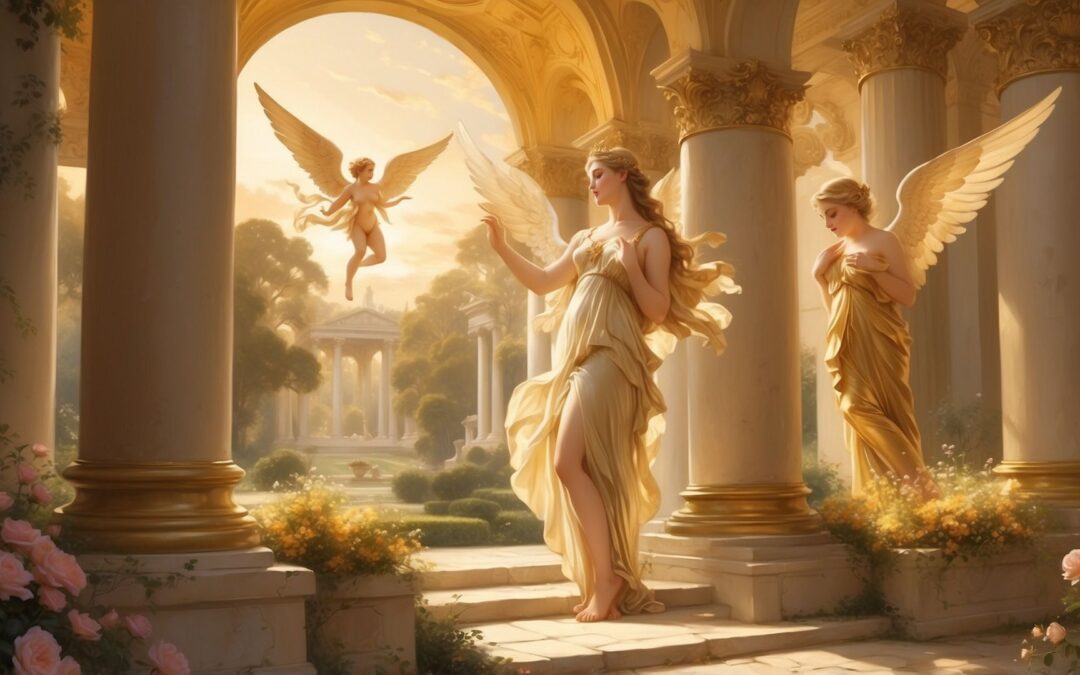
The Tale of Cupid and Psyche: A Roman Myth of Love and Trials
Discover the Roman myth of Cupid and Psyche, a tale of love, betrayal, and redemption. Explore its themes, symbolism, and enduring legacy in mythology.
Understanding the Sunk Cost Fallacy: Why We Stay Committed to Bad Decisions
Discover how the sunk cost fallacy influences decisions based on past investments, why it happens, and how to break free from this psychological trap.

Did You Know About the Massive Alcohol Cloud in Sagittarius B?
Discover the fascinating astronomical phenomenon of a 463-billion-kilometer-wide alcohol cloud in Sagittarius B, located near the center of the Milky Way.

Aerodynamics: Understanding How Planes Fly
Explore the science of aerodynamics and discover how planes achieve flight. Learn about lift, drag, thrust, and the principles that keep aircraft in the sky.
More Articles
Understanding “The Apple Doesn’t Fall Far from the Tree”: Meaning and Origins
Explore the meaning, origins, and cultural significance of the proverb “The apple doesn’t fall far from the tree.” Discover how it applies in everyday life and relationships.
The Black Dahlia Murder: Unraveling a Chilling Mystery
Dive into the chilling mystery of the Black Dahlia murder. Explore the facts, theories, and why this infamous case continues to captivate the world decades later.
How Migratory Birds Navigate Their Incredible Journeys
Discover the secrets of how migratory birds navigate vast distances. Learn about their use of magnetic fields, celestial cues, and innate instincts to find their way.
Building an Inclusive Future: Education for Students with Disabilities
Discover how inclusive education empowers students with disabilities, promotes equality, and transforms schools into environments of understanding and collaboration.
The Journey of E-commerce: From Clicks to Delivery
Explore the fascinating journey of e-commerce, from the moment customers click ‘Buy Now’ to doorstep delivery. Learn how technology, logistics, and customer expectations shape the world of online shopping.
How Postcolonial Literature Shapes Cultural Identity: A Lasting Influence
Explore how postcolonial literature shapes cultural identity, shedding light on its impact in reclaiming narratives and fostering a deeper understanding of diverse cultural backgrounds.
Discovering Norway’s Love for Friluftsliv: Embracing the Outdoors
The Gist Norway is known for its breathtaking landscapes and a cultural practice that celebrates the outdoors: friluftsliv. This Norwegian concept, meaning “open-air living,” is more than just spending time outside; it’s about connecting with nature, finding peace,...
The Connection Between Happiness and Material Possessions: Does More Equal Happier?
Discover how happiness and material possessions correlate. Learn if owning more things really leads to greater happiness and what factors truly impact your well-being.
How to Become a Forensic Scientist: Your Complete Career Guide
Discover the path to becoming a forensic scientist, including education, skills, and career opportunities. Learn what it takes to succeed in this fascinating field.
Exploring the True Purpose of Education: Beyond the Classroom
Discover the purpose of education and how it goes beyond just academics. Learn how education shapes critical thinking, personal growth, and lifelong success.
Learn English Magazine
Heathcliff by Danny B. Phoenix
Experience the haunting world of Heathcliff through an immersive album of songs inspired by Wuthering Heights. Explore themes of love, obsession, and revenge as music and story intertwine, offering a fresh perspective on Heathcliff’s turbulent journey. Listen to the full story narration alongside powerful tracks that bring the emotional depth of Wuthering Heights to life.
The Snow Maiden: The Enchanting Tale of Snegurochka in Russian Folklore
Discover the magical story of the Snow Maiden (Snegurochka), a beloved figure in Russian folklore, who symbolizes winter and the delicate balance between innocence and love.
Harriet by Danny B. Phoenix
Harriet is a short story by Danny B. Phoenix about the great Harriet Tubman told from her own perspective about her life and struggles that wrote a new page in the rising against slavery and oppression history book.
Heathcliff’s Wuthering Heights | A Love Story in Shadows
Explore the dark and haunting world of Wuthering Heights through the eyes of Heathcliff. This retelling dives deep into the fierce and consuming love that shaped his life, revealing a story of obsession, revenge, and the complex nature of human emotion.
The Science of Happiness | Listening Comprehension
Explore the fascinating science of happiness and discover how relationships, mindset, and even acts of kindness can boost your well-being. Learn how to apply these research-backed strategies in your life.
Entrepreneurship and Innovation | Listening Comprehension
Explore the relationship between entrepreneurship and innovation in this engaging lecture designed for high-intermediate to advanced English learners. Learn how entrepreneurs take risks, solve problems, and embrace innovation to shape the world around them.
Public Speaking Tips | Listening Comprehension
Learn key public speaking tips in this engaging lecture designed for high-intermediate to advanced English learners. Discover how to overcome fear, improve delivery, and connect with your audience for a more confident presentation.
The Importance of Sleep | Listening Comprehension
Meta Description
Learn about the essential role sleep plays in our physical and mental health in this engaging lecture designed for high-intermediate to advanced English learners. Discover why sleep is vital for overall well-being and how to improve your sleep quality.
History of the Olympic Games | Listening Comprehension
Explore the fascinating history of the Olympic Games in this engaging lecture designed for high-intermediate to advanced English learners. Learn how the games evolved from ancient Greece to the global event they are today.
Endangered Species and Conservation | Listening Comprehension
Learn about endangered species and conservation in this engaging lecture designed for high-intermediate to advanced English learners. Discover the causes of species endangerment and how conservation efforts can make a difference.
Literary Magazine
No Results Found
The page you requested could not be found. Try refining your search, or use the navigation above to locate the post.