English Plus Magazine
Dive into a world of ideas, stories, English and discovery.
Coming Soon!
Some of these articles are already published, and some will be published very soon. Check out the new articles below…
Danny's Column
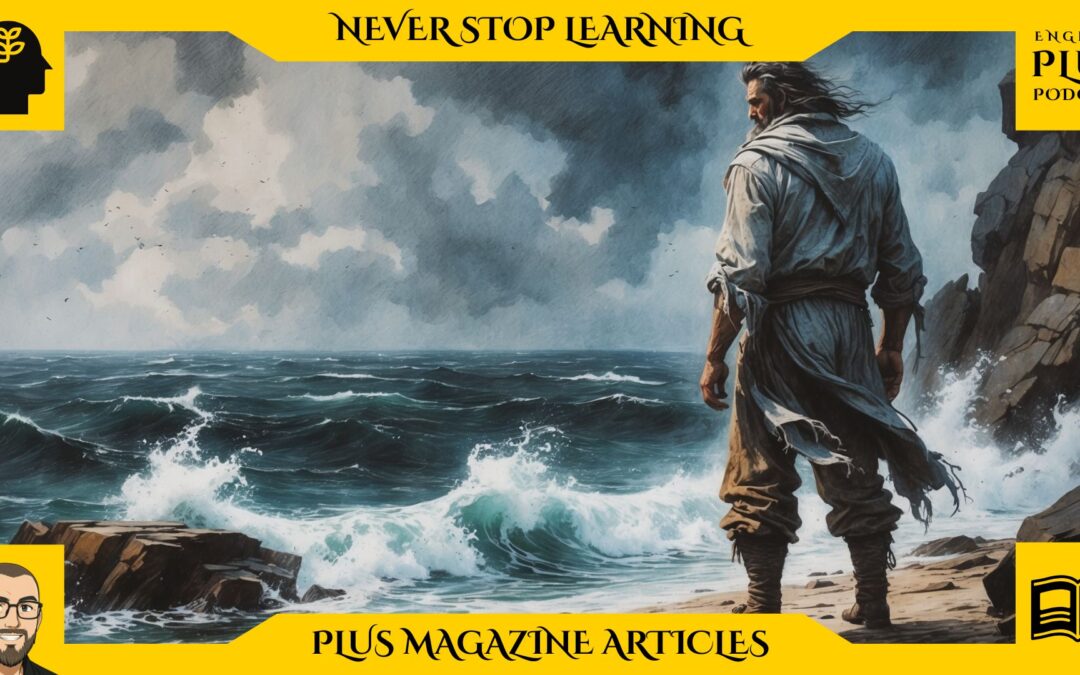
The Beautiful, Terrible Burden of a Questioning Mind
The Uncomfortable Itch of Awareness
Have you ever felt it? That quiet, internal lurch in the middle of a perfectly normal conversation. Everyone’s laughing, nodding along, sharing a story that feels good, warm, and simple. But you… you feel a dissonant chord being struck. You see the tiny crack in the logic, the unsubstantiated leap of faith, the emotional manipulation masquerading as wisdom. Do you speak up and shatter the comfortable illusion, or do you swallow your words and smile, feeling like a stranger in your own skin? This is the daily pilgrimage of anyone cursed, and blessed, with a questioning mind. It’s the journey of carrying a lantern in a world that often prefers the cozy, comforting darkness.
The First Glimmer of a World in High-Definition
I remember when it first started becoming… loud. It’s not a sudden event, more like a slow, creeping dawn. At first, it’s exhilarating. It feels like a superpower. You’re reading an article, and suddenly you can see the skeleton of the argument beneath the skin of the prose. You can spot the weasel words, the appeal to emotion, the data that’s been cherry-picked to sparkle just so. You watch a commercial and you don’t just see a happy family driving a new SUV; you see a meticulously crafted narrative designed to bypass your rational brain and hook directly into your insecurities about safety, status, and happiness. It’s like Neo seeing the Matrix for the first time. The world, which once seemed solid and straightforward, suddenly reveals itself as a shimmering code of intentions, biases, and hidden agendas. In that moment, you feel powerful. You feel free. No one can pull a fast one on you anymore.
The Joy of Deconstruction
There’s a clean, pure satisfaction in it, isn’t there? It’s the joy of the mechanic who hears a perfectly tuned engine, the mathematician who sees the elegance of a completed proof, the chef who can taste every individual ingredient in a complex sauce. You take apart a conspiracy theory piece by piece, not with anger, but with a kind of surgical precision, laying out the logical fallacies like carefully preserved specimens. You trace a piece of viral misinformation back to its source, watching the game of telephone warp a simple fact into a monstrous fiction. This isn’t about feeling superior. Not really. It’s about a deep, abiding love for the truth, or at least, the most honest approximation of it we can manage. It’s the thrill of clarity, a momentary rescue from the endless fog of noise and nonsense that bombards us every single day.
When the Superpower Becomes a Social Handicap
But then… the other side of the coin starts to show. The superpower that felt so liberating in private starts to feel like a social disability in public. You’re at a family gathering, and a beloved uncle starts talking about a “miracle cure” he saw on a late-night show. The old you might have nodded politely. The new you, the you with the questioning mind, feels a klaxon go off in your head. Your brain is instantly flooded with questions: What’s the mechanism of action? Has it been peer-reviewed? What’s the sample size of the study they’re citing? Who funded the study? But you know you can’t ask any of that. Because you’re not just questioning a claim; you’re questioning your uncle’s hope, his judgment, his desire for a simple solution in a complicated world.
The Unofficial Title of “Buzzkill”
So you try. You gently offer a counterpoint. “You know, Uncle Jim, I read an article that said…” And you see it. The shutters come down. The mood in the room cools by a few degrees. You’re not a curious nephew anymore; you’re a buzzkill. A contrarian. A know-it-all. You have punctured the pleasant balloon of shared belief, and now a tense silence is leaking into the room. You learn, quickly, that a fact is a cold, sharp thing in a room built on warm feelings. And you start to feel a profound sense of loneliness. You are standing on one side of a chasm, holding what you believe to be a map, while people you love are happily gathered on the other side, insisting the chasm isn’t even there.
The Silent Scream of the Echo Chamber
This loneliness intensifies in the digital age. You watch friends, intelligent and kind people, share articles from sources that are demonstrably false. You see them get swept up in moral panics, outrage cycles, and political narratives that are built on sand. You want to scream. You want to type out a 12-part comment thread with sources and citations, a beautiful testament to reason and evidence. But you’ve been down that road before. You know it doesn’t work. You know that you can’t use logic to pull someone out of a position they didn’t use logic to get into in the first place. Their belief isn’t an intellectual conclusion; it’s an identity. It’s a team jersey. And by attacking the belief, you are, in their eyes, attacking them. So you just keep scrolling, a silent scream trapped in your chest.
The Weight of Watching the World Burn (Metaphorically, Mostly)
It’s a unique kind of pain to see the mechanism of a trap and be unable to prevent someone you care about from walking into it. It could be a financial scam, a toxic wellness trend, a manipulative political ideology, or just a really bad self-help book. You can see the hooks, the empty promises, the predictable, painful outcome. But your warnings are dismissed as negativity or cynicism. You’re told to “be more positive” or to “just let people believe what they want.” It is a profoundly helpless feeling. It’s like being the only sober person at a party where everyone has decided it’s a great idea to start juggling knives. You’re not trying to ruin the fun; you’re just trying to prevent a trip to the emergency room.
The Temptation of Blissful Ignorance
There are days, let’s be honest, when you wish you could just switch it off. You wish you could go back to a time when you could listen to a politician’s speech and feel inspired instead of mentally red-lining every empty platitude and logical fallacy. You wish you could read a headline and just accept it, without the immediate, exhausting impulse to check three other sources and investigate the author’s bias. The world seems so much simpler, so much happier, for those who don’t feel this compulsion. It’s the siren song of blissful ignorance. Just nod. Just smile. Just agree. Just let it go. It would be so much easier. Peace, both internal and external, would be so much easier to come by.
Navigating the Minefield: The Art of Inquiry
So what do we do? Do we become bitter recluses, communicating only in heavily footnoted emails? It’s tempting. But it’s also a dead end. The real challenge, the real art, is learning how to live with this questioning mind in a way that doesn’t completely sever us from humanity. And I think the key lies in shifting from a prosecutor to a detective. A prosecutor’s job is to prove a point. A detective’s job is to understand what happened. This means trading pronouncements for questions. Instead of saying, “That’s not true,” maybe we try, “That’s interesting, where did you hear about that?” Instead of, “That’s a logical fallacy,” we could ask, “Can you help me understand how you got from A to B?” It’s not foolproof. It can be just as annoying, if we’re not careful. Because you know, people love being gently led through a Socratic dialogue at a barbecue.
Choosing Your Battles, and Your Weapons
The real skill is emotional intelligence. It’s learning to read the room. Is this a moment for truth-seeking, or is this a moment for connection? Sometimes, connection is more important. Sometimes, letting your aunt enjoy her belief in crystal energy is a small price to pay for a peaceful holiday. The harm is negligible. The relationship is invaluable. The battle isn’t worth fighting. But when the belief slides into something harmful—when it’s about shunning medical advice, or embracing hatred, or making ruinous financial decisions—then the stakes are different. Even then, our weapon shouldn’t be a club of facts. It should be a hand offered in genuine concern. It starts with empathy. “I understand why that feels comforting,” or “I can see why that idea is so powerful.” You have to build a bridge of shared emotion before you can ask them to walk across it to a different point of view.
The Solace of Finding Your Tribe
And perhaps the most critical survival skill is finding your people. Find the other detectives. The other questioners. The other people who light up when a conversation gets deep and complex, who aren’t afraid to say “I don’t know,” and who see a friendly debate not as a fight, but as a collaborative search for truth. These are the conversations that feel like coming home. They are the antidote to the loneliness. In these spaces, your questioning mind isn’t a burden; it’s a gift. It’s the very thing that connects you. You don’t have to agree on everything—in fact, it’s better if you don’t—but you agree on the rules of the game: good faith, curiosity, and a willingness to be wrong.
So, Why Bother? The Terrible, Beautiful “Why”
After all this—the loneliness, the frustration, the social awkwardness—why carry this burden? Why not just put the lantern down and enjoy the darkness with everyone else? Because for some of us, that’s not a choice. The switch doesn’t have an “off” position. But more than that, we carry it because it’s worth it. It is a terrible burden, but it is also a beautiful one. To live an examined life, as Socrates said, is to live a life of integrity. It’s to refuse to be a passive consumer of reality. It’s to insist on being an active participant in your own understanding. It’s an act of profound self-respect.
A Quiet Rebellion in a Noisy World
This questioning mind is what protects you from manipulation. It’s your internal armor against the hucksters, the demagogues, and the charlatans who prey on mental laziness. It’s what allows you to build a worldview that is truly your own, brick by painful, well-considered brick, rather than just inhabiting a pre-fabricated structure someone else handed you. It is a quiet, daily act of rebellion. It’s the refusal to outsource your thinking. And in a world that is screaming at you from every screen to do exactly that, it might be one of the most radical acts there is.
The Weight is the Point
In the end, maybe the burden is the beauty. Like the weight a weightlifter uses to build muscle, the strain of critical thinking is what makes our minds stronger, more resilient, more capable. The discomfort is a sign of growth. The loneliness is a testament to your refusal to compromise on what you know to be true. It’s the price of clarity. And while it can be a lonely road, it is the only road that leads to a place of genuine, hard-won wisdom. It’s the difference between being a passenger in your own life and grabbing the steering wheel with both hands, even if you’re not entirely sure where you’re going, and even if the other people in the car are complaining about your driving. You’re awake. You’re aware. And that, in itself, is a victory. It’s a quiet, melancholy, and deeply beautiful victory.
So, here’s my question to you. When do you feel the weight of your own questioning mind the most? Is it in a family setting, at work, or when you’re just scrolling online? And more importantly, how have you learned to carry it? Share your stories and strategies in the comments below; I think we could all learn something from each other.
English Plus Magazine
The Philosophy of Happiness: How to Define and Achieve True Joy
Explore the philosophy towards achieving happiness in life. Learn how mindset, purpose, and practical steps can help you define and attain true joy and fulfillment.
The Highs and Lows of a Professional Dancer’s Career: Insights into Passion and Perseverance
Explore the highs and lows of a professional dancer’s career, from the joy of performance to the challenges of physical demands, industry pressures, and career longevity.
The Value of Escapist Entertainment in a Complex World
Explore the value of escapist entertainment in our lives. Discover how books, movies, and games provide more than distraction, offering relief, creativity, and even life lessons in today’s complex world.
Exploring Immortality in Literature: The Glass Bead Game by Hermann Hesse
Dive into the timeless masterpiece The Glass Bead Game by Hermann Hesse. Explore its themes of intellectual pursuit, spirituality, and the quest for meaning, and understand why this work remains immortal in literature.
How to Write Authentic and Diverse Characters
Discover how to write authentic and diverse characters that resonate with readers. Dive into tips on avoiding stereotypes, crafting nuanced personalities, and creating compelling dialogue. Listen to this insightful episode on the English Plus Podcast.
How to Prepare for English Exams: Tips for TOEFL, IELTS, SAT, and More
Discover expert strategies to ace English exams like TOEFL, IELTS, and SAT. Learn how to prepare effectively, manage test-day stress, and avoid common pitfalls in this episode of English Plus Podcast.
Fitness for Seniors: Safe and Effective Workout Tips for a Healthier Life
Discover senior-friendly workout tips to enhance strength, balance, and flexibility safely. Learn how to stay active, avoid injuries, and enjoy quality of life through tailored fitness routines.
The Science of Visualization: Why Imagining the Process Beats Picturing Success
Learn how visualizing success can enhance performance, but discover why focusing on the process is even more effective for achieving your goals. Explore practical tips and real-life examples to transform your mindset and boost your results.
Axolotls’ Amazing Regeneration Powers: Heart, Lungs, and More!
Did you know axolotls can regenerate their heart, lungs, and spinal cord? Discover the science behind this amazing ability and what it means for humans.
Genome Sequencing: Unlocking the Secrets of Life
Discover the fascinating world of genome sequencing! Learn how scientists decode DNA, explore its potential to revolutionize medicine, and discuss the ethical dilemmas it raises.
Ocean Currents: Understanding the Earth’s Conveyor Belt
Dive into the world of ocean currents, often called the Earth’s conveyor belt. Discover their role in climate regulation, marine ecosystems, and global weather patterns.
Are Bacteria Always Harmful?
Discover the truth behind the statement “Bacteria are always harmful.” Learn about the essential roles beneficial bacteria play in our health, environment, and industry.
Also in English Plus Magazine
Mini Podcasts Network
No Results Found
The page you requested could not be found. Try refining your search, or use the navigation above to locate the post.
Stories
To Kill a Mockingbird”: Harper Lee’s Timeless Classic Examined
Delve into the plot, characters, themes, and narrative achievements of Harper Lee’s “To Kill a Mockingbird.” Explore the enduring relevance of this powerful novel’s messages about empathy, fairness, and the importance of standing up for what is right.
The Sole Track | A Short Story
Follow the story of Ramon, a veteran race car driver, as he faces the challenges of competing against the best in the world on the most prestigious race track. Learn about his drive to succeed, the importance of having a support system, and the qualities necessary for success in the world of motorsports.
The Life and Poetry of Emily Dickinson: Exploring the Themes and Techniques of a Literary Pioneer
Step into the world of Emily Dickinson, one of America’s greatest poets. Explore her unique style, her use of themes like mortality and spirituality, and the techniques that made her work so innovative. Discover how Dickinson’s life of solitude and seclusion influenced her writing, and find inspiration for your own creative journey. Join us as we dive into the life and poetry of a true literary pioneer.
The Legend of King Arthur and the Knights of the Round Table
Discover the legendary figures of King Arthur and the Knights of the Round Table, their stories of adventure and heroism, and their ultimate downfall.
Overcoming Writer’s Block: Understanding the Causes and Finding Solutions
Discover the underlying causes of writer’s block and find solutions to overcome this condition and unleash your creativity as a writer.
The Great Gatsby: A Masterpiece that Critiques the American Dream – An Interview with F. Scott Fitzgerald
Discover F. Scott Fitzgerald’s timeless masterpiece, “The Great Gatsby,” a critique of the American Dream that explores the complexities of human nature. Read the interview with the author to learn more.
Spectrum Radio Mixes
No Results Found
The page you requested could not be found. Try refining your search, or use the navigation above to locate the post.