
English Plus Magazine
Dive into a world of ideas, stories, English and discovery.
Letter from the Editor
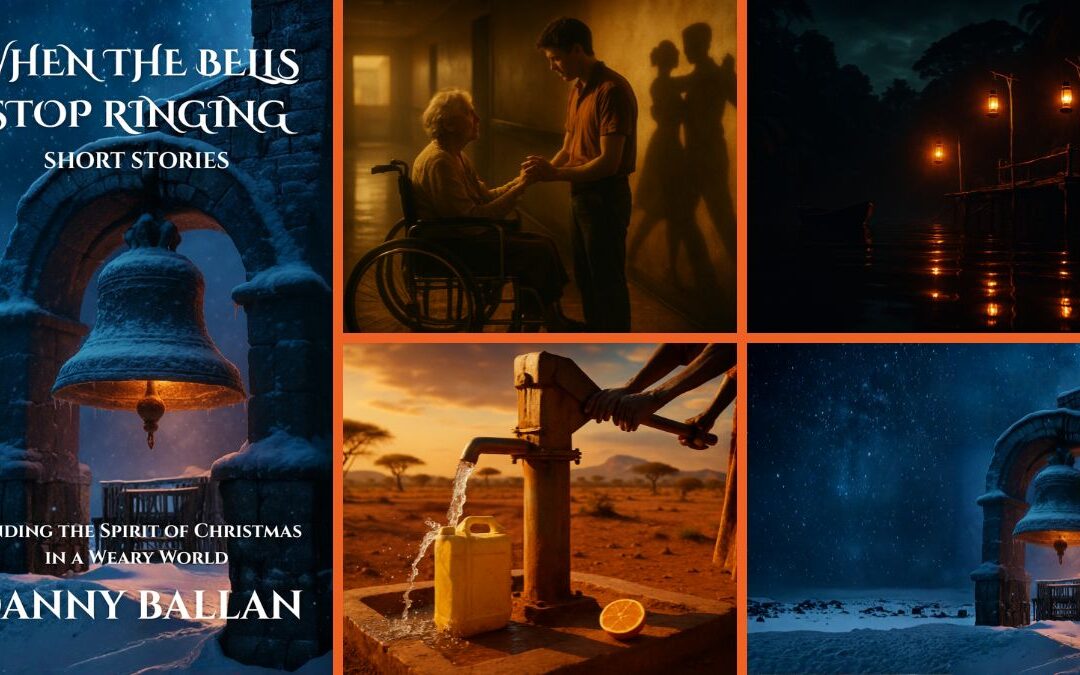
The Dance, The Drift, and The Handle: How We survive the Morning After
We have reached the end of the year. The bells have stopped ringing, the wrapping paper is in the bin, and we are standing on the threshold of the “Morning After.” In this final Thinking Out Loud of 2025, we explore the art of survival through three powerful metaphors: The Dance, The Drift, and The Lever. We travel to Argentina to see an orderly teach a paralyzed woman that she can still lead; we float down the Amazon to discover that being lost is sometimes the only way to be found; and we stand at a well in Kenya to learn why peace is physically heavy. We ask the difficult questions: Are we tourists in our own lives, or are we pilgrims? Does the music stop just because our legs do? And what happens when we realize that the handle of survival is too heavy to lift alone? Join me for one last reflection before we turn the page to 2026.
So, here we are.
We have arrived at that strange, liminal space on the calendar. You know the one I’m talking about. The days between Christmas and New Year’s. The “Perineum of the Year,” if you’ll forgive the biological metaphor.
Time feels weird right now. We are full of cheese and chocolate. The house is a mess. The adrenaline of the holidays is fading, replaced by a low-grade exhaustion. And if we are being honest, there is a little bit of a letdown.
We spent weeks building up to the “Big Day.” We lit the candles. We bought the gifts. We chased the magic. And now… the wax has hardened. The guests have gone home. And we are left staring at a Tuesday that looks suspiciously like a normal Tuesday.
This is the “Morning After.”
And it felt appropriate, for this final episode of 2025, to look at the last batch of stories in our collection because they are all, in their own way, about what happens after the main event.
They are about what happens when the body fails, when the engine dies, and when the water runs out. They are about how we survive the ordinary, brutal days when there are no bells ringing to save us.
Let’s start in Buenos Aires. Let’s talk about the heat.
The story of The Midnight Tango takes place in a nursing home that has turned into a greenhouse.
We need to talk about how we treat the elderly. I don’t mean medically; I mean existentially.
Valeria is eighty-two. She is a “number on a chart”. To the nurses, she is just a body that needs to be hydrated and turned. They see the swollen feet. They see the orthopedic slippers. They see the “Grandma”.
We are a culture obsessed with the “New.” We worship the straight spine. We worship the fresh start. When we look at someone like Valeria, we see an ending. We see a history book on a shelf—dusty, fragile, and closed.
But Valeria isn’t a book. She’s a fire.
She was a queen of the milongas. She didn’t birth children; she birthed art.
The tragedy here isn’t that she is old. The tragedy is that nobody sees the dancer inside the patient.
Until Lucas.
Lucas is the “Orderly in Sneakers.” He’s messy. His uniform is untucked. He doesn’t look like a savior. He looks like a kid.
But Lucas does something profound. He hums.
And not just any song. He hums Carlos Gardel. El día que me quieras. The anthem of longing.
Music is a time machine. We all know this. You hear a song from high school, and suddenly you aren’t paying your mortgage anymore; you’re sixteen, driving with the windows down.
When Lucas plays the tango, the smell of floor wax fades. It’s replaced by rose water and sweat. The room changes because the perception changes.
And then comes the dance.
This is the part that gets me. Valeria says, “I cannot stand.”.
This is the logic of the body. My legs don’t work, therefore I cannot dance.
Lucas challenges the premise. He says, “Tango is not in the feet. It is in the chest.”.
He separates the action from the essence.
He moves around her. He does the footwork for both of them. He creates the tension—the abrazo—that makes the dance alive.
He treats her as a partner, not a patient.
The “What If” question here is: What if we are wrong about what makes us useful?
We think we are only valuable if we are “standing”—if we are working, producing, running, achieving. We think that if we end up in the chair, the music stops.
But the story suggests that the music plays in the blood. It suggests that dignity isn’t about physical capability; it’s about being recognized.
Lucas gave Valeria her history back. He looked at a “boy in sneakers” and she looked at a “crippled woman,” and for three minutes, they dissolved those labels and became two dancers.
As we head into 2026, we are all going to get older. (Spoiler alert). We are all going to lose capabilities. The question is: Will we keep dancing in the chest? And will we have the grace to be the partner for someone else who can no longer stand?
Now, let’s move from the stillness of the chair to the chaos of the river.
Let’s go to the Amazon.
The story The River of Stars touches on a fear that is so primal it makes my palms sweat just reading it. The engine dying at night.
Thiago is a pilot. He knows the river. He has a map. He has a schedule. He is a man of control.
And then… silence. The machinery fails.
We are people of the engine. We believe that if we just keep the motor running—if we keep working, keep planning, keep pushing—we are safe. We view “drifting” as a failure.
Thiago drifts. He spins. He is pulled away from the lights of the village, away from safety.
In the Amazon, drifting means death. There are logs in the water. There are caimans.
But then he sees the spark.
It’s not a lighthouse. It’s not a rescue helicopter. It’s a kerosene lantern tied to a stick in the mud.
It’s a rickety dock belonging to three families living at the edge of the world.
This is a story about Humble Salvation.
We often wait for a “Big Rescue.” We want the lottery win. We want the grand gesture. We want the solution that fixes everything perfectly.
But usually, salvation looks like a grilled fish on a dirty plate.
The woman on the dock tells him, “We don’t need mail… We need to eat.”.
She simplifies the world. The engine is dead? Fine. Are you hungry? Yes. Then eat.
The logic of the river is different from the logic of the city. In the city, you need credentials. You need money. On the river, you just need to be human.
The line that struck me most was the woman explaining the lights: “We don’t want anyone to miss the way home.”.
They weren’t expecting Thiago. They didn’t know the mail boat was coming. They lit the lights just in case.
They are the “Keepers of the River Lights”. They maintain a vigil for strangers they haven’t met yet.
This challenges me. Do I have any lights lit for strangers? Or are all my lights focused on my own house, my own path, my own family?
We are all pilot and passenger. Sometimes we are driving the boat. But inevitably, the engine will die. 2025 might have been a year where you were driving. 2026 might be a year where you drift.
And when you drift, you have to hope that someone stuck a pole in the mud and lit a lantern.
So, the lesson is: Be the person who lights the lantern. Not because you know who is coming, but because you know the river is dark.
And finally, let’s talk about the heaviest story of the bunch. Turkana.
The Water at the Well.
This is about the “Morning After” in its most brutal form. The drought.
Zola walks ten kilometers. She is eighteen. She is afraid.
She is walking into the borderlands. Into the territory of the Enemy. The Pokot tribe.
We live in a world of tribes. We are constantly told who to fear. We are told who is stealing our resources. We are told who is “The Other.”
Zola sees the Pokot woman at the well. The “Enemy.”.
Now, in a movie, there would be a standoff. There might be a fight.
But the sun is a hammer. And the thirst is absolute.
The “What If” here is: What if our enemies are just as thirsty as we are?
The pump is the central character of this story. It is old. It is rusted. It is heavy.
It is too heavy for one person.
Think about the design of that. It is a mechanism that requires cooperation to function.
Zola pulls. Nothing happens. She looks at the enemy. The enemy steps forward.
They don’t speak. They don’t sign a peace treaty. They don’t apologize for the cattle raids.
They just count. One. Two. Three..
They find a rhythm.
Peace is not a sentiment. Peace is a rhythm. It is the physical act of pushing down so the other person can pull up.
The friction warms the metal.
And then… the water comes.
You cannot drink the water of victory if the well is dry. That is a truth we seem to have forgotten. We are so busy trying to “win” against the other side that we forget the pump is broken for everyone.
And then, the moment of grace. The orange.
A withered, small orange. A rare treat.
The Pokot woman splits it.
She doesn’t have to. She helped pump the water; the transaction was complete. But she goes further. she creates a bond.
We are entering a year—2026—that I am sure will be full of noise. Full of elections, or arguments, or crises. We will be told, over and over again, to guard our perimeter. To hoard our water. To fear the person standing at the well.
But I want you to remember Zola.
I want you to remember that the handle of survival is too heavy for one pair of hands.
If we want the water to flow, we have to stand on the concrete slab next to the person we fear, and we have to find a rhythm.
So, we have the Dance in Buenos Aires.
The Drift in the Amazon.
The Handle in Turkana.
They all lead us to the final piece in the book: A Prayer for the Morning After.
This reflection sums up everything we’ve been talking about for weeks.
“The holiday is finished, but the work of love has just begun.”.
We have spent this season being “Tourists” of kindness.
A tourist visits a beautiful place. They take a picture. They say, “Oh, look, a manger! Look, a star! How lovely.” And then they go home unchanged.
A pilgrim is different.
A pilgrim travels to the source. They drink from the well. And they are transformed forever.
We need to stop being tourists of Christmas. We need to stop treating kindness like a seasonal decoration that we put back in the attic on January 2nd.
The stories we read—the soldier sharing his canteen, the neighbor unlocking the door, the truck driver opening the crate—these aren’t fables. They are blueprints.
They are instructions.
We need menders. We need weavers. We need people willing to tie the threads back together, knot by stubborn knot.
So, as we stand here, at the end of 2025, looking into the unknown of 2026, I have a challenge for you.
Don’t just go back to normal.
The bells have stopped ringing. The choir has gone home. The lights are coming down.
Great.
Now the real work starts.
Now is when you light the kerosene lamp on the dock.
Now is when you invite the stranger to the table.
Now is when you help your enemy pump the water.
We are the light. We are the hope. We are the answer to our own prayers.
And that, my friends, brings us to the end of Thinking Out Loud for 2025.
I want to take a moment, just me to you, to say thank you.
Thank you for tuning in week after week. Thank you for letting me be a voice in your ear while you drive, or cook, or walk the dog. Thank you for engaging with these stories, for asking the “What If” questions with me, and for being part of this community.
2025 has been a journey. We’ve explored a lot of heavy topics, and we’ve found a lot of light together.
But I have to tell you… we are just getting started.
We have some incredible things planned for English Plus in 2026. We’re going to go deeper. We’re going to explore new formats, new stories, and new ways to learn and think together. The podcast is evolving, and I can’t wait to show you what we’ve been building.
So, enjoy your New Year’s Eve. Eat the leftovers. Take down the tree (or don’t, no judgment).
But keep the fire burning in your chest.
I’m Danny. Thank you for a wonderful year.
I’ll see you in 2026.
More Editorials
No Results Found
The page you requested could not be found. Try refining your search, or use the navigation above to locate the post.
Featured Articles
Life’s Big Question: Is Meaning Found or Created by You?
Delve into one of life’s most profound questions: Is there an objective meaning to life, or do we create it ourselves? Explore philosophical insights, practical life tips, and the journey to personal fulfillment.
The Evolving Librarian: More Than Shhh & Shelves in the Digital Age
Explore the dynamic transformation of librarians in the 21st century. Discover how they’ve become tech-savvy information architects, community builders, and champions of digital literacy, far beyond the outdated stereotypes. Learn about their new skills and vital roles in today’s complex information landscape.
Mental Health vs. Mental Illness: Understanding the Key Differences
Demystify mental health and mental illness. Learn the crucial distinctions, understand signs of well-being, and discover how to foster resilience. Break the stigma and empower yourself with knowledge.
Homer’s The Iliad: An Immortal Epic of Heroes, Gods, and Humanity
Journey into the heart of the Trojan War with Homer’s The Iliad. Explore its timeless themes of rage, honor, and fate, and discover why this ancient masterpiece continues to captivate. Elevate your English and delve into an immortal work of literature.

Mastering Your Masterpiece: How to Choose the Perfect Title for Your Story
Unlock the secret to captivating readers from the first glance! This comprehensive guide offers expert creative writing tips on choosing compelling, unique, and thematic titles for your stories, ensuring your narrative stands out. Discover strategies, pitfalls to avoid, and elevate your English vocabulary along the way.

Embracing a Plant-Based Diet: Your Guide to Better Health & a Greener Life
Unlock the incredible health benefits of a plant-based diet, from improved heart health to weight management and gut vitality. Learn how to transition, understand nutritional needs, and explore the environmental impact of this vibrant culinary revolution.
Rosa Parks: The Quiet Defiance That Sparked a Civil Rights Revolution
Uncover the full story of Rosa Parks, the woman whose quiet act of defiance ignited the Montgomery Bus Boycott and became a powerful catalyst for the Civil Rights Movement. Explore her life, enduring legacy, and the true meaning of courage.

Unpacking Women’s Representation in Media: Beyond Stereotypes
Explore the nuanced world of women’s representation in media, from historical archetypes to modern shifts. Understand pervasive influences, subtle biases, and the power of diverse portrayals in shaping societal perceptions and real-world impact.

Quetzalcoatl: The Feathered Serpent God of Aztec Lore & Beyond
Uncover the captivating story of Quetzalcoatl, the Aztec Feathered Serpent deity of creation, wisdom, and wind. Explore his myths, profound symbolism, and enduring legacy in Mesoamerican culture and beyond. Dive deep into a rich history that shaped an empire.
More Articles
The Real Life of a Makeup Artist: Behind the Glamour & Brushes
Thinking of a makeup artist career? Discover the reality behind the perceived glamour – the diverse skills, freelance challenges, various career paths & unique rewards.
Can Curiosity Be Taught? How to Cultivate Lifelong Learning in Anyone
Is curiosity innate or learned? Explore the science and psychology behind our urge to know, and discover practical strategies to cultivate curiosity in kids and adults for lifelong learning.
Yukio Mishima’s Chilling Masterpiece: Analysis of The Sailor Who Fell from Grace with the Sea
Explore Yukio Mishima’s dark classic, ‘The Sailor Who Fell from Grace with the Sea.’ Deep dive analysis of plot, characters, themes of disillusionment, nihilism & its shocking ending.
Writing Tips: Master the Art of Chapter Endings & Keep Readers Hooked
Stop readers from putting your book down! Essential writing tips on crafting compelling chapter endings – from cliffhangers to emotional resonance. Keep readers engaged!
Mindfulness: Your Secret Weapon for a Healthier Lifestyle & Less Stress
Discover how mindfulness reduces stress & boosts health. Learn simple techniques for mindful eating, exercise & better sleep to enhance your well-being. Start your practice today!
Wu Zetian: Concubine, Empress, China’s Only Female Emperor – Her Ruthless Rise & Lasting Legacy
Discover Wu Zetian, China’s sole female emperor during the Tang Dynasty era.82 Explore her incredible rise from concubine, ruthless tactics, effective reign, Buddhist patronage, & complex legacy debated for centuries.
Parental Leave & Work-Life Balance: Why Better Policies Benefit Everyone
Explore global parental leave policies and their crucial link to work-life balance. Learn benefits (parents, kids, employers), challenges, and why paid, equitable leave matters. Includes vocabulary, quiz & discussion.
The White Buffalo Calf Woman: Unpacking the Sacred Lakota Legend, Her Gifts, and Enduring Message of Hope
Explore the profound Lakota legend of the White Buffalo Calf Woman (Pte San Win). Learn about her arrival during famine, the gift of the Sacred Pipe (Chanunpa), the Seven Sacred Rites, and her enduring prophecy. Discover themes of harmony, respect, and hope. Includes vocabulary lessons, quiz, and discussion.
Are We Failing the Future? Environmental Choices That Matter Now
The planet’s future hangs in the balance as our daily choices continue to impact ecosystems, climate, and public health. From plastic use to energy consumption, small decisions add up to global consequences. Are we truly considering the legacy we leave behind?
The Chameleon Effect: Why You Unconsciously Copy People (It’s Social Glue!)
Unlock the secrets of social psychology! Learn about the Chameleon Effect – our unconscious tendency to mimic others’ posture, gestures & mannerisms – and how it builds rapport and empathy.