
English Plus Magazine
Dive into a world of ideas, stories, English and discovery.
Letter from the Editor
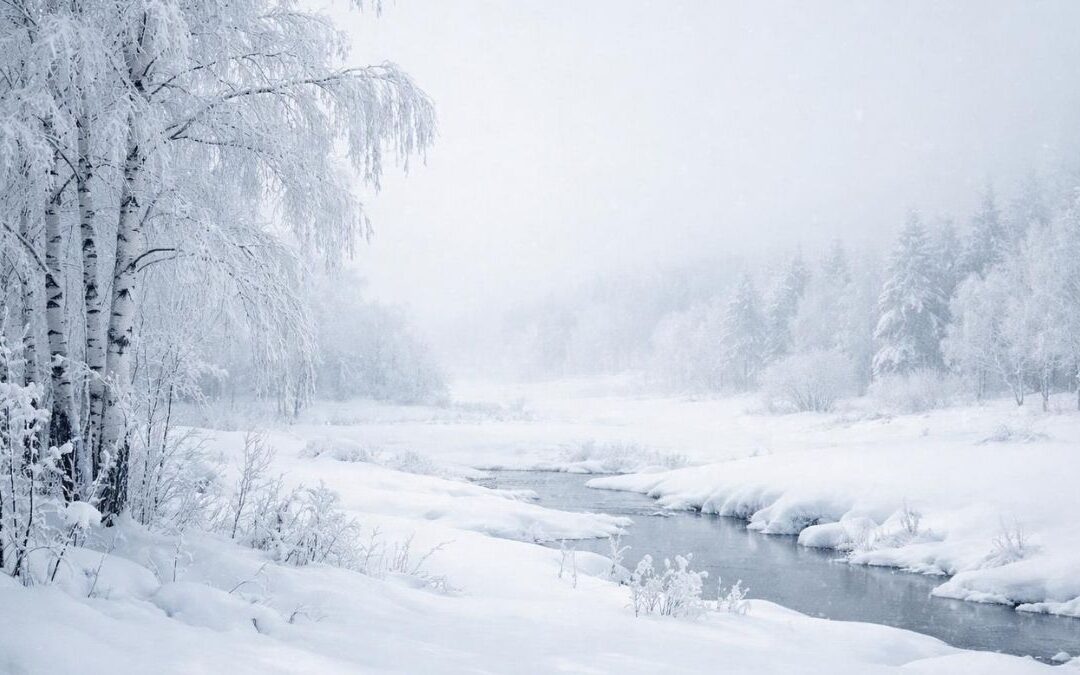
The White Silence of January | The Poet
Have you looked out the window today? I mean, really looked?
There is a specific quality to the light in January. It’s different from the gold of October or the hazy, humid white of July. The light in January is thin. It’s pale. It struggles to get through the clouds, and when it touches the ground, it feels hesitant. It’s a shy light.
It feels like the world is holding its breath.
The party is over. The confetti has been swept away—or maybe there’s still a stray piece of it caught in the rug, a glittering reminder of a midnight that has already faded into history. The champagne is flat. The noise of the celebration has stopped echoing, and what we are left with is this… this vast, overwhelming silence.
The White Silence.
I want to sit with you in this silence today. I don’t want to fill it with plans. I don’t want to break it with the sound of grinding gears or the scratching of to-do lists. I just want us to look at the snow, or the grey sky, or the blank wall, and feel the weight of it.
We are so afraid of the silence, aren’t we? We run from it. We plug our ears with music, podcasts, news, chatter. We fill our calendars because an empty square on a Tuesday feels like an accusation. It asks us, “Who are you when you aren’t doing anything?”
And January… January is one giant, empty square.
It is the season of the Blank Page.
To a writer, the blank page is the most beautiful thing in the world. And it is also the most terrifying. It is pristine. It is perfect. As long as it is empty, it holds infinite potential. It could be the greatest poem ever written. It could be a tragedy. It could be a love letter. It is pure.
But the moment you make a mark—the moment the ink touches the fiber of the paper—you have ruined that perfection. You have collapsed the infinite possibilities down to one singular, imperfect reality. You have committed.
That is why we tremble at the start of something new. That is why the fresh start feels heavy in your chest, right behind your ribs. It’s not excitement. Or, it’s not just excitement. It is the grief of potential lost. It is the fear that what you build will not be as beautiful as what you dreamed.
Think of a field of snow. Unbroken. Not a single footprint. It looks like a bedsheet pulled tight over the sleeping earth. It is so white it hurts your eyes. You stand on the edge of it, wearing your heavy boots, and you hesitate. You know that once you step out there, you will leave a trail. You will disturb the peace. Your path might be crooked. You might slip. You will mark the world.
So many of us are standing on the edge of the snow right now. We are holding the pen over the diary. We are holding the handle of the door. And we are paralyzed. Not by laziness. But by a reverence for the blankness. We don’t want to mess it up.
But we must mark it. We must walk. We must write. But we must do it with respect. We must do it slowly.
There is a sadness to this season that we don’t talk about enough. The world tells you to be happy. “Happy New Year!” we shout. We launch fireworks to scare away the dark. We drink to forget the passing of time. But underneath the celebration, there is an ache.
You feel it, don’t you? Late at night, when the house is quiet. A little pang in your heart.
That ache is grief.
A Fresh Start is a funeral. We don’t like to frame it that way, because it sounds morbid. We want to focus on the birth, on the newness. But you cannot have a Fresh Start without an ending. You cannot have a New You without saying goodbye to the Old You.
Think about the person you were twelve months ago. Think about the things that person hoped for. The things they feared. Think about the coffee they drank, the hands they held, the secrets they kept.
That person is gone. They have been dissolved by time. The cells in your body have replaced themselves. The memories have shifted, slightly, like sand dunes in the wind.
We need to take a moment to mourn the year that has passed. We need to honor it. We treat our past years like old coats that have gone out of style—we just toss them in the back of the closet and buy a new one. “That was a bad year,” we say. “I’m glad it’s over. Delete it.”
But even the hard years—especially the hard years—deserve a eulogy. They carved you. They took pieces of you, yes, but they also added layers to your skin. The heartbreak, the failures, the long nights of worry, the moments of sudden, sharp joy… they are the soil you are standing on.
If you rush into the new without honoring the old, you are building a house on a foundation of ghosts.
So, let yourself be sad. Let yourself miss the things that didn’t work out. Let yourself miss the people who aren’t in this chapter of the book. It is okay to look backward while you are walking forward. That is what makes us human. We are creatures of memory. We drag our history behind us like a long, velvet train. It is heavy, but it is royal.
This is the season of Wintering.
I love that word. Wintering. It’s not just a noun; it’s a verb. To winter.
In our modern world, we live in an eternal summer. We have lights that banish the night. We have heating that banishes the cold. We can buy strawberries in January. We expect ourselves to bloom all year round. We think we should be productive, energetic, and colorful three hundred and sixty-five days a year.
But look at nature. Look at the trees outside. They are bare. Their skeletons are exposed to the sky. They look dead, don’t they? If you didn’t know better, if you were a visitor from another planet, you would think the forest was a graveyard.
But the trees are not dead. They are wintering.
They have pulled their energy in. They have withdrawn from the surface. They have stopped trying to impress the world with leaves and flowers. They have gone underground.
Down in the dark, under the frozen crust of the earth, the roots are busy. They are reaching deeper. They are drinking from the deep reserves of the water table. They are strengthening their hold on the earth so that when the spring storms come, they will not be toppled.
This is what you should be doing right now.
The world is screaming at you to bloom. “Start the business!” “Run the marathon!” “Transform your body!” They want to see your flowers. They want to see the color.
But you cannot bloom in January. It is unnatural. If you force a flower to open in the frost, it will die. It will turn black and wither.
This is why so many resolutions fail. This is why the gym is empty by February. Because we are trying to force a harvest in the middle of winter. We are fighting the season.
You need to go underground. You need to let your Fresh Start be quiet. You need to focus on your roots.
What are your roots? They are your values. They are the quiet hum of your mental health. They are the small, invisible habits that nobody sees. They are the hours of sleep you need to recover. They are the books you read just for the beauty of the language, not to learn a skill.
A Fresh Start isn’t about the results. It’s not about the fruit. It’s about the soil.
It is okay if your life looks quiet right now. It is okay if you don’t have a grand announcement to make on social media. It is okay if you are tired.
The bear hibernates not because he is lazy, but because he is wise. He knows that to survive the scarcity, he must rest. He must dream.
What are you dreaming of in the dark?
I imagine us all as seeds, buried in the dark, cold earth. It’s tight down there. It’s crushing. We don’t know which way is up. We don’t know if the sun will ever come back.
That is the feeling of change. Change feels like being buried.
We often confuse being buried with dying. We think, “It’s dark, I can’t breathe, the weight of the world is on top of me… this is the end.” But for a seed, that darkness is the beginning. The cracking of the shell—that pressure that feels like it’s going to break you—that is the only way the sprout can come out.
You have to break to grow. You have to be undone.
Maybe that’s what you’re feeling right now. Undone. Unraveled. You thought you had it all figured out, and now the new year is here and you feel… messy. Scattered.
Good. Be scattered. Let the wind blow you apart.
There is a Japanese art called Kintsugi, where they take broken pottery and put it back together with gold lacquer. They don’t try to hide the cracks. They highlight them. They say, “This bowl is more beautiful because it has been broken.”
Your Fresh Start is the gold lacquer. It is the thing that binds your broken pieces together into something new. But first, you must acknowledge the break.
I want to talk about the sensory experience of the cold.
When you step outside in January, the air bites. It stings your cheeks. It fills your lungs with this sharp, metallic clarity. It wakes you up.
Summer air is lazy. It’s thick. It lulls you to sleep. But winter air? Winter air demands your attention. It strips away the excess. You can’t wear light, frivolous things in winter. You have to layer up. You have to protect your core.
That is a metaphor for this time in your life. Strip away the frivolous things. The shallow friendships. The hobbies you only do to look cool. The obligations you agreed to out of guilt. The cold wind will blow them away anyway. Let them go.
Protect your core. What is the fire burning inside you? What is the one thing that keeps you warm when the world is frozen?
Maybe it’s your art. Maybe it’s your children. Maybe it’s a quiet faith that the sun will return. Whatever it is, wrap your arms around it. Huddle over it. Feed it.
Don’t worry about the rest of the world. They are freezing because they are chasing the wind. You… you stay by the fire.
I hear so many people say, “I feel like I’m falling behind.”
Behind whom? Behind the imaginary version of yourself who is perfect? Behind the curated lives of strangers?
Nature never rushes. The oak tree does not scream at the acorn to hurry up. The river does not panic because it hasn’t reached the ocean yet. The seasons move in a slow, deliberate circle. They take their time.
Why do you think you are above the laws of nature? You are biology. You are blood and bone and water. You are subject to the same tides as the ocean. You have your own seasons.
Maybe this year is not your year of harvest. Maybe this is your year of fallow ground.
Farmers know this. They know you cannot plant the same crop in the same field every single year. The soil gets exhausted. It runs out of nutrients. Every few years, you have to let the field lie fallow. You let weeds grow. You let it rest. You let the rain and the sun just touch the bare earth.
And then, when you plant again, the harvest is ten times richer.
Maybe you are exhausted because you have been planting and harvesting without a break for a decade. Maybe your soul is just… tired soil.
If that is you, then your Fresh Start is not a new project. Your Fresh Start is rest. Your Fresh Start is saying “No.” Your Fresh Start is staring at the wall and doing absolutely nothing.
And that is harder than working, isn’t it? It is terrifying to be fallow. We feel useless. But you are not useless. You are recovering. You are gathering strength.
Listen to the sound of the snow falling.
It is the quietest sound in the universe. It is a hush. It blankets the sharp edges of the world. It softens the concrete. It makes the ugly things beautiful for a little while.
We need more softness. We are so hard on ourselves. We are so rigid. We treat our lives like geometry problems to be solved—sharp angles, straight lines, rigid structures.
But life is not geometry. Life is fluid. Life is watercolor.
Allow yourself to be soft this month. If you fail at your resolution on day three, be soft with yourself. Don’t freeze over. Don’t become ice. Ice is brittle. Ice shatters.
Be water. Flow around the obstacle.
I want you to imagine you are walking through a dense, grey fog. You can’t see your feet. You can’t see the path ahead. You can only see the white mist swirling around your hands.
This is the Unknown.
We are taught to fear the unknown. We want a map. We want a GPS. We want a guarantee that if we walk X miles, we will arrive at Y destination.
But the fog is where the magic happens. In the fog, you have to trust your other senses. You have to listen. You have to feel. You have to trust your intuition.
A Fresh Start is a walk into the fog. You don’t know who you will be in December. You don’t know what tragedies or triumphs are waiting for you in June. You are walking blind.
And that is beautiful. Because if you knew—if you knew everything that was going to happen—there would be no point in living it. The surprise is the point. The mystery is the gift.
So, embrace the fog. Embrace the confusion. When you feel lost, don’t panic. Just stop. breathe. Wait for a clearing.
There is a poem by Rilke that I think about often in January. He says, “Let everything happen to you: beauty and terror. Just keep going. No feeling is final.”
No feeling is final.
The sadness you feel right now? It will pass. The excitement? It will pass too. The numbness? It is temporary. You are a vessel for these feelings. Let them flow through you like wind through a screen door. Don’t try to trap them.
The terror of the blank page is real. But the only way to conquer it is to make a mark. But—and here is the secret—it doesn’t have to be a loud mark. You don’t have to shout. You can whisper.
Your life can be a whisper.
Some of the most powerful music in the world is the quietest. The notes you have to lean in to hear. The notes that make you hold your breath.
Be a quiet song this year.
You don’t need to be the anthem that plays in stadiums. You can be the lullaby. You can be the hum.
So, as you stand before this vast, white expanse of the New Year, take your shoes off. Feel the cold against your skin. Acknowledge the shiver. That shiver is proof that you are alive.
Don’t look for the finish line. There isn’t one. There is just the snow, and the sky, and the sound of your own heartbeat.
Be patient with your roots. They are doing work you cannot see. Trust the dark. Trust the wait.
And when you are finally ready to move… when the urge to grow becomes stronger than the fear of the cold… move gently.
Do not rush to write on the snow. Let the silence speak first.
More Editorials
No Results Found
The page you requested could not be found. Try refining your search, or use the navigation above to locate the post.
Featured Articles
The Hidden Epidemic: Unmasking Modern Slavery and How We Can Fight It
An in-depth exploration of human trafficking and modern slavery in our world today. Understand the forms it takes, the psychological impact, and the global efforts to end this horrific crime against humanity. Learn how you can make a difference.
The Myth of Echo and Narcissus: The Tragic Origin of Vanity and Voice
Dive into the poignant Greek myth of Echo and Narcissus. Discover a timeless story of unrequited love, the curse of vanity, and the origin of narcissism. A lesson in love, loss, and the danger of your own reflection.
The Silent Tyranny of Groupthink: How to Find Your Voice When Everyone Else is Nodding
Discover the dangerous psychological trap of groupthink. Learn why even the smartest groups make disastrous decisions and get actionable strategies to foster critical thinking and courageous dissent.
The Biggest Waterfall on Earth is Hidden Under the Ocean
Did you know the world’s largest waterfall isn’t on land? Discover the Denmark Strait cataract, a colossal underwater cascade with a flow 25 times greater than the Amazon River, and learn why it’s vital for our planet’s climate.
Are We Alone? The Real Science Behind the Search for Alien Life
Dive into astrobiology, the rigorous science asking the universe’s biggest question. From Mars to the icy moons of Jupiter and distant exoplanets, discover how we’re searching for life beyond Earth.

Why Is Modernist Literature So Weird? Your Questions Answered
Ever felt bewildered by Joyce or Woolf? This FAQ-style guide demystifies Modernist literature, explaining its difficult techniques, core themes of alienation, and why it still matters today.
Beaches: More Than Sand and Sun, The Secret Life of the Shore
Ever wonder how beaches are made? Explore the dynamic science of our coastlines, from black sand beaches to the resilient ecosystems hiding beneath your feet. This article reveals the surprising truth about nature’s sandboxes.
Fact or Fiction: Are All Chemicals Secretly Trying to Harm You?
Dive into the surprising truth about chemicals. This in-depth article debunks the myth that “all chemicals are harmful,” exploring the science of toxicology, the “natural vs. synthetic” fallacy, and how to develop chemical literacy.
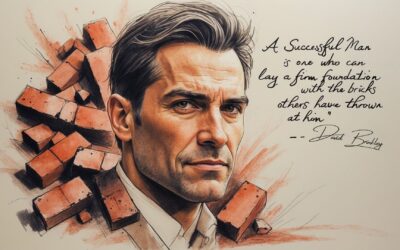
Building Success: Turning Adversity into Advantage (David Brinkley’s Wisdom)
Explore David Brinkley’s iconic quote: “A successful man is one who can lay a firm foundation with the bricks others have thrown at him.” Learn how to transform criticism and setbacks into powerful building blocks for your own success.
More Articles
Rosa Parks: The Quiet Defiance That Sparked a Civil Rights Revolution
Uncover the full story of Rosa Parks, the woman whose quiet act of defiance ignited the Montgomery Bus Boycott and became a powerful catalyst for the Civil Rights Movement. Explore her life, enduring legacy, and the true meaning of courage.
Unpacking Women’s Representation in Media: Beyond Stereotypes
Explore the nuanced world of women’s representation in media, from historical archetypes to modern shifts. Understand pervasive influences, subtle biases, and the power of diverse portrayals in shaping societal perceptions and real-world impact.
Quetzalcoatl: The Feathered Serpent God of Aztec Lore & Beyond
Uncover the captivating story of Quetzalcoatl, the Aztec Feathered Serpent deity of creation, wisdom, and wind. Explore his myths, profound symbolism, and enduring legacy in Mesoamerican culture and beyond. Dive deep into a rich history that shaped an empire.
Existential Crisis: How Life’s Deepest Questions Can Lead to Personal Growth
Feeling lost or questioning your purpose? Discover how an existential crisis, while challenging, can be a powerful catalyst for deeper self-understanding, authenticity, and profound personal growth.
The Ship of Theseus Paradox: Still the Same Ship After All These Changes? A Philosophical Puzzle!
Explore the fascinating Ship of Theseus paradox: If a ship’s parts are all replaced, is it still the same ship? Delve into questions of identity, change, and what makes something itself.
Electromagnetism: The Invisible Force Shaping Your World & The Universe
Discover electromagnetism, the fundamental force responsible for electricity, magnetism, light, and the very structure of matter. Explore how it holds everything together and powers our technology.
Civil Rights Movement FAQ: Understanding a Nation’s Struggle for Equality
Explore key questions about the American Civil Rights Movement: its timeline, pivotal figures like MLK Jr. & Rosa Parks, Jim Crow laws, major events, and lasting legacy. Essential history explained.
Forests: Earth’s Green Lungs & Ultimate Carbon Sink Solution
Discover how forests act as vital carbon sinks, absorbing CO2 and combating climate change. Learn about photosynthesis, threats like deforestation, and how we can protect these crucial ecosystems.
Hat Myth Busted: Do You Really Lose Most Heat Through Your Head? Fact vs. Fiction!
Uncover the truth about the age-old belief: “You lose most body heat through your head.” We dive into the science, debunk the myth, and explain why wearing a hat is still a good idea. Get the facts!
Your Time, Your Talent, Your Terms: Why Charging What You’re Worth is Non-Negotiable
Stop giving away your expertise! Explore Kim Garst’s powerful advice on valuing your time and talents. Learn why charging for your work is crucial for respect, sustainability, and attracting quality clients. Unlock your earning potential today.