
English Plus Magazine
Dive into a world of ideas, stories, English and discovery.
Letter from the Editor

Outsmarting the Algorithm: How to Pivot When AI Does It Better
Resilience in the Age of AI
Let’s be honest about what you’re feeling right now. It’s not just annoyance. It’s not just a concern about job security. It’s something deeper. It’s a specific kind of grief.
You have spent ten, maybe twenty years building a fortress of knowledge. You read the books. You put in the late nights. You honed your syntax, or your code, or your design eye until it was sharp enough to cut glass. You built your identity on being the person who knows things, the person who can execute high-quality work faster than anyone else in the room.
And then, almost overnight, the landscape shifted. You watched a machine churn out a draft, a solution, or a strategy in four seconds that would have taken you four hours. And maybe, just maybe, the machine’s version was actually… good.
That realization feels like a gut punch. It feels like you’ve been bested. You look at that screen and you think: If this tool can do what I do, then what am I for?
If you are asking that question, you are already halfway to the solution. Most people don’t ask. They deny. They mock the AI, pointing out its hallucinations or its stiff prose, clinging to the hope that it’s just a fad. That is a losing strategy. Denial is not a plan.
Here is the reality we have to accept before we can move forward: You can no longer compete on information recall. You can no longer compete on syntax generation. You can no longer compete on speed.
If your value proposition is “I know a lot of facts and I can type them out quickly,” you are in trouble. But here is the good news, and I mean this sincerely: That was never your actual value. That was just the labor. Your actual value is something the machine hasn’t touched yet, and that is where we are going to build your new fortress.
Today, we are going to break down exactly how to pivot. We aren’t going to talk about “embracing the future” with vague optimism. We are going to look at the mechanics of resilience. We are going to restructure your workflow and your mindset so that you stop competing with the machine and start standing on top of it.
Let’s break this down into three phases: The Mental Shift, The Strategic Audit, and The Execution Protocol.
Phase One: The Mental Shift
Resilience in this context isn’t about “toughing it out.” It’s about reframing your relationship to the work.
For your entire career, you have likely been an Operator. An Operator is someone who does the thing. You write the email. You debug the line of code. You grade the paper. You are the engine.
The AI revolution forces you to become a Conductor.
Think about an orchestra. The violin player is skilled. They have dexterity and timing. But the conductor? The conductor doesn’t make a sound. The conductor doesn’t touch a string. Yet, without the conductor, you don’t have a symphony; you have noise. The conductor understands the intent of the music. They understand pacing, emotion, and the overall architecture of the piece.
The AI is now the violin player. It is a very fast, very tireless violin player. If you try to grab the bow and play faster than it, you look ridiculous. Your job now is to stand on the podium.
This requires a painful ego death. You have to stop taking pride in the grind. We have been conditioned to believe that if we didn’t sweat over the first draft, we didn’t earn the final product. You need to let that go. The grind is no longer the metric of value. The outcome is the metric of value. The insight is the metric of value.
So, the first step is to stop asking, “How can I do this better than the AI?” and start asking, “How can I use the AI to get to the solution I envision?”
You are moving from Production to Direction.
Phase Two: The Strategic Audit
Now that we’ve adjusted the mindset, let’s look at your inventory. You feel like your experience has been negated. That is factually incorrect. Your experience is the only thing keeping the AI from producing garbage.
AI models are probability engines. They predict the next word or pixel based on an average of human data. They are the ultimate “average” generators. They lack three things that you possess: Context, Nuance, and Taste.
Let’s look at Context.
A machine can write a marketing strategy for a coffee shop. But it doesn’t know that your specific coffee shop is in a neighborhood that resents gentrification, and therefore using words like “luxury” or “exclusive” will actually alienate your customer base. It doesn’t know the history of the street corner. It doesn’t know the subtle emotional temperature of your team.
Your experience gives you that context. You know why certain strategies fail, not because the data says so, but because you’ve seen the human fallout.
Next is Nuance.
AI struggles with subtext. It struggles with the unsaid. In negotiation, in high-level teaching, in complex storytelling, the power is often in the silence between the words. It’s in the deliberate ambiguity. A machine optimizes for clarity and pattern matching. It flattens the curve. You, with your lifetime of reading rooms and reading minds, know when to be ambiguous. You know when to break the rule.
Finally, and most importantly, Taste.
This is the big one. As AI floods the world with content—infinite blog posts, infinite images, infinite code—we are entering an era of noise. The scarcity is no longer “content.” The scarcity is “curation.”
Who decides what is good? Who decides what is relevant?
You do.
Your twenty years of experience have refined your taste. You know what a great sentence sounds like. You know what elegant code looks like. You can look at ten AI-generated options and immediately identify the one that has a spark, and the nine that are derivative trash. That filter? That is your new currency.
So, here is your strategic audit. I want you to sit down and list every skill you have. Then, I want you to circle the ones that require high emotional intelligence, local context, or subjective judgment.
Those circled items? That is your job now. Everything else? Delegate it to the machine.
Phase Three: The Execution Protocol
We have the mindset. We have the strategy. Now, let’s talk about Monday morning. What do you actually do?
Step 1: The Integration Hour.
You cannot direct a tool you do not understand. If you are feeling overwhelmed, it’s usually because you are looking at AI as a monolith. You need to get your hands dirty.
Dedicate one hour a day to “breaking” the AI. Don’t just use it to write a generic email. Push it. specific, complex prompts. See where it fails.
When you find the failure point, that is where you step in.
For example, if you are a writer, have it write a story. Watch where it falls into cliché. Your job is to rewrite the cliché. You are now the editor-in-chief of a very prolific but unimaginative junior writer.
Step 2: Raise Your Baseline.
Because the machine handles the basics, your baseline of quality must go up. “Good enough” is dead. “Competent” is now free.
If you used to deliver “competent” reports, you are now obsolete. You must deliver insightful reports. You must deliver actionable wisdom.
Use the time the AI saves you on drafting to spend more time on thinking. If it takes you 10 minutes to generate the data analysis instead of 4 hours, use those saved 3 hours and 50 minutes to figure out what the data actually means for the future of the company.
Shift your energy from “gathering” to “synthesizing.”
Step 3: Human-to-Human Connection.
The more digital the world becomes, the more valuable the analog becomes.
If you are a teacher, the lecture can be an AI video. But the mentorship? The hand on the shoulder? The specific encouragement to a student who is struggling with self-doubt? That is 100% you.
If you are a consultant, the data processing is the machine. But the trust? The ability to look a client in the eye and say, “I’ve seen this before, and we’re going to be okay”? That is you.
Double down on your humanity. Be the person people want to talk to, not just the person who sends the file.
Step 4: Continuous Reinvention.
This is the hardest part. You have to accept that the learning curve never flattens again. The tool you master today will be outdated in six months.
Resilience is not a state of being; it’s a habit of adaptability. You must become comfortable with being a novice.
Remember when you were starting out? That hunger? That willingness to look stupid while you figured it out? You need to find that again. The “expert” mindset is rigid; it breaks under pressure. The “learner” mindset is flexible; it bends and snaps back.
The Bottom Line
Let’s wrap this up. I know it’s scary. It is valid to mourn the old way of doing things. It was comfortable. We knew the rules.
But the rules have changed.
You haven’t been bested. You’ve been promoted. You have been promoted from the assembly line to the design studio.
The machine can answer the question. Only you can ask the right one.
The machine can parse the data. Only you can find the meaning.
The machine can simulate empathy. Only you can actually care.
Your lifetime of learning wasn’t a waste. It was the training ground for this exact moment. It gave you the wisdom to wield this new power responsibly.
Don’t compete. Orchestrate.
Don’t produce. Curate.
Don’t retreat. Lead.
Get up. Dust off that experience. We have work to do.
More Editorials
No Results Found
The page you requested could not be found. Try refining your search, or use the navigation above to locate the post.
Featured Articles
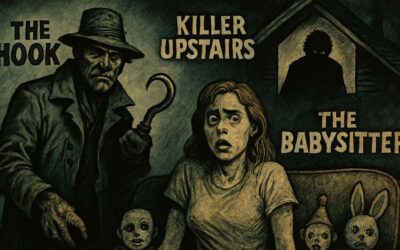
The Babysitter is Calling from Inside the Patriarchy: A Feminist Guide to Urban Legends
Ever wonder why classic urban legends always star women in peril? We explore how tales like “The Hook” reflect deep societal anxieties about female independence.

The Girl Who Helped Thunder: Inside the Powerful Lenape Legend of Storms and Belonging
Explore the resonant Lenape myth of the Girl Who Helped Thunder. Delve into a timeless story of loneliness, courage, and finding purpose among the gods of the storm.
Anatomy of a Hoax: The Science of Why We Fall for Disinformation
Ever wonder why you fall for online hoaxes? Discover the cognitive biases and emotional triggers manipulators exploit and learn how to build your mental toolkit.

Beyond Logic: Why Understanding Your Biases Makes You a More Empathetic Person
The true goal of learning about cognitive biases isn’t to become a perfect robot. It’s to become a “Rational Empath.” This capstone article explores how understanding our own flawed thinking leads to greater compassion, forgiveness, and wisdom.

The Cognitive Cascade: How a Chain Reaction of Biases Leads to Disaster
Cognitive biases rarely act alone. Discover how biases interact and compound each other in a “cognitive cascade.” Using the legendary “New Coke” failure as a case study, we deconstruct how a chain reaction of flawed thinking leads to disastrous outcomes.

Coded Bias: How AI Is Learning to Think Like Us (and Why That’s a Problem)
Artificial intelligence was supposed to be impartial. Instead, our human biases are being coded into the algorithms that shape our lives. Discover how AI learns our stereotypes, creates feedback loops, and what “coded bias” means for our future.

The Psychology of Our Divided World: How Your Brain Is Trapped in an Echo Chamber
Discover how cognitive biases like Confirmation Bias and Group Polarization are fueling political division and creating social media echo chambers. Learn the science behind why facts fail to change minds and how to have more productive conversations in a fractured world.

How Hidden Biases Are Sabotaging Your Workplace: A Guide to Smarter Teams
Discover the cognitive biases that secretly run your workplace. Learn how Groupthink leads to disastrous decisions, the Curse of Knowledge creates communication silos, and unconscious bias affects hiring and promotions. A must-read guide for leaders and teams.
3 Cognitive Biases That Are Secretly Hurting Your Relationships
Ever wonder why small disagreements with your partner blow up? Discover how cognitive biases like the Fundamental Attribution Error and Confirmation Bias shape your relationships, poison perceptions, and distort memories. Learn how to spot these mental traps and build stronger connections.
More Articles
The Only Constant is Change: Why This Ancient Proverb is the Key to Modern Life
Explore the profound meaning of “the only constant is change.” From the philosophy of Heraclitus to modern science and psychology, discover why embracing this paradox is crucial for resilience, growth, and navigating our fast-paced world.
The Axeman of New Orleans: The Unsolved Mystery of the Killer Who Demanded Jazz
Delve into the chilling, unsolved case of the Axeman of New Orleans, a serial killer who terrorized the city from 1918-1919. Explore the macabre crimes, the infamous letter from “Hell,” and the bizarre night the city played jazz to survive. Was he a man, a demon, or a myth?
Left-Handed vs. Right-Handed: The Real Reason You Prefer One Hand
Ever wonder why 90% of people are right-handed? It’s not just chance. We dive into the science of handedness, from your brain’s wiring and your family’s DNA to the surprising moment this preference is set—long before you’re even born.
Joan of Arc: The Teenager Who Commanded Armies and Saved France
Discover the incredible true story of Joan of Arc, the illiterate farm girl who heard divine voices, led the French army to victory, crowned a king, and was burned at the stake as a heretic—all by the age of 19. A timeless tale of faith, courage, and unwavering conviction.
Neptune: The Secrets of the Solar System’s Wildest, Windiest World
Dive deep into the mysteries of Neptune, the brilliant blue ice giant. Discover its supersonic winds, ephemeral storms like the Great Dark Spot, its captured moon Triton, and why this beautiful behemoth challenges everything we thought we knew about how planets are made.
From Knowledge to Action: Why Environmental Education is Key to a Sustainable Future
Discover how environmental education is more than just nature walks. It’s a vital tool for creating a sustainable future by fostering ecological intelligence, active stewardship, and critical thinking for a healthier planet.
Remote Work Revolution: The Benefits, Challenges, and Future of the Home Office
Is remote work a dream come true or a logistical nightmare? We dive deep into the pros and cons, from the flexibility and cost savings of working from home to the hidden dangers of burnout and proximity bias. Explore the future of work in our comprehensive guide.
Why Laughter is a Serious Weapon: The Power of Humor and Satire in Literature
Explore how authors from Mark Twain to Jonathan Swift have used humor and satire as powerful tools for social critique. Learn the difference between a simple joke and a jester’s gambit in our deep dive into the serious business of literary comedy.
Cambodia’s Apsara Dance: The Story of a Tradition That Refused to Die
Explore the divine beauty, rich symbolism, and tragic history of Cambodia’s Apsara dance. From the ancient temples of Angkor to its near-destruction and incredible revival, discover a living art form that embodies the soul of a nation.
How to Find Inner Peace When the World Is in Chaos
Feeling overwhelmed by the chaos of modern life? Learn practical strategies and ancient wisdom to cultivate inner peace. Our in-depth guide covers mindfulness, cognitive reframing, and building your internal sanctuary from the storms of life.